
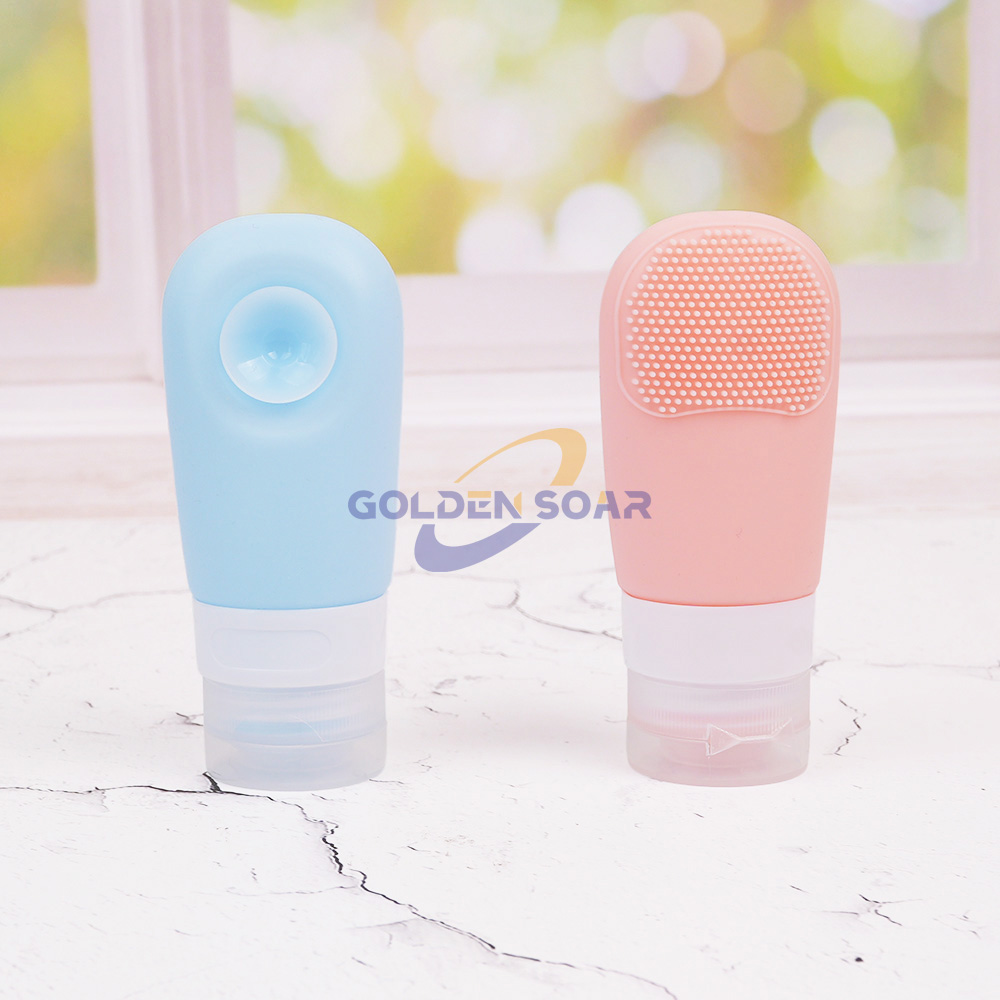
Engineering reliability of silicone bottles for travel in demanding environments
Silicone bottles for travel are engineered to maintain leak-proof performance and food-grade safety, even when exposed to mechanical stress and temperature extremes. Their elastic seals must withstand repeated compression and flexing, ensuring travelers can rely on consistent durability and hygienic storage wherever their journey takes them.
Sealing reliability and material fatigue in silicone bottles for travel
Travel scenarios impose a unique set of mechanical and environmental demands on packaging materials, particularly for silicone bottles designed for portable use. Sealing-material designers are tasked with ensuring that these containers maintain their elastic sealing integrity when subjected to repeated compression, flexing, and exposure to varying temperatures. The challenge is accentuated by the need for food-grade safety and compliance with regulatory standards, as well as the expectation for long-term durability despite harsh handling. Analyzing the elastic-sealing durability of silicone bottles for travel requires a detailed understanding of material fatigue, sealing behavior, and the interplay between mechanical stress and temperature fluctuations. This analysis will dissect the core mechanisms governing seal reliability, evaluate material performance under simulated travel conditions, and provide engineering-focused recommendations for validation and improvement.
Silicone bottles for travel are engineered to combine flexibility, resilience, and chemical inertness, making them suitable for a range of liquids including toiletries and food products. The primary function of the elastic seal is to prevent leakage, preserve contents, and ensure hygienic storage. The sealing system typically consists of a compressible silicone interface, often a gasket or integrated closure, that forms a barrier between the bottle and its cap. The geometry of the sealing surface, the Shore hardness of the silicone, and the design of the closure mechanism all contribute to the overall sealing performance.

Elastic sealing interface
Cross-sectional diagram illustrates the elastic sealing interface in silicone bottles for travel, highlighting the compressive contact area and closure geometry.

Food-grade safety
Production of silicone bottles for travel using food-grade, BPA-free silicone ensures safety for consumables and compliance with international standards.

Material selection for the sealing component is dictated by the need to balance elasticity with mechanical strength. Food-grade silicone, typically polydimethylsiloxane (PDMS), is favored due to its non-reactive nature and ability to maintain flexibility over a wide temperature range. The Shore A hardness is commonly specified between 40 and 60 to provide sufficient compressibility for sealing without excessive deformation under load. The bottle body and cap are often co-molded or assembled to ensure a uniform seal, with attention paid to the tolerances of mating surfaces to prevent microleakage.
Evaluating seal performance under travel conditions
The reliability of silicone bottles for travel is fundamentally determined by the seal’s ability to withstand cyclic mechanical stresses and temperature variations encountered during transportation. Mechanical stress arises from repeated opening and closing, accidental drops, squeezing, and pressure changes during altitude shifts. Each actuation of the closure system imposes localized strain on the elastic seal, leading to potential creep, set, or microcracking over time. Temperature fluctuations, ranging from sub-zero storage to exposure to hot liquids or environments, further challenge the material by inducing thermal expansion and contraction.


Material fatigue is a critical concern, as repeated cycles of deformation can cause permanent set or loss of elasticity in the silicone seal. This fatigue manifests as a reduction in sealing force, increased permeability, or visible cracking at high-stress locations. The viscoelastic nature of silicone contributes to its ability to recover after deformation, but prolonged or excessive loading can exceed the material’s elastic limit. The core pain point for sealing-material designers is predicting and mitigating these failure modes to ensure consistent seal reliability throughout the product’s lifecycle.
Temperature resistance is another pivotal factor influencing seal performance. Silicone’s glass transition temperature is well below typical usage conditions, allowing it to remain flexible from -40°C to 200°C. However, repeated exposure to extreme temperatures can accelerate aging processes such as chain scission or crosslink density reduction, leading to embrittlement or tackiness. For travel applications, designers must account for scenarios such as bottles left in hot vehicles, subjected to freezing during air transit, or exposed to rapid temperature cycling. Accelerated aging tests, such as oven aging or freeze-thaw cycling, are employed to evaluate long-term durability under these conditions.


Food-grade safety is non-negotiable in the context of travel bottles intended for consumables. The silicone formulation must comply with FDA or LFGB standards, ensuring that no volatile organic compounds, plasticizers, or extractables migrate into the contents. The sealing region, being in direct contact with stored liquids, is particularly scrutinized for potential leaching under thermal or mechanical stress. Material selection and process control are therefore integral to maintaining both sealing performance and user safety.
Evaluation of sealing reliability under travel conditions involves a combination of laboratory testing and real-world simulation. Compression set tests are conducted to measure the permanent deformation of the seal after prolonged compression, providing insight into the material’s ability to recover and maintain contact pressure. Leak testing, using both static and dynamic pressure differentials, quantifies the seal’s effectiveness under various loading scenarios. Mechanical cycling rigs simulate repeated opening and closing actions, while drop tests assess the seal’s resilience to impact.
Finite element analysis (FEA) is employed to model stress concentrations and predict failure points within the seal geometry. By varying parameters such as seal thickness, closure torque, and material modulus, designers can optimize the seal profile to minimize fatigue and enhance durability. Experimental validation is essential to correlate simulation results with actual performance, particularly under complex loading and environmental conditions.
In addition to mechanical and thermal testing, chemical resistance assessments are performed to ensure that the silicone seal does not degrade or swell when exposed to common travel liquids such as shampoos, lotions, or acidic beverages. Swelling or softening of the seal can compromise the contact pressure and lead to leakage. Accelerated chemical exposure tests, combined with post-exposure leak and compression set evaluations, provide a comprehensive picture of seal robustness.
The interplay between elastic sealing behavior and material fatigue is central to addressing the core pain point of seal reliability. For sealing-material designers, the objective is to specify silicone formulations and seal geometries that maintain a consistent sealing force across thousands of cycles and a broad temperature spectrum. This entails careful control of crosslink density, filler content, and curing parameters during silicone compounding and molding. Quality assurance protocols, such as 100% visual inspection and random leak testing during production, further mitigate the risk of field failures.
To ensure optimal performance of silicone bottles for travel, engineering validation must be conducted at multiple stages. Initial material selection should be based on empirical data from compression set, tensile, and tear resistance tests. Prototyping and iterative design, supported by FEA, allow for refinement of seal geometry and closure mechanisms. Pre-production samples should undergo accelerated aging, mechanical cycling, and chemical exposure testing to confirm durability under simulated travel conditions. Post-market surveillance, including user feedback and failure analysis, provides data for continuous improvement.
In conclusion, the elastic-sealing durability of silicone bottles for travel is governed by a complex interaction of material properties, seal design, and environmental exposure. Addressing the core pain point of seal reliability under mechanical stress and temperature variation requires a rigorous engineering approach, encompassing material fatigue analysis, thermal and chemical resistance testing, and iterative design validation. Sealing-material designers are encouraged to conduct comprehensive engineering validation for seal performance, utilizing both simulation and empirical testing, to ensure that silicone bottles for travel meet the stringent demands of portable use while maintaining food-grade safety and long-term durability.
For more details on food-grade silicone and travel packaging solutions, visit our Silicone Packaging Materials page. To explore leak-proof innovations, see Diseño de tapa a prueba de fugas and for safe material options, refer to Silicone & BPA-Free Options.
Engineering validation for reliable silicone bottles for travel
Ensuring the long-term reliability of silicone bottles for travel requires a comprehensive approach to material selection, seal geometry, and validation testing. By integrating simulation, empirical testing, and continuous improvement protocols, sealing-material designers can deliver travel bottles that maintain leak-proof performance, food-grade safety, and durability under real-world travel conditions.
For technical support, design consultation, or to learn more about Goldensoar’s engineering standards for silicone packaging, visit our Perfil de la empresa or browse our Preguntas frecuentes for further information.
 English
 Español
 Русский
 日本語
日本語 한국어
한국어 Français
 العربية
 Português