
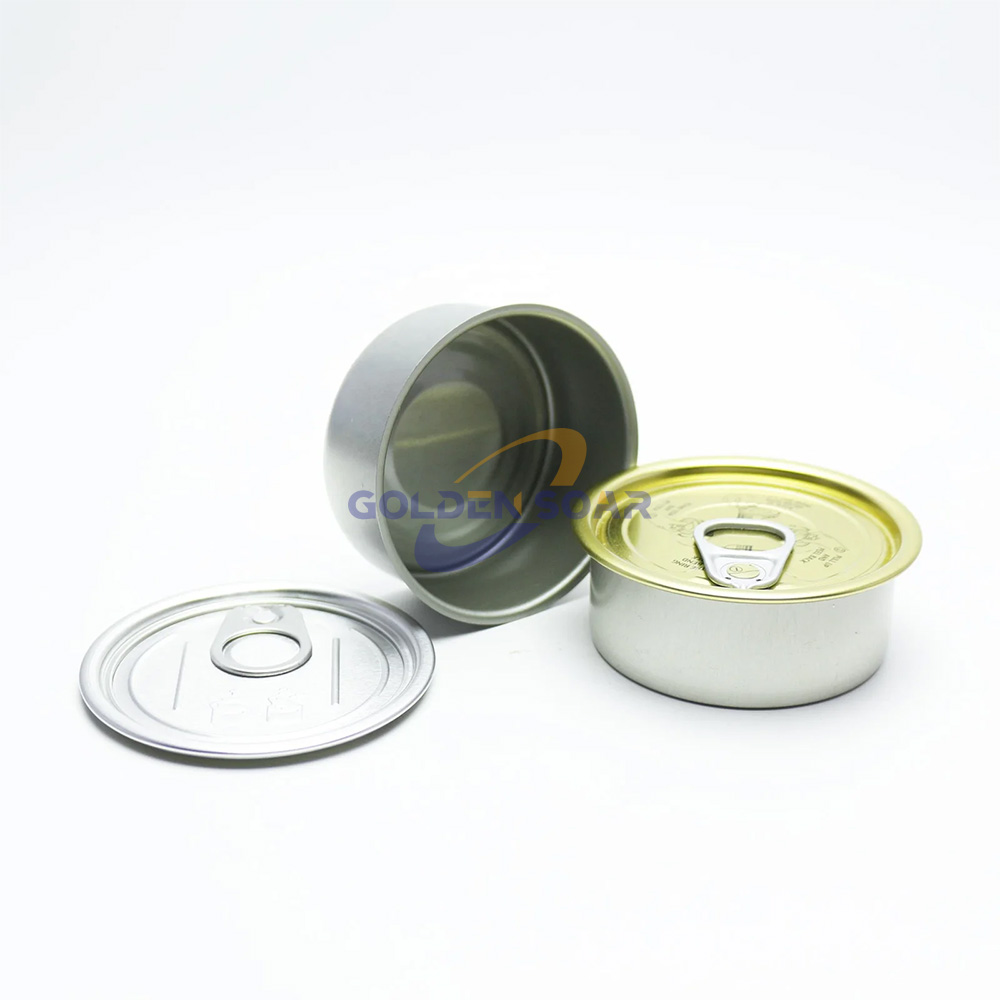
Engineering Analysis of Corrosion Mechanisms and Barrier Performance in Tinplate Packaging Lids
Introduction
Tinplate lids are fundamental components in metal food packaging, serving not only as closures but also as protective barriers that preserve product quality and safety. Their effectiveness hinges on resisting internal corrosion and maintaining oxygen impermeability, challenges that become pronounced in demanding environments such as high-humidity coastal regions. In these settings, elevated moisture and chloride ion concentrations accelerate degradation processes, threatening the integrity of the packaging and the safety of the contained food. As a packaging materials engineer with hands-on experience in metal canning applications, I have observed that understanding the complex interactions between material properties, mechanical stresses, and environmental factors is critical to designing lids that withstand such conditions. This discussion delves into the mechanical behavior of tinplate lids, their failure modes with an emphasis on internal corrosion, and the rigorous testing protocols aligned with Certiquality Management System Certification that ensure their suitability for prolonged use in challenging environments.
Mechanical Principles & Material Behavior
Tinplate lids are produced from cold-rolled steel substrates coated with a thin, uniform layer of tin. This tin coating acts as a sacrificial anode, providing cathodic protection to the steel and serving as a physical barrier against corrosive agents. The coating thickness typically ranges from 1 to 3 microns, balancing corrosion resistance with mechanical flexibility. The adhesion between the tin layer and steel substrate is paramount; poor adhesion can lead to delamination, exposing the steel to aggressive species.

During manufacturing, lids undergo stamping, flanging, and beading processes that impose plastic deformation. These mechanical operations can induce microcracks or discontinuities in the tin coating, which serve as initiation points for corrosion. The lid’s geometry, including sealing flange width and bead radius, influences stress distribution during closure and retort sterilization. Excessive stress concentrations may exacerbate coating damage, especially under cyclic thermal and mechanical loads.
A polymeric lacquer is commonly applied on the internal surface of the lid to enhance the oxygen barrier and prevent direct metal-food contact. This lacquer layer, typically 10–20 microns thick, must exhibit strong adhesion to the tinplate and maintain its integrity after thermal processing. The oxygen transmission rate (OTR) of the combined tinplate and lacquer system is extremely low, often below 0.1 cc/m²/day at 23°C and 50% relative humidity, but any defects or microcracks can significantly increase permeation.
In coastal environments, the presence of moisture and chloride ions accelerates electrochemical reactions. The tin-steel interface forms a galvanic couple; once the tin coating is breached, the steel corrodes preferentially. The mechanical robustness of the tin layer and the lacquer’s barrier properties are thus interdependent in maintaining lid performance. Understanding these material behaviors under mechanical and environmental stresses is essential for predicting service life and preventing premature failure.

Failure Modes
Primary Failure: Internal Corrosion
The most critical failure mode in tinplate lids is internal corrosion, which compromises both structural integrity and food safety. Internal corrosion initiates when microscopic defects in the tin coating or lacquer expose the steel substrate to moisture and oxygen. In high-humidity coastal environments, chloride ions readily penetrate these defects, triggering localized pitting corrosion. This form of corrosion is particularly insidious because it can progress beneath intact coatings, leading to blistering and delamination that further accelerate degradation.
Corrosion products, primarily iron oxides and hydroxides, accumulate under the coating, causing swelling and loss of adhesion. This process reduces the sealing force exerted by the lid flange, risking loss of hermeticity. Over time, deformation and eventual breach of the container occur, allowing microbial ingress and product spoilage. Field observations confirm that corrosion initiation sites often coincide with manufacturing-induced coating discontinuities or mechanical damage sustained during sealing.
The kinetics of internal corrosion are influenced by temperature, humidity, chloride concentration, and the electrochemical potential difference between tin and steel. Elevated temperatures during retorting accelerate corrosion rates, while cyclic thermal stresses can induce microcracking in the lacquer, compounding the problem. Effective mitigation requires controlling these variables through material selection, coating quality, and process optimization.
Secondary Failure: Oxygen Barrier Degradation
Even in the absence of visible corrosion, degradation of the oxygen barrier function can compromise product shelf life. The lacquer layer, while providing a critical oxygen diffusion barrier, is susceptible to microstructural changes over time due to environmental exposure and mechanical stress. Thermal cycling during storage or transport can induce microcracks or crazing in the lacquer, increasing oxygen permeability.
Increased oxygen ingress leads to oxidative spoilage of oxygen-sensitive products such as meats and fruits. This failure mode often precedes visible corrosion, acting as an early indicator of barrier compromise. Additionally, mechanical vibrations and humidity fluctuations can exacerbate lacquer degradation, reducing its effectiveness.
The interplay between oxygen barrier degradation and corrosion is cyclical: increased oxygen permeability promotes corrosion, which in turn further degrades the barrier layers. Therefore, maintaining lacquer integrity is as critical as preserving the tin coating to ensure overall lid performance.
Environmental Effects: High-Humidity Coastal Environment
High-humidity coastal environments present a uniquely aggressive challenge to tinplate lids. Ambient moisture levels often exceed 80% relative humidity, and airborne salts deposit chloride ions on exposed surfaces. These conditions create a persistent electrolyte layer on the lid, facilitating electrochemical corrosion processes.
Chloride ions lower the pitting potential of steel, making localized corrosion more likely at coating defects. The thin electrolyte film maintains ionic conductivity, sustaining galvanic cells between the tin coating and steel substrate. Moreover, temperature fluctuations common to coastal climates induce differential thermal expansion between the metal and lacquer layers, generating cyclic mechanical stresses that promote crack initiation and propagation.
Condensation on internal lid surfaces during storage further exacerbates corrosion risk by maintaining moisture contact. Additionally, salt deposits can migrate into microscopic crevices, intensifying localized corrosion rates. These environmental factors necessitate stringent material and process controls to ensure durability.
Engineering strategies to counteract these effects include selecting tinplate with optimized tin purity and coating thickness, employing lacquers with enhanced flexibility and adhesion, and incorporating corrosion inhibitors into coating formulations. Understanding the specific environmental loading profiles is essential for accurate failure prediction and mitigation.
Testing Standards & Validation
Ensuring the reliability of tinplate lids under high-humidity coastal conditions requires comprehensive testing protocols aligned with established standards. Certiquality Management System Certification provides a structured framework for quality assurance, emphasizing traceability, process control, and compliance with international packaging material standards.
Corrosion resistance is typically evaluated through accelerated aging tests such as ASTM B117 salt spray (fog) exposure, which subjects lids to a controlled sodium chloride mist at 35°C. This test simulates the corrosive effects of coastal environments over condensed timeframes. Complementary cyclic corrosion tests incorporate alternating salt fog, drying, and humidity cycles to more accurately replicate real-world conditions, including thermal fluctuations.
Electrochemical techniques such as electrochemical impedance spectroscopy (EIS) and potentiodynamic polarization provide quantitative insights into coating integrity and corrosion kinetics. EIS measures the impedance response of the coating-substrate system, detecting early-stage degradation, while polarization tests determine corrosion potential and current density.
Oxygen barrier performance is assessed using oxygen transmission rate (OTR) measurements, employing coulometric or manometric methods under controlled temperature and humidity. These tests quantify the oxygen permeation through the lid assembly, critical for predicting shelf life of oxygen-sensitive products. Lacquer adhesion and coating continuity are evaluated via cross-cut tape tests and microscopic inspection to identify defects that could compromise barrier function.
Validation protocols integrate laboratory data with field observations from storage trials in high-humidity coastal environments. This correlation ensures that accelerated tests reliably predict in-service performance. Third-party laboratory certifications provide unbiased verification of material properties and coating effectiveness, supporting compliance with Certiquality requirements.
Application & Integration
The successful integration of tinplate lids into metal packaging systems demands a multidisciplinary engineering approach that balances mechanical robustness, corrosion resistance, and barrier efficacy. Material specifications must define tin coating thickness and purity, prioritizing uniformity and adhesion to withstand forming stresses. Lacquer formulations require compatibility with both the tinplate substrate and the intended food product, maintaining flexibility and barrier properties after thermal processing.
Manufacturing processes must be tightly controlled to minimize mechanical damage to the tin coating during stamping, flanging, and sealing. Tooling geometry should be optimized to reduce stress concentrations, and forming speeds adjusted to prevent coating microfractures. Post-forming inspections, including microscopic examination and adhesion testing, help identify defects before assembly.
In environments characterized by high humidity and salt exposure, additional protective measures enhance lid durability. Incorporating corrosion inhibitors into lacquer formulations can retard electrochemical reactions at coating defects. Packaging lines may implement desiccant systems or controlled atmospheres to limit moisture ingress during storage and transport. Design considerations should accommodate thermal expansion mismatches between metal and lacquer to prevent delamination under cyclic temperature loads.
Process parameters for retort sterilization require optimization to minimize thermal stress on coatings. Monitoring sealing torque and flange deformation ensures that mechanical stresses do not compromise barrier layers. Collaboration between materials engineers, process engineers, and quality assurance teams is essential to develop packaging solutions that maintain hermetic seals and resist internal corrosion throughout the product lifecycle.
Internal corrosion and oxygen barrier degradation remain the principal challenges in maintaining the integrity of tinplate lids, particularly in high-humidity coastal environments. Engineering solutions rely on preserving the mechanical continuity of the tin coating and the effectiveness of the lacquer barrier through meticulous material selection, manufacturing control, and rigorous validation aligned with Certiquality Management System Certification. By understanding the electrochemical mechanisms and mechanical stresses involved, packaging engineers can design lids that reliably protect food products, ensuring safety and shelf life under demanding environmental conditions. Integrating tinplate lids as a critical interface in metal packaging requires continuous monitoring and adherence to validated standards to manage failure risks effectively.
This analysis was reviewed by a Senior Package Materials Engineer with practical field experience under high-humidity coastal environment operating conditions, with validation focused on internal corrosion in accordance with Certiquality Management System Certification compliance requirements.
From an engineering standpoint, long-term reliability of tinplate lids depends on correct polymer selection, verified barrier and mechanical behavior, validation under high-humidity coastal environment exposure, and documented compliance with Certiquality Management System Certification together with other relevant packaging material testing and regulatory benchmarks.

 English
 Español
 Русский
 日本語
日本語 한국어
한국어 Français
 العربية
 Português