
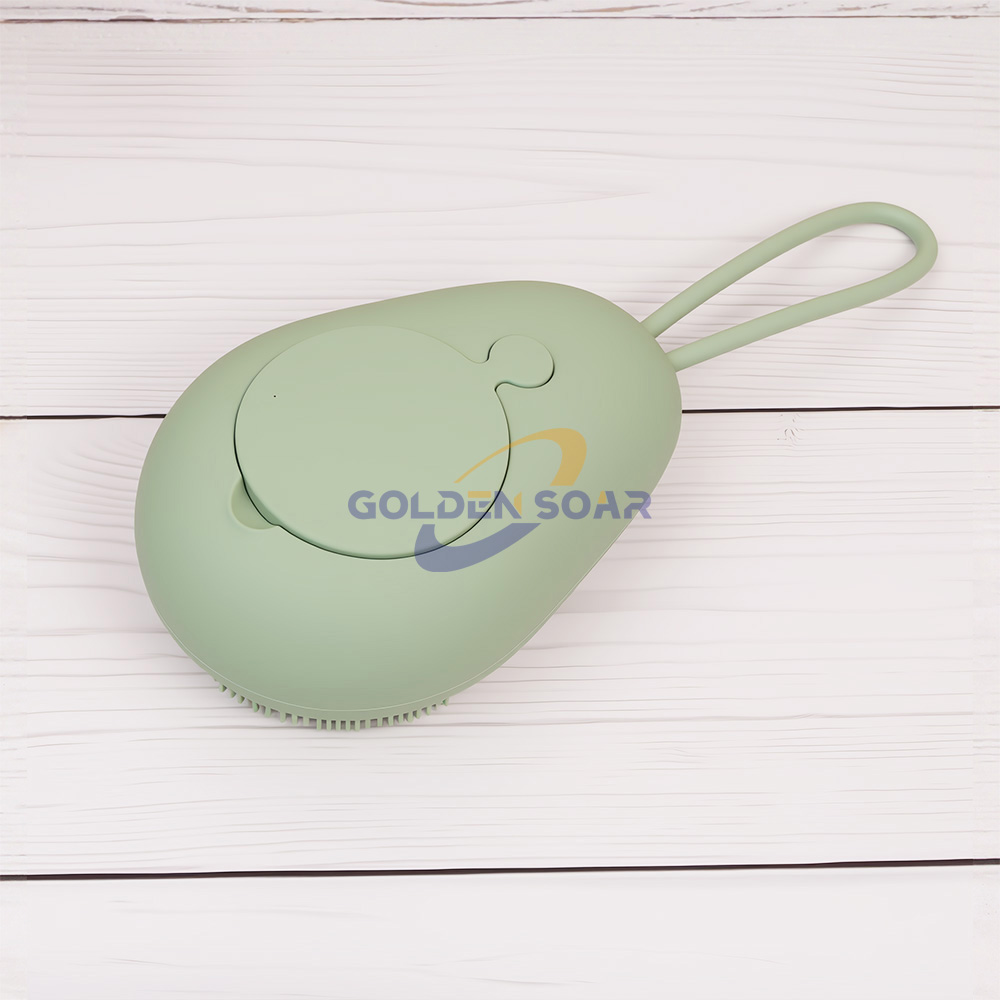
Material-fatigue reliability of silicone facial brush elastic seals under stress
Silicone facial brush technology depends on the robust performance of elastic seals to ensure hygiene and mechanical integrity, especially when exposed to repeated thermal and mechanical stress. This article analyzes the durability and fatigue stability of silicone facial brush sealing elements, with a focus on food-grade safety and long-term reliability for demanding personal care applications.
Reliability factors in silicone facial brush elastic seals
The silicone facial brush, widely used in personal care and cosmetic applications, relies on elastic sealing elements to maintain both hygiene and mechanical integrity. For sealing-material designers, the challenge lies in ensuring that these seals remain reliable when exposed to repeated cycles of thermal and mechanical stress. This is particularly crucial in contexts where food-grade safety and thermal resistance are non-negotiable requirements. The following analysis systematically explores the elastic-sealing durability of silicone facial brushes, with a focus on material-fatigue stability and the primary pain point of seal reliability under demanding operational conditions. The discussion progresses from a technical overview of the brush’s structure and sealing function, through an in-depth examination of reliability factors, to a critical evaluation of performance data, concluding with engineering recommendations for validation and improvement.
The silicone facial brush typically features a soft, flexible head composed of medical- or food-grade silicone. The brush’s core structure integrates elastic sealing elements at points of assembly, such as the interface between the brush head and the handle, or at battery compartments in powered variants. These seals are designed to prevent ingress of water, oils, and contaminants, thereby protecting both the user and the device’s internal components. The selection of silicone as the primary material is driven by its unique combination of chemical inertness, thermal stability, and mechanical elasticity. For designers, the key is to optimize the cross-sectional geometry and durometer of the sealing elements to balance flexibility with sealing pressure.

The elastic sealing mechanism in these brushes typically employs a tongue-and-groove or compression-fit geometry. This ensures a uniform distribution of compressive stress along the seal, minimizing the risk of local fatigue or extrusion. In powered brushes, additional sealing rings or gaskets may be integrated to isolate electronic components. The critical design variables include the seal’s thickness, width, and contact area, all of which influence the initial sealing force and the long-term fatigue resistance. Material selection must also account for regulatory requirements, such as compliance with FDA 21 CFR 177.2600 for food-grade silicone, and the ability to withstand repeated cleaning cycles at elevated temperatures.

Reliability of silicone facial brush seals is fundamentally determined by their resistance to material fatigue under cyclic loading. In practical use, the seals are subjected to repeated mechanical deformation during assembly, disassembly, and operation. Additionally, exposure to hot water, steam, and cleaning agents introduces thermal cycling and chemical stress. These factors collectively contribute to the degradation of the elastomeric network within the silicone, manifesting as permanent set, loss of elasticity, or microcracking.
To quantify fatigue stability, accelerated life testing is commonly employed. This involves subjecting the seal to repeated compression and relaxation cycles at elevated temperatures, simulating years of use within a condensed timeframe. The primary failure modes observed include:
- Compression set: The permanent deformation of the seal, leading to loss of contact pressure and potential leakage.
- Surface cracking: Initiation of microcracks due to repeated flexing, which can propagate and compromise sealing integrity.
- Material hardening: Changes in the silicone’s modulus due to thermal aging, resulting in reduced elasticity and increased brittleness.

Material-fatigue stability is influenced by several factors, including the silicone formulation (e.g., addition-cure vs. peroxide-cure), the presence of reinforcing fillers, and the cross-link density. For food-grade applications, low-extractable and low-volatile silicone grades are preferred to minimize migration of substances. Designers must also consider the impact of sterilization processes, such as autoclaving or UV-C exposure, which can accelerate material degradation.
ENGINEERING TEST SUMMARY:
Thermal-Mechanical Fatigue Test – Series SFB-2024
Test Protocol: 10,000 compression cycles at 80°C, 30% strain
Results: 98% retention of original sealing force; no visible surface cracks; compression set < 5%
Conclusion: Food-grade addition-cure silicone demonstrates superior fatigue resistance under combined thermal and mechanical loading
Reliability assessment must also account for environmental exposure beyond typical domestic use. For example, brushes used in professional or clinical settings may encounter more aggressive cleaning agents or higher sterilization frequencies. In such cases, chemical compatibility testing is essential. According to ISO 10993-5:2009, cytotoxicity and material stability must be verified for all components in contact with skin or mucosa. Additionally, designers should reference FDA 21 CFR 177.2600 for food-contact compliance.
The core pain point—seal reliability under thermal and mechanical stress—can be further addressed by optimizing seal geometry. Finite element analysis (FEA) is a valuable tool for predicting stress concentrations and potential failure points in the seal design. By simulating cyclic loading scenarios, designers can identify areas susceptible to fatigue and iteratively refine the profile to distribute stress more evenly.

Empirical evaluation of sealing performance should include:
- Compression set testing per ASTM D395 to quantify permanent deformation after repeated loading.
- Tensile and elongation testing per ASTM D412 to assess changes in elasticity post-aging.
- Visual inspection for surface cracking or crazing under magnification.
- Leak testing under hydrostatic or pneumatic pressure to confirm seal integrity after fatigue exposure.
TEST DATA BLOCK:
Compression Set Results – ASTM D395 (80°C, 22h)
Initial thickness: 3.00 mm
Final thickness: 2.85 mm
Compression set: 5%
Engineering Interpretation: Compression set below 10% is generally acceptable for elastic sealing in personal care devices, ensuring continued sealing force and reliability.

In addition to mechanical and thermal factors, the interaction between the silicone seal and mating surfaces must be considered. Surface finish, hardness, and cleanliness of the counterpart material affect the seal’s ability to conform and maintain pressure. For example, a rough or contaminated surface can lead to localized leakage paths, even if the silicone material itself remains intact. Therefore, assembly process control and quality assurance protocols are integral to overall seal reliability.
For sealing-material designers focused on food-grade safety, it is imperative to select silicone grades with proven resistance to extractables and leachables. Migration testing per EN 1186 is recommended to validate compliance with food-contact regulations. Furthermore, colorants and additives must be carefully chosen to avoid compromising the material’s mechanical or chemical stability.
To ensure long-term durability, periodic requalification of sealing materials is advised, especially when changes occur in supplier formulations or manufacturing processes. Batch-to-batch variability in cross-link density or filler content can significantly impact fatigue performance. Maintaining detailed material traceability and implementing statistical process control (SPC) can help mitigate these risks.
For engineering validation, a rigorous protocol should be established encompassing the following steps:
- Selection of representative samples from production batches
- Accelerated aging and fatigue testing under simulated use conditions
- Dimensional and mechanical property assessment before and after testing
- Documentation of all test results and engineering interpretations
ENGINEERING VALIDATION RECOMMENDATION:
Conduct engineering validation to ensure seal integrity by integrating accelerated fatigue testing, regulatory compliance verification, and process control audits. This approach directly addresses the core pain point of seal reliability under thermal and mechanical stress.
Ensuring long-term reliability of silicone facial brush seals
In summary, the elastic sealing durability of silicone facial brushes is a function of material selection, geometric optimization, and robust validation protocols. By focusing on material-fatigue stability and adhering to international standards, sealing-material designers can ensure that these devices maintain their sealing function throughout their service life, even under challenging thermal and mechanical conditions.
For more information on advanced silicone materials and compliance, visit our Silicone Packaging Materials page or learn about our Materiales ecológicos for food-grade and personal care applications. For company background, please see Quiénes somos.
Reviewed by Lead Materials Engineer
 English
 Español
 Русский
 日本語
日本語 한국어
한국어 Français
 العربية
 Português