
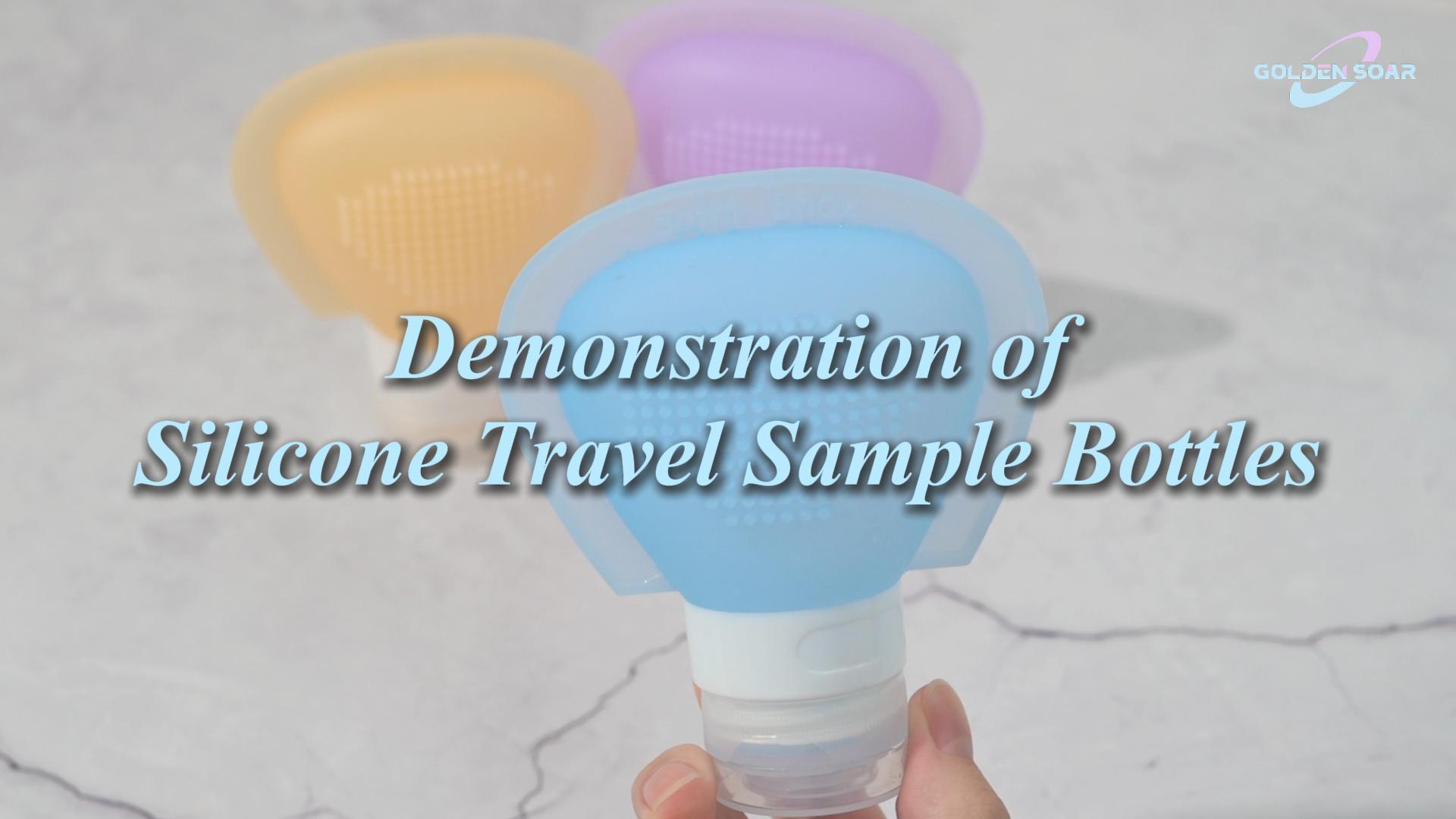
Seal reliability and material structure in travel squeeze bottles
Travel squeeze bottles are a critical component of flexible packaging, demanding robust seal reliability and material resilience to withstand repeated use and pressure changes. This technical overview explores how the structure and engineering of travel squeeze bottles ensure performance in dynamic travel conditions.
Material selection and seal reliability in travel squeeze bottles
In the context of flexible packaging, travel squeeze bottles present a unique engineering challenge: maintaining seal integrity and material reliability despite repeated flexing, pressure cycles, and exposure to various contents. For packaging production engineers, the focus is not only on initial product performance but also on how the material structure and sealing mechanisms behave under real-world stresses. This analysis addresses the core pain point of seal reliability in travel squeeze bottles, emphasizing the interplay between polymer formulation, mechanical design, and repeated user interaction. The discussion is structured to provide a technical examination of material selection, sealing architecture, and the evaluation methodologies required to ensure consistent performance in demanding travel scenarios.
Travel squeeze bottles are typically fabricated from flexible polymers such as low-density polyethylene (LDPE), polypropylene (PP), thermoplastic elastomers (TPE), and occasionally silicone. Each material presents distinct mechanical and chemical properties that influence both the bottle’s resilience and the effectiveness of its sealing system. The selection process must account for elasticity, stress-crack resistance, chemical compatibility with a range of liquids, and the ability to return to original shape after deformation. The bottle’s closure—often a flip-top or screw-cap—relies on precise dimensional tolerances and surface finish to maintain a leak-proof seal, especially under the variable internal pressures generated by squeezing and atmospheric changes during air travel.

Each polymer used in travel squeeze bottles offers unique advantages and challenges for seal reliability, with PE and PP being common choices for their flexibility and chemical resistance.
The reliability of these seals is fundamentally a function of both the material’s viscoelastic properties and the closure’s mechanical design. LDPE, for example, offers high flexibility and good sealability due to its low modulus and ability to conform to mating surfaces. However, it is susceptible to environmental stress cracking, especially in the presence of surfactants or oils commonly found in personal care products. PP provides greater rigidity and chemical resistance but may require additional sealing features, such as integrated liners or elastomeric gaskets, to achieve comparable leak prevention. Silicone, while highly resilient and inert, introduces manufacturing complexity and cost considerations.
The closure mechanism itself is engineered to balance user convenience with sealing force. Flip-top caps typically employ a living hinge and a snap-fit or interference fit between the cap and the dispensing orifice. The seal is achieved by compressing a flexible lip or gasket against a rigid seat, generating localized pressure sufficient to prevent fluid migration. Screw caps, in contrast, depend on thread engagement and torque application to compress a liner or the bottle neck itself, distributing sealing force more uniformly but requiring precise thread geometry and material hardness control.

Material and closure design must be optimized together to ensure the travel squeeze bottle maintains a reliable seal under repeated use and pressure changes.
Evaluation methodologies for seal-stress behavior
A critical aspect of seal reliability is the behavior of the system under repeated use. Each actuation—squeezing the bottle to dispense contents—subjects the material to cyclic deformation, generating localized stresses at the seal interface and in the hinge region of the closure. Over time, these stresses can induce creep, microcracking, or permanent set in the polymer, degrading the effectiveness of the seal. The challenge for packaging engineers is to quantify these effects and select material formulations and closure geometries that mitigate long-term failure risks.
To evaluate seal performance, laboratory protocols typically involve a combination of pressure retention testing, cyclic compression testing, and accelerated aging. Pressure retention tests subject filled bottles to internal pressures above normal use conditions, monitoring for leakage or seal rupture. Cyclic compression tests simulate repeated squeezing, quantifying the number of cycles to failure or the onset of measurable leakage. Accelerated aging exposes the system to elevated temperatures, humidity, and aggressive chemical environments to predict material degradation over the product’s intended lifespan.

Testing protocols for travel squeeze bottles include pressure retention, cyclic compression, and accelerated aging to ensure seal reliability in real-world travel scenarios.
Material characterization is equally important. Differential scanning calorimetry (DSC) and dynamic mechanical analysis (DMA) provide insight into the polymer’s thermal transitions and viscoelastic response, which directly impact seal recovery and resistance to permanent deformation. Contact angle measurements and surface energy analysis inform the potential for interfacial adhesion or slip, particularly relevant for bottles with co-molded or multi-material closures. Chemical resistance testing ensures that the selected polymer does not swell, crack, or lose mechanical properties when exposed to a range of typical fill substances.
The interaction between closure design and material selection is further complicated by manufacturing tolerances and assembly processes. Injection molding of bottle necks and caps must achieve tight dimensional control to ensure consistent seal engagement. Surface finish, particularly at the sealing interface, is critical; micro-roughness or flash can compromise the seal, especially in systems relying on elastic deformation rather than compressible gaskets. In multi-component assemblies, the coefficient of thermal expansion mismatch between bottle and closure materials can introduce stress concentrations during temperature cycling, further challenging seal reliability.
In case evaluations, bottles subjected to repeated travel scenarios—such as pressure changes during flight, rough handling, and frequent opening/closing—often reveal failure modes not evident in static testing. Common issues include cap loosening due to thread wear, loss of hinge elasticity, and gradual hardening or embrittlement of the bottle material. These failures are typically traced to a combination of suboptimal material selection, inadequate closure geometry, or insufficient process control during manufacturing. For instance, a PP cap with insufficient wall thickness may deform under repeated torque, reducing thread engagement and compromising the seal. Similarly, LDPE bottles exposed to aggressive solvents may exhibit stress whitening or cracking at the neck, leading to slow leaks.
To mitigate these risks, engineering validation protocols should incorporate real-world stressors and extended use cycles. This includes subjecting assembled bottles to thermal cycling, drop tests, and chemical exposure representative of typical travel conditions. Quantitative metrics such as leak rate, closure torque retention, and hinge cycle life provide actionable data for material and design optimization. In addition, non-destructive evaluation techniques—such as ultrasonic seal inspection and X-ray computed tomography—can identify internal defects or voids that may compromise long-term reliability.
From a material formulation perspective, advances in polymer blends and additives offer pathways to enhanced seal reliability. The incorporation of impact modifiers, slip agents, and UV stabilizers can improve flexibility, reduce wear, and extend service life. For closures, the use of co-molded elastomeric seals or multi-durometer components allows for tailored stress distribution and improved sealing under variable loads. However, these enhancements must be balanced against manufacturability, cost, and recyclability constraints.
In summary, the engineering of travel squeeze bottles for reliable sealing performance is a multidisciplinary challenge requiring precise alignment of material properties, closure design, and manufacturing quality. The core pain point—seal reliability under repeated use and pressure—can only be addressed through rigorous analysis of material structure and seal-stress behavior, validated by comprehensive laboratory and real-world testing. For packaging production engineers, the path to robust flexible packaging lies in the systematic evaluation of polymer selection, closure architecture, and assembly processes, with continuous feedback from field performance data.
Ensuring long-term reliability of travel squeeze bottles
To ensure the integrity of travel squeeze bottle seals, it is essential to conduct engineering validation protocols that encompass pressure retention, cyclic actuation, and environmental exposure. Only through such technically grounded assessment can the long-term reliability of flexible packaging solutions be assured, minimizing leakage risks and supporting consistent user experience in varied travel environments.
For more information on material selection and packaging reliability, explore Envases de PE, Envases de PP, y Envases de silicona solutions from Goldensoar.
 English
 Español
 Русский
 日本語
日本語 한국어
한국어 Français
 العربية
 Português