
Pharmaceutical Packaging Materials Solution
Reference Standard: Relevant material and performance testing standards include ASTM D1693 environmental stress-cracking resistance testing for polyethylene stress-crack screening and ISO 9001 quality management principles for process control. These references support material and production discipline; they do not imply pharmaceutical registration, sterile packaging approval, or drug-device compliance unless separately documented by the buyer and supplier.
Short Answer
When Pharmaceutical Cream Packaging Starts With Formula Exposure Time, Not Bottle Appearance
The first serious question for pharmaceutical cream packaging is not whether the container looks medical, clean, premium, or visually distinctive. It is how long the formulation remains exposed to external air during use. In a conventional pump bottle, every dispensing cycle may create a small exchange between the formula chamber and the surrounding environment. For stable cosmetic lotions this may be tolerable, but for oxygen-sensitive creams, medical-grade topical formulations, thick gels, or functional skincare emulsions, that exposure path becomes a technical risk. The documented refill bottle system addresses this point through a vacuum-type inner bottle, where the content is described as not being exposed to external air. That makes the structure more relevant to pharmaceutical cream packaging than a generic rigid bottle, even though no sterile, drug registration, GMP, or FDA drug approval claim should be inferred.
The confirmed material stack is specific: Bomba: PP, Botella interior: PE, y Estuche exterior: PP. The confirmed filling envelope is also specific: 451.9ml full capacity y 420ml recommended capacity. This gap between full and recommended capacity matters because creams and high-viscosity emulsions need headspace and dispensing tolerance. Overfilling a collapsible or vacuum-type structure can interfere with pump response, inner bottle deformation, and consistent feed toward the pump chamber. A procurement team should therefore read capacity not as a marketing number but as a working range.
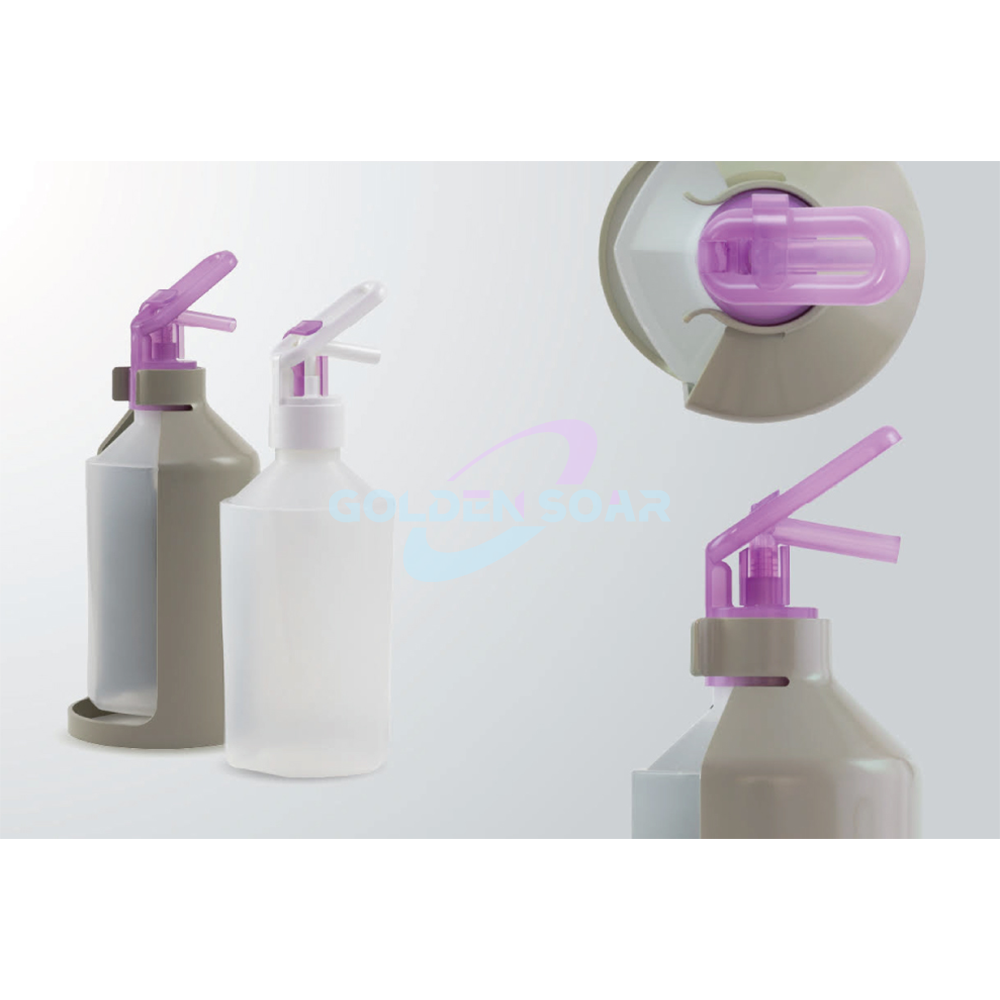
A useful edge-case model is a warm bathroom, clinic cabinet, or retail sampling environment where the user presses the pump repeatedly over several weeks. The early phase is stable because the internal volume is near its recommended fill level and the formula column remains close to the pump feed area. The middle phase becomes more demanding because each actuation reduces internal volume and the PE inner bottle must continue collapsing without creating isolated pockets. The late phase is the hardest because the remaining formulation is more likely to cling to sidewalls, corners, or folds. In that phase, the promise of an airless structure depends less on appearance and more on whether the bottle contraction path remains predictable.
A cross-dimensional comparison helps clarify the issue. A standard jar gives direct access and easy filling, but every opening exposes the cream surface. A rigid pump bottle reduces finger contact, but air may still enter after dispensing depending on pump and venting design. A vacuum-type refill airless bottle reduces air backflow risk by allowing the inner bottle to contract as the formula is dispensed. The buyer is not choosing between “premium” and “basic”; the buyer is choosing between different exposure mechanisms. That is why pharmaceutical packaging materials for topical creams should be reviewed as a time-under-exposure system, not as a container category.
For related closure and dispensing formats, buyers comparing pump-based packaging can also review frasco de loción con bomba dispensadora to distinguish standard dispensing behavior from airless refill behavior.
The Pump Recovery Moment: Where Airless Claims Either Hold or Fail
The critical moment in an airless pump bottle is not only the downward press. It is the recovery phase immediately after the user releases pressure. During the downward press, the pump chamber pushes formula outward. During recovery, the internal mechanism must reset without pulling uncontrolled air into the formula path. This is where many general packaging descriptions become too shallow. A bottle can be called “leak-proof” in casual language, but pharmaceutical cream packaging needs a more precise question: after release, does the pump recover while maintaining a controlled internal pressure path?
The documented pump component is PP, with a confirmed pump content weight of 17.3g and a pump specification of 943333 mm. These figures do not by themselves prove dosage accuracy, life-cycle durability, or pharmaceutical suitability. They do, however, define the component scale that a buyer can use during sample inspection. A small pump body paired with a dense cream may feel acceptable in the first ten actuations but become inconsistent when the inner bottle begins contracting and the formula becomes harder to draw upward. A practical sample test should therefore observe the recovery moment across different fill levels, not only on a full bottle.
A normal pump bottle can fail quietly. It may not leak on the desk, and it may still dispense product, yet each recovery cycle can introduce tiny disturbances into the formula chamber. In oxygen-sensitive creams, even minor air exchange can gradually shift texture, scent, color, or active-ingredient stability. For thick formulations, recovery weakness can also create sputtering, delayed output, or partial strokes. The documented airless structure is relevant because it is described as having no air backflow, and as being able to dispense even thick formulations with minimal residue left inside. The procurement value sits in that mechanical behavior, not in broad packaging language.
An edge extreme scenario can be modeled as a cold-to-warm handling cycle. In the initial phase, the user stores the package in a cool cabinet; viscosity rises, and the pump needs more effort to move the cream. In the middle phase, the container is placed in a warmer room; the formula softens, and rebound may feel easier. In the limit phase, after many partial dispensing cycles, the remaining material is no longer distributed evenly. A weak pump recovery path may begin to show delayed rebound, hollow strokes, or output variation. These symptoms should be treated as early warnings, not as normal consumer inconvenience.
| Pump Recovery Variable | Low-Risk Observation | Warning Sign | Procurement Response |
|---|---|---|---|
| Release after press | Pump returns smoothly | Slow or uneven rebound | Repeat testing at low fill level |
| Output continuity | Cream exits in stable flow | Sputtering or broken flow | Check formula viscosity range |
| Air control | No visible bubble disturbance | Air pockets appear near outlet | Review airless structure fit |
| User force | One-handed operation remains practical | User needs repeated pressure | Compare pump and formula compatibility |
| Residue behavior | Product continues feeding late in use | Cream remains isolated from pump path | Inspect inner bottle collapse pattern |
A cross-system risk appears when the pump feels acceptable but the formula feed path is not. Buyers often test packaging with water or low-viscosity lotion because it is convenient. That test can hide the failure mode. A high-viscosity cream places more demand on recovery, suction control, and inner bottle deformation. For pharmaceutical cream packaging, the better comparison is not water versus water; it is the target cream, a thicker stress sample, and a low-fill sample after repeated actuation. Only then can a buyer separate a visually clean pump from a functional airless dispensing system.
KEY TAKEAWAYS
- Watch for delayed pump rebound after repeated use at partial fill levels.
- Check for sputtering, hollow strokes, or unstable cream output during recovery.
- Test the actual cream viscosity instead of relying only on water-based leak checks.
High-Viscosity Evacuation Is a Geometry Problem, Not a Marketing Claim
High-viscosity evacuation is not solved by saying a package is “airless.” It is solved by geometry. Creams, serums, lotions, masks, and medical-grade topical formulations move differently from thin liquids. They resist flow, cling to walls, and collect in corners if the container shape does not direct them toward the pump feed path. The documented inner bottle has a confirmed specification of 1516974mm and a content weight of 25.5g. It is described as a vacuum-type inner bottle that contracts, with a unique spiral structure that creates an elegant shrinking pattern as contents are gradually used. For procurement analysis, that shrinking pattern should not be treated only as a visual feature. It is a possible evacuation pathway.
The root issue is shear and adhesion. Thick creams do not instantly level out after each pump stroke. They may remain in ridges along the internal wall, especially if the wall is rigid and the feed point stays fixed. In a rigid bottle, the pump may continue drawing from the central region while material near the sidewall becomes stranded. The documented collapsible PE inner bottle changes that condition. As internal volume reduces, the walls move inward. If the contraction remains controlled, the remaining formulation is pushed toward the dispensing path rather than left in isolated regions.
An extreme model can be built around a dense cream filled near the 420ml recommended capacity. In the early phase, output appears smooth because the formula mass is large and the pump feed zone remains surrounded. In the middle phase, the inner bottle must collapse evenly enough to prevent side pockets. In the limit phase, the last portion of cream tests whether the spiral contraction path and pump draw direction are working together. If the inner bottle buckles unpredictably, residue may stay in folds. If it contracts along a controlled pattern, the remaining cream has a better chance of moving toward the outlet.
The cross-dimensional comparison should include at least three formats. A jar allows complete scooping but increases exposure and user contact. A rigid pump bottle improves hygiene perception but may leave more wall residue. A collapsible airless inner bottle can reduce exposure and improve late-stage evacuation when the geometry cooperates. This is why the same material data must be read through a functional lens. PE inner bottle does not automatically mean good evacuation; the value comes from PE flexibility combined with the vacuum-type contraction structure, pump draw behavior, and outer case support.
There is also a secondary chain effect. Residue is not only a waste issue. In sensitive topical products, residual pockets can become older than the dispensed portion, especially when the formula does not move uniformly. If the user receives fresher material from the central feed path while sidewall material remains static, the package creates uneven use history inside the same container. The documented minimal-residue claim is therefore more than convenience. It is relevant to consistency, consumer perception, and formula-use integrity, as long as the claim is validated by real fill trials using the buyer’s target formulation.
A practical buyer should request evacuation testing with the actual cream or a viscosity-matched surrogate. The test should record starting fill weight, dispensed weight after repeated strokes, visible remaining residue, stroke force change, and late-use output behavior. The objective is not to prove that every drop exits. The objective is to understand whether the geometry keeps a high-viscosity formulation moving predictably until the package reaches a commercially acceptable empty state.
Refill Cartridge Seating Should Be Audited Like a Functional Interface
The refill cartridge should not be evaluated as a sustainability story in this article. It should be audited as a functional interface. The documented structure states that the pump attaches to the refill bottle, the inner bottle slides into the outer case, and the assembly locks in place with one click. The outer shell serves as a supporting frame, maintaining stability even though the vacuum-type inner bottle is designed to contract and deform. The confirmed outer case specification is 1658788mm, with an outer case content weight of 65g. These are not decorative details; they define the support envelope around a deforming inner component.
A functional interface has several risk points. First, the refill cartridge must enter the case without twisting into a misaligned position. Second, the one-click lock must create enough seating confidence for ordinary users without requiring excessive force. Third, the pump must remain aligned after the cartridge is seated, because a small angular error can affect press feel, output direction, and perceived quality. Fourth, the outer frame must support the inner bottle as it contracts, not squeeze it in a way that interrupts the collapse path.
This section can be modeled as a repeated consumer replacement cycle. In the early phase, the first installation feels secure because the contact surfaces are fresh and the user is following instructions carefully. In the middle phase, repeated cartridge changes may introduce small seating habits: the user presses at an angle, inserts too quickly, or stops before the lock is fully engaged. In the limit phase, minor alignment drift may appear as unstable pump feel, case rattle, click inconsistency, or poor visual centering. These are logical procurement audit points based on the documented structure, not catalog-proven cycle test results.
A cross-dimensional test should compare three conditions: factory-assembled sample, user-replaced sample, and intentionally misaligned sample corrected by hand. The factory sample shows ideal alignment. The user-replaced sample shows realistic handling. The misaligned sample reveals how forgiving the interface is. If a package requires perfect user behavior to function well, it may create complaints even when the material selection is reasonable. For pharmaceutical cream packaging, where user confidence is closely tied to perceived cleanliness and controlled dispensing, that interface tolerance matters.
A buyer should also separate brand customization from functional risk. The documented system supports OEM/ODM, including custom logo, packaging, and color. Custom colors, surface finishes, labels, and branding panels can improve shelf presentation, but they should not interfere with cartridge seating, pump access, rear visibility, or grip. A label that crosses a seam, a coating that changes friction, or a decorative surface that hides alignment cues can weaken the user experience. The safest development route is to approve the functional interface first, then apply branding around it.
Interface Audit Checklist
- Confirm that the refill cartridge slides into the outer case without forced twisting.
- Check whether the one-click lock produces a clear tactile and audible confirmation.
- Test pump operation after multiple cartridge insertions by different users.
- Inspect whether the inner bottle contraction path remains unobstructed inside the case.
- Review label placement so decoration does not cover alignment cues or moving zones.
- Compare full, half-used, and near-empty samples for case stability and pump position.
- Record any rattle, tilt, delayed rebound, or click inconsistency as an interface warning.
- Validate the buyer’s real cream formula before approving the packaging for launch.
Acceptance Solution for Pharmaceutical Packaging Materials
A robust solution should combine formula exposure control, pump recovery observation, high-viscosity evacuation testing, and refill interface auditing. The goal is not to claim that a package is medically approved. The goal is to build a practical acceptance route for non-sterile external creams, medical-grade topical formulations, and high-viscosity personal care products using the documented airless refill structure.
Solution 1: Define the Formula Exposure Boundary Before Design Approval
Execution Protocol: Start by classifying the formulation by oxygen sensitivity, viscosity, fragrance volatility, and expected use duration after opening. Then match that profile against the documented vacuum-type inner bottle structure. The buyer should confirm that the package will be used for external creams or medical-grade formulations only within a validated non-sterile claim boundary unless additional regulatory documentation is supplied.
Expected Material Behavior: With a vacuum-type PE inner bottle, the container should reduce direct air exchange compared with open jars or vented rigid bottles. The key expected behavior is controlled internal volume reduction during dispensing. The PP pump, PE inner bottle, y PP outer case should be evaluated as a coordinated system rather than isolated parts.
Hidden Cost and Risk Control: The main risk is overclaiming. A package may be structurally suitable for topical cream discussion without being approved for pharmaceutical drug packaging. Avoid label language that suggests sterile use, injection use, certified medical approval, or drug compliance unless the required documents exist. Keep claims tied to airless dispensing, material structure, and formula exposure control.
Solution 2: Run Viscosity-Matched Dispensing Trials
Execution Protocol: Fill samples at the 420ml recommended capacity using the target formulation or a validated viscosity-matched surrogate. Test full, half-used, and low-fill conditions. Record stroke count, output continuity, visible residue, rebound behavior, and remaining product after practical emptying. Do not rely only on water tests.
Expected Material Behavior: The PE inner bottle should progressively contract as the product is dispensed. If the contraction path stays stable, thick cream should continue feeding toward the pump with reduced isolated residue. The pump should maintain consistent recovery without hollow strokes or sudden output loss.
Hidden Cost and Risk Control: Viscosity testing takes more time than a basic leak test, but skipping it creates greater launch risk. The supplier and buyer should agree on acceptable residue level, output variation, and sample conditioning before mass production. Product-specific fill trials are especially important for creams, masks, gels, and dense lotions.
Solution 3: Audit the Refill Cartridge as a Seating Interface
Execution Protocol: Test the cartridge insertion process with multiple users. Observe whether the inner bottle slides into the outer case smoothly, whether the one-click lock is clear, and whether pump alignment remains stable after replacement. Include intentional minor misalignment attempts to understand the tolerance of the interface.
Expected Material Behavior: En 65g PP outer case should support the deforming inner bottle without blocking contraction. The 1658788mm outer frame should maintain the visual and mechanical position of the refill unit during dispensing. The pump should remain centered enough for repeatable one-handed operation.
Hidden Cost and Risk Control: Refill structures can create hidden user-handling risks. A package that performs well in factory assembly may perform differently after consumer replacement. Avoid approving decoration, labels, or special surface finishes until the seating interface has been tested under realistic handling.
Solution 4: Combine Catalog QC With Buyer-Side Validation
Execution Protocol: Use the documented quality base as the starting point: ISO 9001:2015, ASTM-D1693 Standard, 15-25 days lead time, y MOQ: 10,000 units appear in the product context. PE packaging references also include 100-point parison control, automated deflashing, in-line leak testing, and ASTM D1693 ESCR testing using notched samples in 10% Igepal solution at 50°C con >168 hours exposure. Then add buyer-specific checks for pump dose consistency, formula compatibility, appearance cleanliness, drop protection, and batch traceability.
Expected Material Behavior: ESCR testing is relevant for polyethylene stress-crack resistance, especially when formulas contain surfactants or aggressive ingredients. Leak testing screens containment risk, while actuation and evacuation testing screen functional risk. Together, these checks create a broader acceptance logic.
Hidden Cost and Risk Control: Catalog QC does not replace formula-specific validation. A buyer should treat published standards as a foundation, not a final approval. The hidden cost is sample testing time, but the avoided cost is far larger: leakage complaints, inconsistent dispensing, formula instability, or failed retail launch.
| Validation Area | Confirmed Data Anchor | Practical Test Focus | Acceptance Logic |
|---|---|---|---|
| Exposure control | Vacuum-type inner bottle | Air backflow observation | No visible reverse air disturbance during use |
| Capacity control | 451.9ml full, 420ml recommended | Fill-level performance | Stable dispensing without overfill stress |
| Pump function | PP pump, 17.3g, 943333 mm | Recovery and output continuity | No delayed rebound or hollow strokes |
| Inner evacuation | PE inner bottle, 25.5g, 1516974mm | Residue after practical emptying | Minimal isolated cream pockets |
| Outer support | PP outer case, 65g, 1658788mm | Cartridge seating and case stability | One-click lock remains aligned |
| Material screening | ASTM D1693 context | Resistencia al agrietamiento por tensión | No premature cracking under defined screening |
| Production control | ISO 9001:2015 context | Batch documentation | Traceable inspection and release records |
PRO-TIP / CHECKLIST
- Ask whether the intended use is external topical cream, cosmetic cream, healthcare cream, or another regulated application.
- Request formula-specific dispensing trials instead of approving samples filled only with water.
- Verify the recommended fill volume before testing pump performance.
- Inspect pump rebound at full, half-used, and near-empty conditions.
- Record residue behavior after practical emptying of high-viscosity samples.
- Test cartridge insertion with real users, not only factory technicians.
- Keep regulatory claims separate from material and structural claims.
- Approve decoration only after seating, gripping, and pump access remain stable.
Frequently Asked Questions (FAQ)
What are eco friendly packaging materials?
Eco-friendly packaging materials reduce waste, improve recyclability, or support reuse without weakening product protection. For this airless refill format, the relevant point is not a broad environmental claim; it is whether the PP outer case, PE inner bottle, and refill structure maintain function while reducing unnecessary replacement of the supporting case.
How to choose cosmetic packaging materials?
Choose cosmetic packaging materials by matching formula chemistry, viscosity, filling method, dispensing behavior, and user handling. For thick creams or oxygen-sensitive products, a vacuum-type airless structure may be more suitable than a jar or standard pump bottle. Always test with the real formula before mass production.
Which packaging material is best for biscuits?
Biscuit packaging usually prioritizes moisture barrier, aroma retention, crush protection, and food-contact compliance. The airless PP and PE refill bottle discussed here is designed for creams, lotions, serums, masks, and external topical formulations, not dry biscuit packaging. Biscuit packaging requires a different material and validation route.
Do suffocation warnings need to be on retail packaging materials?
Suffocation warnings depend on local regulations, bag size, film thickness, market destination, and packaging format. Rigid pump bottles are different from plastic bags or flexible films. Buyers should verify retail warning requirements with the destination market and packaging type before printing labels or shipping products.
How are mushroom packaging materials made?
Mushroom packaging materials are usually made by growing mycelium through agricultural fibers, then drying and heat-treating the formed structure. That process is unrelated to PP and PE airless pump bottles. Mycelium packaging is more common for cushioning, molded protection, or compostable packaging research, not cream dispensing.
What is an A-A-59135 packaging material sheet?
A-A-59135 refers to a packaging material specification context used in procurement and packaging documentation. It should not be assumed to apply to airless cream bottles without a direct requirement. For PP and PE airless packaging, buyers should request the supplier’s actual material, dimensional, and performance documents.
 English
 Español
 Русский
 日本語
日本語 한국어
한국어 Français
 العربية
 Português