
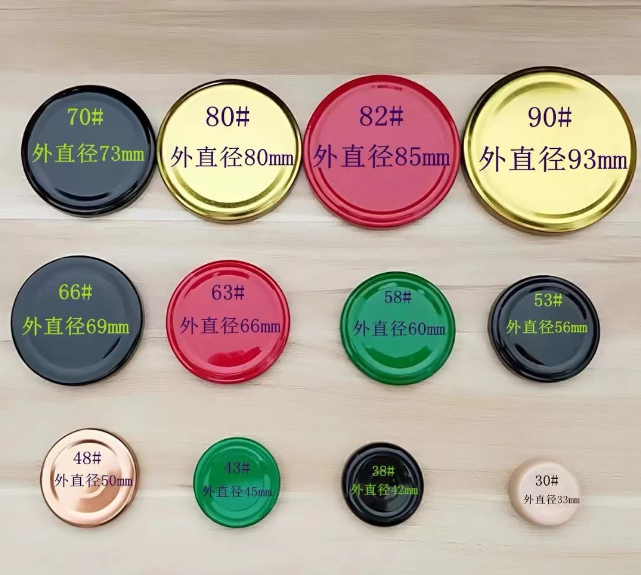
Elastic-Seal Reliability Framework for Twist-off Cap Evaluating Material Fatigue Stability in Food-Grade Applications
In modern food-grade packaging, the Twist-off Cap is critical for maintaining consistent product safety and freshness. Ensuring the elastic seal remains reliable under repeated use and temperature changes is a core engineering challenge, especially as packaging must withstand both mechanical and thermal fatigue. This article explores the technical factors that govern the long-term integrity of Twist-off Cap seals in demanding applications.

Reliability of Twist-off Cap Elastic Seals
Twist-off caps are widely implemented in food-grade packaging systems where the preservation of product integrity is paramount. The primary function of these closures is to maintain a consistent and robust seal, especially under repeated stress and varying thermal conditions. For sealing-material designers, the core challenge lies in ensuring that the elastic sealing interface of the twist-off cap exhibits reliable performance throughout its lifecycle. This requires a deep understanding of how material fatigue, particularly under cyclic loading and temperature fluctuations, impacts seal integrity. The following analysis systematically addresses the structural and material behaviors that govern elastic seal reliability in twist-off caps, with a focus on fatigue stability, evaluation methodologies, and technical recommendations for engineering validation.
Twist-off cap assemblies typically consist of a metallic or polymeric shell—commonly tinplate or aluminum—with an integrated elastomeric liner. The liner, often composed of food-grade PVC, PE, or silicone-based compounds, is engineered to deform elastically when the cap is applied, creating a hermetic seal against the container finish. The initial seal quality is determined by the liner’s compressive modulus, surface conformity, and resilience. However, during repeated opening and reclosing cycles, or under prolonged storage at elevated or fluctuating temperatures, the liner is subjected to mechanical and thermal fatigue. This scenario is particularly critical in applications requiring both food safety and high temperature resistance, where the seal must prevent ingress of contaminants and loss of volatile compounds over time.
Evaluation of Material Fatigue and Seal Performance
Reliability of the twist-off cap seal is fundamentally linked to the elastic properties and fatigue resistance of the liner material. The liner must provide sufficient elastic recovery after each use to maintain contact pressure against the container’s sealing surface. Material fatigue manifests as a gradual reduction in elastic modulus and permanent set, which can compromise the seal. The primary mechanism for this degradation is the repeated compressive and shear loading experienced during cap application, removal, and thermal cycling. For food-grade applications, this is further complicated by regulatory constraints on material composition and migration, limiting the selection of additives that could otherwise enhance fatigue life.
Critical analysis of seal reliability under elastic fatigue requires quantification of several parameters. The most significant are the liner’s compressive set after multiple cycles, its ability to maintain a minimum contact pressure under thermal expansion/contraction, and its resistance to creep deformation. Empirical studies typically employ accelerated fatigue testing, where caps are subjected to repeated opening/closing cycles at controlled temperatures and humidity. The resulting loss of seal integrity is measured by vacuum retention, gas permeability, or dye penetration tests. These methods provide direct evidence of how material fatigue translates into functional seal failure.


Failure Modes and Geometric Factors
The most common failure mode observed in twist-off cap seals under elastic fatigue is the development of micro-leaks at the liner-container interface. These are often initiated by localized loss of resilience in the elastomeric liner, which can be traced to molecular chain scission or plasticizer migration under thermal and mechanical stress. For sealing-material designers, the challenge is to select or formulate compounds with a high degree of crosslinking and stable plasticizer systems, without compromising food safety or processability. Silicone-based liners, for example, offer excellent elastic recovery and thermal stability, but may present challenges in achieving the required adhesion to metallic shells and can be cost-prohibitive for certain applications.
Another aspect influencing seal reliability is the geometric design of the cap and container finish. The uniformity of compression across the liner, determined by the profile of the container neck and the torque applied during cap application, directly affects the local stress distribution within the liner. Non-uniform compression can lead to stress concentrations and early onset of fatigue in specific regions, increasing the probability of seal failure. Finite element analysis (FEA) is frequently used to model these stress fields and predict fatigue life, allowing designers to optimize both cap geometry and liner thickness for improved reliability.
Thermal Cycling and Advanced Evaluation
Thermal cycling presents a unique challenge, as differential expansion between the metallic shell, liner, and glass or polymer container can induce additional shear stresses at the sealing interface. For food-grade applications involving hot-fill or pasteurization, the liner must accommodate significant dimensional changes while maintaining elastic contact. Material selection must therefore consider not only baseline elastic modulus and fatigue resistance, but also thermal expansion coefficients and resistance to hydrolytic degradation.
Evaluation of twist-off cap seal reliability requires a multi-faceted approach. In addition to mechanical fatigue testing, chemical compatibility studies are essential to ensure that liner materials do not degrade or leach under exposure to food products or cleaning agents. Migration testing, as specified by food safety regulations, must be integrated into the material qualification process. Furthermore, real-world validation involves storage trials at elevated temperatures and humidity, with periodic assessment of seal integrity using standardized leak detection protocols.

Material Optimization and Predictive Modeling
From an engineering perspective, the most effective strategy for enhancing seal reliability under elastic fatigue is the iterative optimization of liner formulation and cap design. Advanced elastomeric compounds, such as thermoplastic elastomers (TPEs) with tailored crosslink densities, can offer improved fatigue stability while meeting food-grade requirements. The use of predictive modeling, combined with accelerated laboratory testing, enables designers to identify failure modes early in the development process and implement targeted improvements.
Summary of Reliability Factors
In summary, the reliability of twist-off cap seals in food-grade and temperature-resistant applications is governed by the interplay between material fatigue stability, geometric design, and process conditions. The primary pain point for sealing-material designers is the maintenance of seal integrity under elastic fatigue, which requires a rigorous approach to material selection, mechanical testing, and simulation. By focusing on the underlying mechanisms of fatigue degradation and integrating advanced evaluation techniques, it is possible to systematically improve seal performance and ensure long-term product safety.

Engineering Validation for Twist-off Cap Seal Reliability
To ensure the highest standards of seal reliability, engineering validation must be conducted at every stage of the design and manufacturing process. This includes comprehensive fatigue testing under simulated use conditions, chemical and migration analysis for regulatory compliance, and the application of predictive modeling tools to anticipate failure modes. Only through such a disciplined and technically rigorous approach can the core challenges of elastic seal fatigue in twist-off cap systems be effectively addressed.
For further technical resources on packaging material selection and food-grade compliance, refer to our Food & Beverage Packaging y Preguntas frecuentes sections. For details on advanced liner materials, visit our Envases de silicona page.
 English
 Español
 Русский
 日本語
日本語 한국어
한국어 Français
 العربية
 Português