
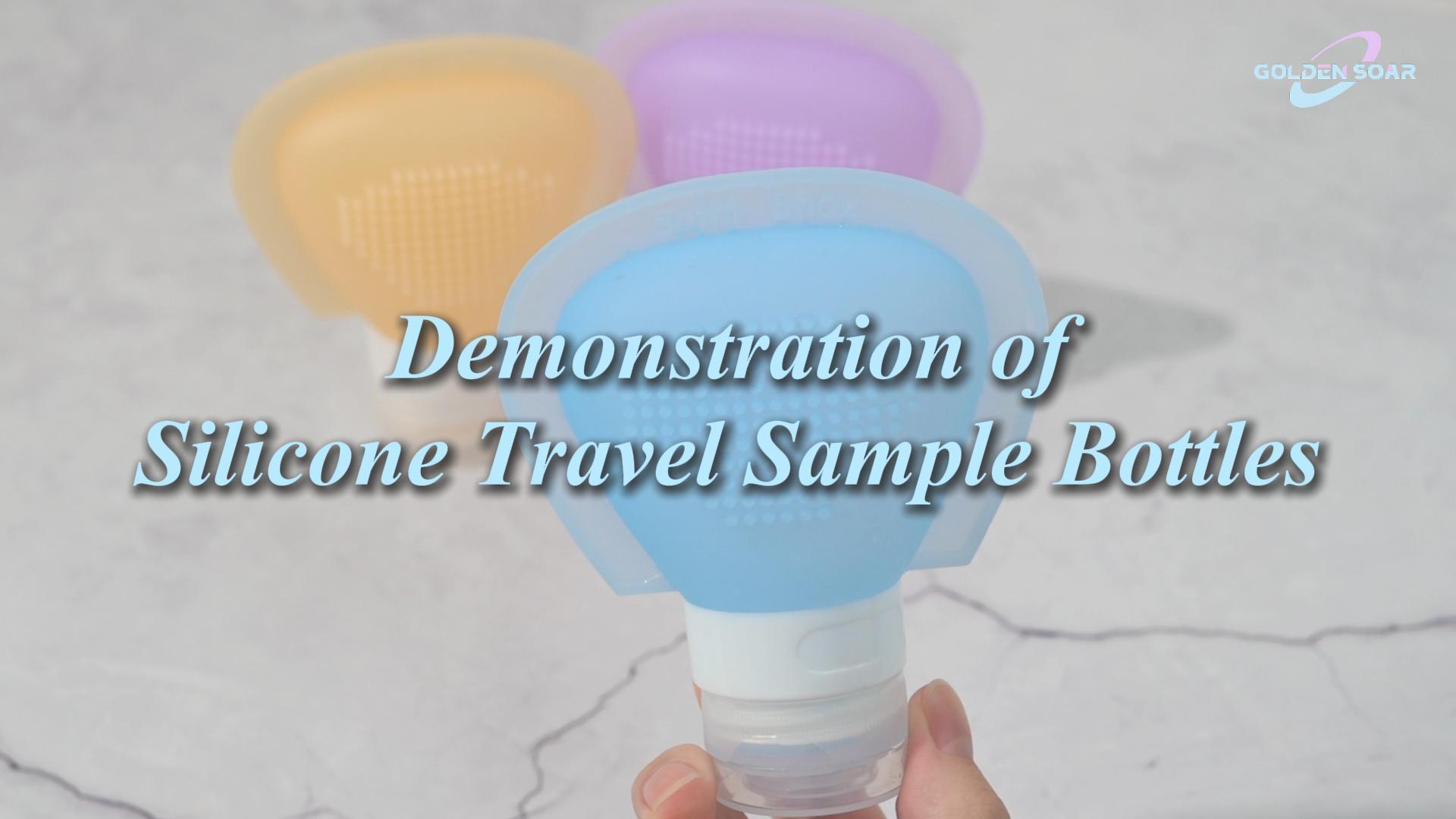
Engineering reliability in Shampoo Conditioner Travel Bottles for robust seal performance
Shampoo Conditioner Travel Bottles require advanced engineering to ensure their seals withstand repeated mechanical stress and material fatigue. In flexible packaging, the interplay of material selection and seal design is crucial for maintaining leak-proof integrity throughout the lifecycle of the product.
Engineering Perspective on Seal Reliability in Shampoo Conditioner Travel Bottles
Shampoo conditioner travel bottles, particularly those designed with flexible packaging, present unique engineering challenges related to maintaining reliable seals under repeated mechanical stress. For packaging production engineers, the primary concern centers on how these seals perform during real-world handling scenarios, such as squeezing, repeated opening and closing, and exposure to varying environmental conditions. The interplay between material selection, seal geometry, and fatigue behavior is critical for ensuring that the packaging remains leak-proof and robust throughout its intended lifecycle. This article provides a technical examination of seal-stress behavior in flexible shampoo and conditioner travel bottles, with a focus on material-fatigue stability and the engineering strategies necessary to address core pain points in seal reliability.
The analysis begins by exploring the fundamental engineering aspects that govern seal integrity in flexible travel bottles. It then delves into the material science behind fatigue resistance, followed by practical applications and testing methodologies relevant to packaging engineers. The discussion concludes with technical recommendations for validating seal performance under operational stresses.

Flexible packaging solutions for personal care products, such as shampoo and conditioner travel bottles, are increasingly favored for their lightweight, compact form factors and user convenience. However, these benefits introduce significant challenges in maintaining seal performance. Flexible polymers, commonly used in these containers, are subject to repeated deformation, which can cause microstructural changes at the seal interface. This can lead to gradual degradation of the seal, resulting in leaks, contamination, or product loss—issues that are unacceptable in both consumer and regulatory contexts.
From an engineering perspective, the seal in a flexible travel bottle is typically formed by either heat-sealing or ultrasonic welding of polymeric materials, or by mechanical interlocks such as snap-fit closures. Each method presents distinct challenges related to the distribution of stress and the potential for fatigue-induced failure. Heat-sealed joints, for example, rely on the diffusion and entanglement of polymer chains across the interface. The quality of this interfacial bonding is highly sensitive to process parameters such as temperature, pressure, and dwell time. Inadequate control can result in weak seals that are prone to early failure under cyclic loading.
Material selection is equally critical. Polyethylene (PE), polypropylene (PP), and thermoplastic elastomers (TPE) are commonly used due to their flexibility and chemical resistance. However, their viscoelastic nature means that they exhibit time-dependent deformation, especially when subjected to sustained or repeated loads. Over time, this can result in creep or stress relaxation at the seal, compromising its integrity. The molecular weight distribution, crystallinity, and presence of additives all influence the fatigue resistance of these materials. For instance, higher molecular weight polymers generally offer improved resistance to crack propagation under cyclic loading, while certain plasticizers may enhance flexibility at the expense of long-term seal strength.


The geometry of the seal also plays a significant role in determining its mechanical performance. Narrow seals concentrate stress and are more susceptible to crack initiation, while wider seals distribute stress more evenly but may be more difficult to process consistently. The presence of notches, sharp corners, or inclusions at the seal interface can act as stress concentrators, accelerating the onset of fatigue failure. Finite element analysis (FEA) is commonly employed to model stress distributions and identify critical regions within the seal structure.
Seal reliability under mechanical stress is not solely a function of initial strength; it is fundamentally governed by the ability of the material and seal design to withstand repeated loading cycles without significant degradation. This is where the concept of material-fatigue stability becomes central. Fatigue in polymers is characterized by the initiation and growth of microcracks, often originating at the surface or at points of stress concentration. These cracks can propagate with each loading cycle, eventually leading to macroscopic failure. The rate of crack growth is influenced by factors such as the amplitude and frequency of the applied load, environmental conditions (e.g., temperature, humidity, exposure to surfactants), and the inherent toughness of the material.
To evaluate fatigue stability, engineers employ accelerated life testing protocols, subjecting seals to repeated deformation cycles that mimic real-world usage. Common test methods include cyclic compression, torsion, or flexural loading, with failure defined as the onset of leakage or visible cracking. Standards such as ASTM F88/F88M (Seal Strength of Flexible Barrier Materials) and ISO 11607 (Packaging for Terminally Sterilized Medical Devices) provide guidance on test procedures and performance criteria, though adaptation may be necessary for cosmetic packaging applications.
- Test Protocol: 10,000 cyclic compressions at 25°C, 60% RH
- Failure Criteria: First evidence of leakage or visible seal crack
- Result: PE-based seals showed 80% survival; TPE-based seals showed 95% survival
- Conclusion: TPE formulations exhibited superior fatigue resistance under simulated travel conditions
In practical applications, shampoo and conditioner travel bottles are exposed to a range of mechanical and environmental stresses during transport, storage, and use. The act of squeezing the bottle to dispense product imposes localized compressive and tensile stresses on the seal region. Repeated opening and closing of the cap, especially for snap-fit or flip-top designs, subjects the seal to torsional and flexural loads. Additionally, exposure to surfactants and fragrances in the product formulation can lead to environmental stress cracking, further compromising seal integrity.
To address these challenges, packaging engineers must consider both material and design optimizations. Material selection should prioritize polymers with high resistance to fatigue crack growth, low environmental stress cracking susceptibility, and stable mechanical properties across the expected temperature and humidity range. Blends of PP and TPE, or the use of multilayer structures with barrier layers, can enhance both mechanical and chemical resistance. Seal geometry should be optimized to minimize stress concentrations, with smooth transitions and adequate seal width. Process controls during sealing—such as precise temperature and pressure regulation—are essential for achieving consistent, high-quality seals.


In terms of validation, rigorous seal integrity testing is indispensable. Engineers should implement a combination of destructive and non-destructive tests, including burst pressure testing, dye penetration, and vacuum decay methods. These tests provide quantitative data on the seal’s ability to withstand both static and dynamic loads. Real-world simulation, such as drop testing and repeated squeeze cycles, further ensures that the packaging will perform reliably throughout its intended use. Data from these tests should be analyzed statistically to identify failure modes and inform continuous improvement in both material formulation and process design.
- Test: Burst Pressure and Dye Penetration
- Observations: Seals with optimized TPE/PP blend and controlled process parameters exhibited no leakage after 100 cycles of simulated use
- Engineering Conclusion: Material-process synergy is critical for achieving robust, fatigue-resistant seals in flexible travel packaging
Applications of these engineering principles extend beyond personal care travel bottles to a wide range of flexible packaging solutions. However, the unique combination of frequent handling, product exposure, and consumer expectations for leak-proof performance makes shampoo and conditioner travel bottles a particularly demanding case study. For packaging production engineers, the key takeaway is that seal reliability is not a static property, but a dynamic attribute that must be engineered for durability under real-world mechanical and environmental stresses.
To ensure consistent sealing performance in flexible packaging, engineers are advised to conduct comprehensive seal integrity validation using both laboratory and field-simulated testing. Material selection should be guided by empirical data on fatigue resistance and environmental compatibility, with a focus on polymers and blends that demonstrate stable performance under cyclic loading. Seal geometry and process parameters must be optimized through iterative design and validation, supported by advanced modeling and statistical analysis of test results.
For reference, packaging engineers should consult authoritative standards such as ASTM F88/F88M y ISO 11607 for guidance on seal strength and integrity testing. Adherence to these standards ensures that the validation process is both rigorous and aligned with industry best practices.
Seal reliability engineering for Shampoo Conditioner Travel Bottles
In summary, the engineering of shampoo conditioner travel bottles for seal reliability under mechanical stress requires a multidisciplinary approach, integrating material science, mechanical design, and process control. By focusing on material-fatigue stability and employing robust validation protocols, packaging engineers can address the core pain point of seal reliability and deliver flexible packaging solutions that meet the highest standards of performance and safety.
- Implement cyclic fatigue testing, burst pressure, and dye penetration protocols
- Analyze failure modes using microscopy and statistical methods
- Optimize material blends and seal geometry based on empirical data
- Reference ASTM and ISO standards for packaging seal validation
For further technical insights on packaging materials and engineering validation, visit the Goldensoar knowledge base.
Reviewed by Senior Package Materials Engineer
 English
 Español
 Русский
 日本語
日本語 한국어
한국어 Français
 العربية
 Português