
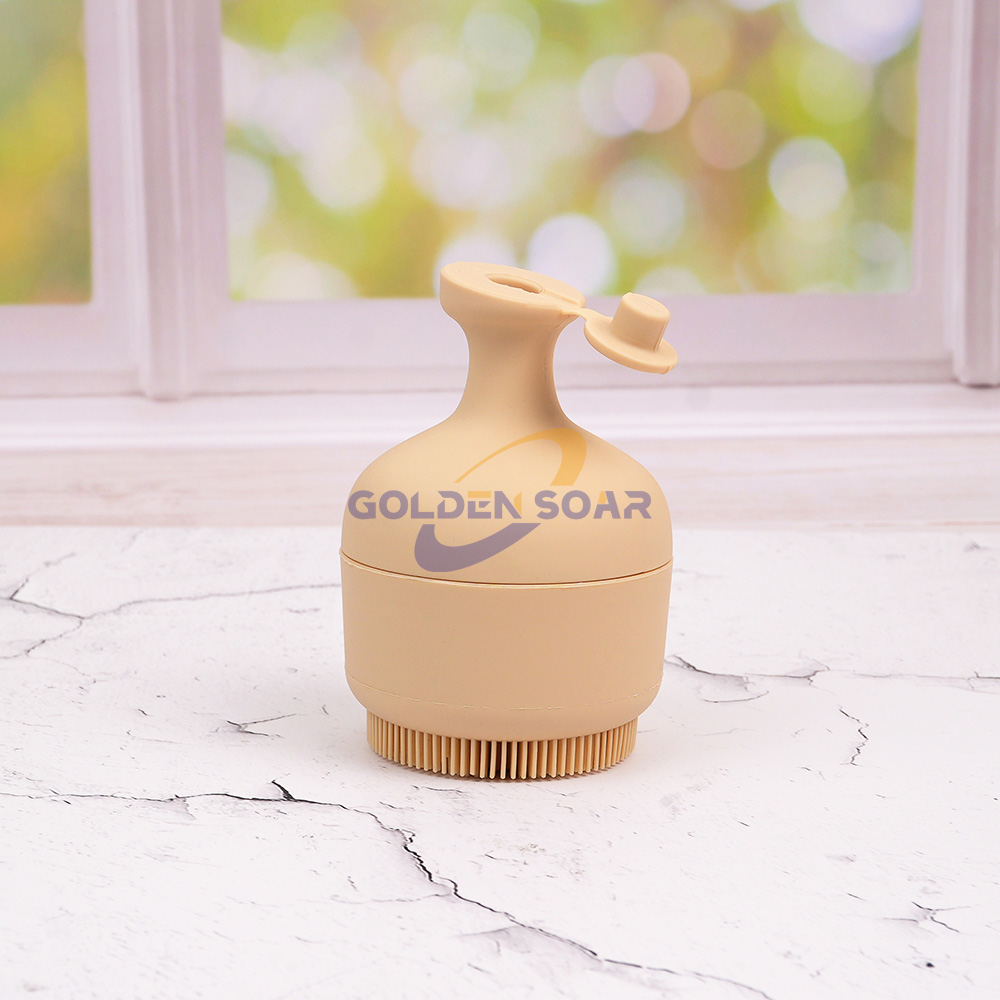
Material fatigue and thermal stability in face washing brush silicone for reliable elastic sealing
In the engineering of elastic sealing for face washing brush silicone, the challenge is to ensure both fatigue resistance and thermal stability under repeated use and temperature fluctuations. Achieving consistent sealing performance and food-grade safety requires a deep understanding of silicone’s material behavior in demanding hygiene applications.
Reliability of face washing brush silicone in elastic sealing
The use of silicone in face washing brushes, particularly for elastic sealing elements, presents a unique intersection of material science and application-specific engineering. For designers focused on sealing materials, the reliability and safety of silicone under repeated mechanical and thermal stress are paramount. The challenge lies in ensuring that the silicone not only maintains its elastic sealing properties but also adheres to food-grade safety standards and demonstrates robust temperature resistance. This analysis systematically examines the critical aspects of elastic-sealing durability in face washing brush silicone, emphasizing the mechanisms of material fatigue and thermal stability. The discussion is structured to provide a technical foundation for evaluating reliability, followed by a detailed assessment of performance, and concludes with actionable engineering recommendations.
Silicone structure and application in elastic sealing
Face washing brushes that employ silicone for elastic sealing rely on the material’s unique polymeric network. The cross-linked polysiloxane backbone imparts both flexibility and resistance to environmental factors. In sealing applications, the geometry of the silicone interface—often a thin, compliant lip or gasket—must deliver a tight seal while accommodating repeated deformation cycles.

- Elastic Recovery: The material must return to its original shape after compression or flexure, critical for maintaining a leak-proof seal.
- Thermal Stability: Exposure to temperature fluctuations, from hot water to ambient air, necessitates a polymer that resists both softening and embrittlement.
- Food-Grade Compliance: Since the brush may contact skin and cleansing agents, the silicone must conform to standards such as FDA 21 CFR 177.2600 or EU 1935/2004, ensuring chemical inertness and absence of harmful extractables.
For sealing-material designers, the core pain point is the long-term durability of the silicone under cyclic loading and thermal cycling. This is particularly relevant for face washing brushes, where users may subject the brush to hundreds of deformation cycles per month, often in the presence of water, surfactants, and variable temperatures.
Reliability under cyclic loading and thermal stress
The reliability of face washing brush silicone in elastic sealing hinges on its resistance to material fatigue. Fatigue in elastomers manifests as microcrack initiation and propagation within the polymer matrix, ultimately leading to seal failure or loss of elasticity. In the context of face washing brushes, this can result in water ingress, loss of tactile function, or even hygiene concerns if the seal becomes compromised.
- Cyclic Compression: Repeated pressing and flexing of the silicone seal causes localized stress concentrations. Over time, this can disrupt the cross-linked network, especially at points of geometric discontinuity.
- Thermal Cycling: Alternating exposure to hot and cold environments induces expansion and contraction, which can accelerate microcrack growth if the silicone is not sufficiently resilient.

- Shore Hardness: Softer silicones (e.g., Shore A 10–20) offer better conformability but may be more prone to permanent set under load. Harder grades improve dimensional stability but can reduce sealing efficiency.
- Crosslink Density: High crosslink density enhances thermal and chemical resistance but may reduce flexibility, impacting the seal’s ability to recover after deformation.
- Additives and Fillers: Food-grade formulations must avoid plasticizers or fillers that could leach out, especially under thermal stress.
Thermal Stability Considerations:
Silicone’s inherent thermal stability is a primary reason for its selection in sealing applications. The material can typically withstand continuous use at temperatures up to 200°C, with short-term excursions even higher. However, repeated cycling near the upper temperature limit can induce post-curing effects, leading to changes in modulus or surface characteristics.

Food-Grade Safety and Chemical Inertness:
For applications in contact with skin and cleansing agents, the silicone must not only resist degradation but also prevent migration of low-molecular-weight species. Testing for extractables and leachables is mandated by regulatory standards, and any formulation changes—such as pigment addition or surface treatments—must be validated for safety.
Evaluation of elastic-sealing durability in face washing brush silicone
A comprehensive evaluation of face washing brush silicone for elastic sealing requires laboratory testing that simulates real-world conditions. The primary focus is on quantifying material fatigue and thermal stability, as these directly impact long-term reliability.
- Compression Set: ASTM D395 outlines procedures for measuring the permanent deformation of silicone after a specified number of compression cycles. A low compression set value (<20%) is desirable for maintaining sealing integrity.
- Dynamic Mechanical Analysis (DMA): This technique evaluates viscoelastic properties over a range of temperatures and frequencies, providing insight into the material’s ability to recover after repeated deformation.
- Accelerated Aging: Samples are subjected to elevated temperatures (e.g., 150°C) for extended periods to simulate long-term use. Post-aging, mechanical properties such as elongation at break and tensile strength are measured.
- Thermal Cycling: Alternating exposure to hot and cold environments assesses the silicone’s resistance to thermal fatigue and dimensional changes.
- Extractables and Leachables: Testing per FDA and EU protocols ensures that the silicone does not release harmful substances during use.
- Surface Analysis: Techniques such as FTIR and SEM are employed to detect changes in surface chemistry or morphology after exposure to cleaning agents and repeated use.
• Compression set after 10,000 cycles: 14%
• No visible microcracks under SEM inspection
• Shore A hardness maintained within ±2 units
• No detectable extractables above regulatory limits
These results indicate that, when formulated and processed correctly, silicone used in face washing brush seals demonstrates excellent resistance to both mechanical and thermal fatigue, with minimal risk of harmful leachables. However, the core pain point—material fatigue and thermal stability—remains a function of both material selection and process control. Variations in curing conditions, crosslinking agents, or even minor formulation changes can significantly affect long-term performance.

Engineering recommendations and validation
- Material Specification and Batch Control
- Specify silicone grades with documented fatigue resistance and validated food-grade compliance.
- Implement batch-level testing for Shore hardness, compression set, and extractables to ensure consistency.
- Process Optimization
- Control curing temperature and time to achieve optimal crosslink density without over-curing, which can embrittle the seal.
- Avoid post-molding treatments that might introduce surface defects or alter the chemical structure.
- Design for Fatigue Resistance
- Employ finite element analysis (FEA) to model stress distribution in the sealing geometry, minimizing sharp corners or stress risers.
- Design seals with sufficient thickness and support to distribute compressive loads evenly.
- In-Use Validation
- Conduct cyclic mechanical testing under simulated use conditions, including exposure to water, surfactants, and temperature cycling.
- Regularly audit field-returned samples for early indications of fatigue or degradation.
- Regulatory and Safety Verification
- Maintain documentation of all food-grade compliance tests and certifications.
- Revalidate material safety upon any change in supplier, formulation, or processing method.

Summary and compliance resources
For sealing-material designers, the elastic-sealing durability of face washing brush silicone is fundamentally determined by its resistance to material fatigue and its ability to maintain stable properties under thermal cycling. The technical evaluation presented here demonstrates that, with rigorous material selection, process control, and validation, silicone can reliably fulfill the demanding requirements of elastic sealing in hygienic, temperature-variable environments. Ongoing engineering validation, including mechanical fatigue testing and compliance verification, is essential to mitigate the core pain point of fatigue-induced failure and ensure long-term safety and reliability.
Conduct engineering-grade material validation on each silicone batch and sealing geometry to ensure compliance with both fatigue resistance and food-grade safety standards. Reference current guidelines from recognized authorities such as the U.S. Food and Drug Administration y European Commission Regulation (EC) No 1935/2004 for food-contact materials.
Reviewed by Lead Silicone Materials Engineer;
For more information about Goldensoar’s material expertise and compliance standards, please visit our Quiénes somos page.
 English
 Español
 Русский
 日本語
日本語 한국어
한국어 Français
 العربية
 Português