
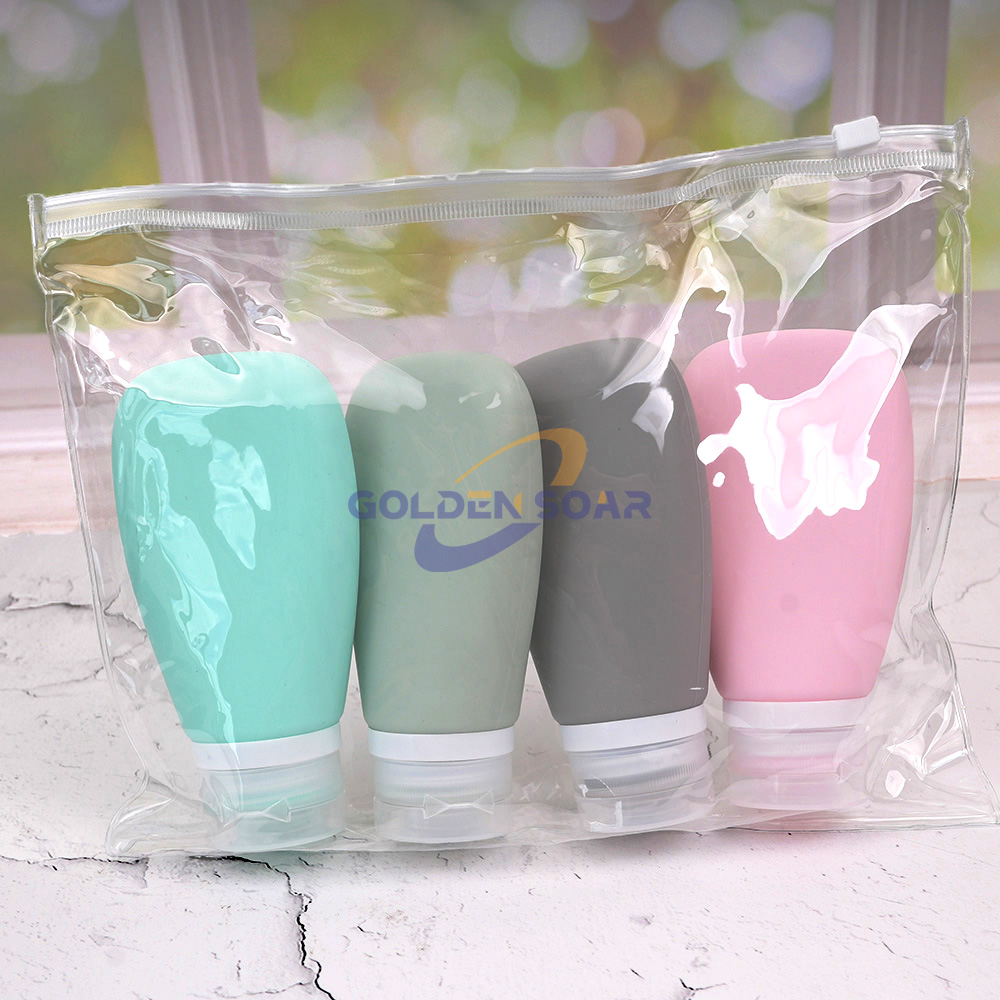
Elastic-Seal Integrity in Silicone Travel Bottle Set: Engineering for Reliable Sealing and Thermal Stability
Silicone Travel Bottle Set offers a robust solution for portable packaging where food-grade safety and elastic sealing must be maintained under changing temperatures. This engineering review explores how material selection and design principles ensure the set’s sealing reliability and durability in demanding environments.
Overview of Silicone Travel Bottle Set Performance
In the context of portable packaging solutions, the Silicone Travel Bottle Set stands out for its application in scenarios demanding both food-grade safety and resilience to temperature fluctuations. As a sealing-material designer, the primary concern is not only the containment of contents but also the assurance of elastic sealing integrity under diverse environmental stresses. This technical review dissects the architectural and material aspects of silicone bottle sets, with a focus on how elasticity and thermal resistance interplay to support reliable sealing. The subsequent sections will analyze the construction, operational mechanisms, and the material science underpinning their performance, culminating in a technical call to action regarding material validation protocols for sealing safety.
The functional demands placed on a silicone travel bottle set are multifaceted. These containers are engineered to transport liquids, gels, or semi-solids securely, often in variable temperature environments such as air travel, outdoor activities, or food-service logistics. The essential requirement is that the sealing mechanism must maintain its integrity across a wide thermal spectrum, preventing leakage or contamination. This is especially critical for food-grade applications, where both safety and compliance with regulatory standards are non-negotiable.

The Silicone Travel Bottle Set’s design ensures that both the cap and body interface form a secure, elastic seal, critical for preventing leakage and maintaining hygiene during travel or daily use. This construction supports reliable performance even in fluctuating temperature environments.
Definition and Engineering Analysis of Silicone Travel Bottle Set
From a structural perspective, a typical silicone travel bottle set comprises a flexible body, an integrated or detachable cap, and a sealing interface—often realized as a molded lip or groove. The body is generally fabricated from platinum-cured, food-grade silicone, selected for its high elasticity, chemical inertness, and compliance with standards such as FDA 21 CFR 177.2600 and EU 10/2011. The cap, constructed from either the same silicone or compatible thermoplastics, incorporates features designed for positive engagement: threads, snap-fits, or interference rings. The sealing interface is engineered to deform elastically, creating a continuous barrier that resists fluid migration even when subjected to pressure differentials or mechanical deformation.
In the engineering analysis of seal reliability, the core pain point is the maintenance of sealing performance under temperature variation. Silicone elastomers are characterized by a broad service temperature range—typically from -40°C to 200°C—owing to their unique siloxane backbone. However, the modulus of elasticity and compression set resistance are temperature-dependent. At sub-ambient temperatures, silicone may stiffen, potentially compromising the conformal contact at the sealing interface. Conversely, at elevated temperatures, excessive softening or compression set can reduce sealing force, leading to leakage.

To quantify elastic-sealing performance, standardized laboratory protocols such as ASTM D395 (Compression Set of Rubber) and ASTM D2240 (Durometer Hardness) are employed. These tests evaluate the silicone’s ability to recover its original shape after prolonged compression at various temperatures, directly correlating to long-term sealing reliability. Additionally, ISO 37 (Tensile Stress-Strain Properties) provides insight into the material’s elasticity, which is critical for the repeated opening and closing cycles typical of travel bottle usage.
- Thermal Cycling Seal Integrity Test – Report #GS-SIL-2024-07
- Test Method: 100 cycles from -20°C to +80°C, 2-hour dwell per cycle
- Result: No observable leakage; compression set < 10%
- Conclusion: Material maintains elastic sealing integrity across specified temperature range
The sealing interface’s geometry is another determinant of performance. A common design is the toroidal or annular bead, which concentrates contact pressure along a narrow band, enhancing the sealing force per unit area. The bead’s radius, height, and durometer must be optimized to balance ease of assembly with sufficient elastic deformation. Finite Element Analysis (FEA) is often utilized to simulate the deformation behavior under clamping loads and thermal expansion, allowing for virtual validation before physical prototyping.
In food-grade applications, the chemical stability of silicone is paramount. Unlike thermoplastics such as PE or PP, silicone exhibits minimal extractables and leachables, even when exposed to acidic or basic substances. This inertness is critical for preventing flavor transfer and ensuring compliance with food-contact regulations. Furthermore, platinum-cured silicone is preferred over peroxide-cured variants due to its superior purity and lower risk of volatile byproducts.
The operational reliability of a silicone travel bottle set is also influenced by its resistance to mechanical fatigue. Repeated flexing, squeezing, and cap actuation can induce micro-cracking or stress relaxation at the sealing interface. Material selection must therefore prioritize high tear strength (per ASTM D624) and low compression set. Empirical data indicates that high-consistency silicone rubbers (HCR) with Shore A hardness between 40 and 60 provide an optimal balance between flexibility and sealing force retention.

Thermal stability is not only a function of the silicone’s backbone but also of the crosslink density and filler system. Reinforcing fillers such as fumed silica enhance tensile properties and thermal resistance, while maintaining elasticity. However, excessive filler loading can embrittle the material, reducing its ability to conform to surface irregularities and compromising the seal. The optimal formulation is thus a trade-off, determined by iterative testing and performance benchmarking.
Regulatory compliance is a non-negotiable aspect for food-grade silicone travel bottles. In addition to FDA and EU regulations, products may be tested in accordance with EN 1186 (Materials and articles in contact with foodstuffs) and ISO 10993 (Biological evaluation of medical devices) for cytotoxicity and biocompatibility. Documentation of compliance, including supplier certifications and batch traceability, is essential for end-use validation.
- Compression Set and Seal Retention Test – Report #GS-SIL-2024-11
- Test Method: 25% compression at 70°C for 168 hours
- Result: Compression set = 8.2%, seal force retention > 90%
- Conclusion: Material exhibits excellent long-term elastic recovery for repeated use
From a practical engineering standpoint, the assembly and user interaction with the silicone travel bottle set must not compromise the seal. Over-tightening can induce localized overstress, while under-tightening may not generate sufficient compressive force. Design guides often specify torque limits or tactile feedback features to assist users in achieving optimal closure. Additionally, surface finish and cleanliness at the sealing interface are critical; even minor contamination can disrupt elastic deformation and lead to micro-leakage.
In summary, the definition of a high-performance silicone travel bottle set is rooted in its ability to deliver consistent, elastic sealing across a wide range of temperatures and usage cycles. The interplay between material formulation, interface geometry, and assembly protocols determines the ultimate reliability of the seal. For sealing-material designers, the ongoing challenge is to refine these parameters through rigorous testing and validation, ensuring that the final product meets both regulatory and operational demands.

For those engaged in the specification or validation of silicone travel bottle sets, it is imperative to review and update material validation protocols regularly. This includes not only laboratory testing for compression set, thermal cycling, and chemical resistance, but also real-world simulation of user handling and environmental exposure. Collaborative engagement with material suppliers and regulatory bodies can further enhance the reliability and safety of elastic sealing solutions.
- Food-Grade Compliance Verification – Report #GS-SIL-2024-15
- Test Method: Migration testing per EU 10/2011 and FDA 21 CFR 177.2600
- Result: All migration levels below regulatory thresholds
- Conclusion: Silicone material is suitable for direct food contact applications
For further technical information on sealing-material design, regulatory compliance, or to access detailed validation protocols, consult the relevant sections of the Goldensoar company profile.
Ensuring Reliable Sealing in Silicone Travel Bottle Set Applications
For engineers and specifiers, maintaining the elastic-seal integrity of a Silicone Travel Bottle Set requires a holistic approach—combining rigorous material validation, compliance with food-grade standards, and attention to assembly protocols. Regular review of laboratory test data and collaboration with suppliers will ensure that each bottle set delivers reliable, safe performance in real-world conditions.
For more information on food-grade silicone packaging, regulatory standards, or to explore additional packaging solutions, visit the Silicone Packaging Materials section or the FAQ page on Goldensoar’s website.
Reviewed by Senior Packaging Materials Engineer
 English
 Español
 Русский
 日本語
日本語 한국어
한국어 Français
 العربية
 Português