
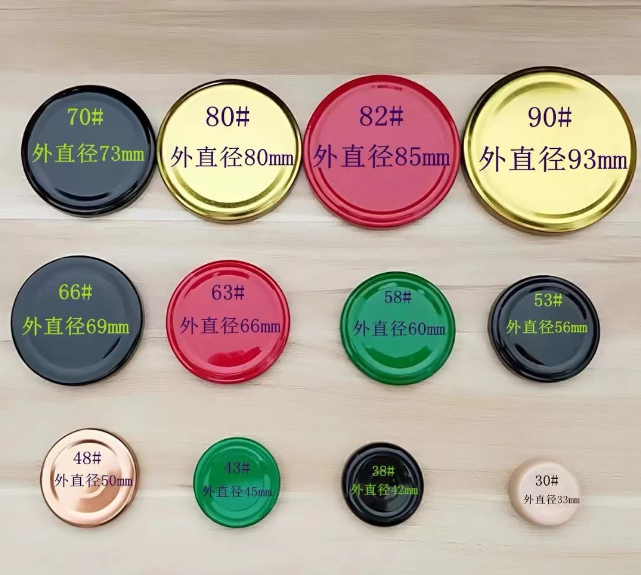
Engineering Challenges in Sealing Performance of Twist-Off Caps for Flexible Packaging
Introduction
As a packaging materials engineer with extensive experience in flexible packaging solutions for moisture-sensitive products, I have observed that the integrity of the seal in twist-off cap systems is critical to product safety and shelf-life. Flexible plastic packaging combined with twist-off caps is increasingly favored in FMCG sectors due to convenience and lightweight design. However, maintaining a reliable moisture barrier under demanding environmental conditions, such as high-humidity coastal areas, presents significant engineering challenges. Seal failure, particularly at the edge interface, leads to moisture ingress and subsequent product degradation. This article explores the mechanical principles governing twist-off cap sealing, analyzes common failure modes with a focus on seal edge leakage, and reviews validation approaches aligned with recognized packaging material standards. The goal is to provide a technical foundation for improving material selection and design robustness in flexible packaging applications.
Mechanical Principles & Material Behavior
The sealing mechanism of twist-off caps on flexible packaging relies on a combination of mechanical compression, material conformity, and interfacial adhesion. Typically, flexible pouches or bags are fitted with a plastic neck finish that interfaces with the cap, which often incorporates a liner or sealing gasket. The cap is designed to apply uniform axial force when twisted, compressing the liner against the flexible substrate or neck finish to form a hermetic seal.

Material behavior under sealing stress is critical. Flexible packaging films are often multilayer polymer laminates engineered for barrier performance, mechanical strength, and heat-sealability. Common materials include polyethylene (PE) for sealant layers, polyethylene terephthalate (PET) or oriented polypropylene (OPP) for structural layers, and ethylene vinyl alcohol (EVOH) or metallized films for moisture and oxygen barrier properties. The twist-off cap liner is frequently composed of elastomeric or foam materials such as expanded polyethylene (EPE) or thermoplastic elastomers (TPE), selected for their compressibility and recovery characteristics.
The mechanical integrity of the seal depends on the liner’s ability to conform to micro- and macro-scale surface irregularities of the flexible neck finish, maintaining continuous contact under static and dynamic loads. The flexible substrate must resist deformation or creep under compression to prevent seal gap formation. Additionally, the materials’ moisture vapor transmission rate (MVTR) and oxygen transmission rate (OTR) directly influence barrier performance. High-humidity environments exacerbate the risk of moisture permeation, necessitating materials with low MVTR and stable mechanical properties under humidity-induced plasticization.
Thermal behavior is also influential. During sealing, temperatures typically range between 120°C and 160°C for heat-sealing flexible films, but the twist-off cap assembly often occurs at ambient or slightly elevated temperatures. The liner must maintain elasticity across this temperature range without embrittlement or excessive softening, which could compromise seal integrity during handling and storage.

Failure Modes
Primary Failure: Seal Edge Leakage
The predominant failure mode in twist-off cap flexible packaging is seal edge leakage. This occurs when the interface between the cap liner and the flexible neck finish fails to maintain a continuous hermetic barrier. The failure typically initiates at the seal edge, where stress concentrations and surface irregularities are greatest. Factors contributing to this failure include insufficient compression force, liner material fatigue, and micro-void formation due to substrate deformation.
In flexible packaging, the neck finish often has a reduced thickness and lower stiffness compared to rigid containers, making it susceptible to localized deformation under cap torque. This deformation can create micro-gaps at the seal edge, allowing moisture ingress. Additionally, repeated opening and reclosing cycles can cause liner compression set or permanent deformation, reducing sealing force and increasing leakage risk.
Secondary Failure: Material Degradation and Contamination
Secondary failure modes involve degradation of the sealing materials and contamination at the interface. Exposure to high humidity and temperature cycling can accelerate hydrolytic degradation of polymer layers, particularly in sealant films with ester linkages such as PET or EVOH. This degradation reduces mechanical strength and barrier properties, increasing permeability.
Contaminants such as dust, oils, or residual manufacturing lubricants trapped at the sealing interface can prevent intimate contact between the liner and substrate, creating leakage pathways. In coastal environments, salt deposits and airborne particulates may exacerbate contamination risk, necessitating stringent cleanliness protocols during packaging.
Environmental Effects on Seal Integrity
The high-humidity coastal environment imposes additional stress on the sealing system. Elevated moisture levels increase the risk of water vapor permeation through both the flexible film and the cap liner. Moisture absorption can plasticize polymer layers, reducing their modulus and increasing creep under sustained compression. This phenomenon leads to gradual seal relaxation and the formation of micro-channels at the seal edge.
Salt-laden air can also induce corrosion or degradation of any metalized barrier layers within the film laminate, further compromising barrier performance. Thermal cycling due to diurnal temperature variations causes expansion and contraction of materials with different coefficients of thermal expansion, potentially inducing mechanical fatigue at the seal interface.
The combination of mechanical stress, environmental exposure, and material aging underscores the importance of selecting materials with stable barrier properties and mechanical resilience tailored for coastal conditions.
Testing Standards & Validation
Validation of twist-off cap sealing performance in flexible packaging must adhere to recognized packaging material testing standards to ensure reliability under intended use conditions. The BRCGS Global Standard for Packaging Materials provides a comprehensive framework covering material safety, quality, and performance criteria.
Seal integrity testing typically involves a combination of physical and analytical methods. Leak detection can be performed using dye penetration, vacuum decay, or pressure decay methods to identify seal edge leakage. These tests simulate stress conditions that may occur during transport and storage, verifying the absence of micro-leaks.
Moisture vapor transmission rate (MVTR) and oxygen transmission rate (OTR) measurements are conducted using standardized methods such as ASTM F1249 and ASTM D3985, respectively. These quantify the barrier efficiency of the flexible film and liner materials, providing baseline data for shelf-life predictions.
Environmental conditioning tests replicate high-humidity coastal conditions by exposing samples to controlled temperature and relative humidity cycles, often at 85% RH and 30°C or higher. Post-conditioning seal integrity tests assess the durability of the sealing system under accelerated aging.
Mechanical torque testing of twist-off caps evaluates the applied sealing force and its retention after repeated opening and reclosing cycles. This ensures the liner maintains sufficient compression to prevent seal edge leakage throughout the product’s lifecycle.
Third-party laboratory validation is recommended to provide unbiased verification of compliance with the BRCGS standard and to benchmark material performance against industry best practices.
Application & Integration
Integrating twist-off caps with flexible plastic packaging for moisture-sensitive FMCG products requires a holistic approach to material selection, design, and process control. The flexible film must incorporate a multilayer structure optimized for barrier and mechanical properties, with a sealant layer compatible with the cap liner material to promote adhesion and conformability.
The cap liner material should be selected based on its compressive modulus, recovery behavior, and moisture resistance. Thermoplastic elastomers with low compression set and high resilience are preferred to maintain sealing force over multiple cycles. Compatibility with the flexible neck finish polymer is essential to prevent interfacial delamination.
Manufacturing process parameters, including cap torque application and sealing temperature, must be tightly controlled to ensure consistent seal formation without damaging the flexible substrate. Torque values should be optimized to balance sufficient compression against the risk of substrate deformation.
In high-humidity coastal environments, additional protective measures such as desiccant integration or secondary packaging barriers may be necessary to mitigate environmental stress on the seal. Continuous monitoring of seal integrity through in-line leak detection and periodic laboratory testing supports early detection of potential failures.
Collaboration between packaging engineers, material suppliers, and quality assurance teams is critical to validate the entire packaging system under real-world conditions and to implement corrective actions promptly.
Engineering Summary
The engineering challenges associated with twist-off cap sealing on flexible packaging stem primarily from the interplay between material behavior, mechanical stress, and environmental exposure. Seal edge leakage remains the principal failure mode, driven by compression loss, substrate deformation, and material fatigue, particularly in high-humidity coastal environments. Adherence to recognized testing standards such as the BRCGS Global Standard for Packaging Materials ensures rigorous validation of seal integrity and barrier performance. Material selection focusing on resilient liner elastomers and robust multilayer films, combined with precise process control, is essential to achieve reliable moisture barriers and extend product shelf-life. Understanding these engineering variables enables packaging engineers to design twist-off cap systems that maintain safety and quality in demanding use environments.
This analysis was reviewed by a Senior Package Materials Engineer with practical field experience under high-humidity coastal environment operating conditions, with validation focused on seal edge leakage in accordance with BRCGS Global Standard for Packaging Materials compliance requirements.
In practical field applications, engineers treating Twist-off Cap as a performance-critical interface typically combine finite-life fatigue predictions, scheduled inspection intervals, and conformance to BRCGS Global Standard for Packaging Materials and recognized third-party packaging material laboratory reports to keep risk within acceptable limits under high-humidity coastal environment loading profiles.

 English
 Español
 Русский
 日本語
日本語 한국어
한국어 Français
 العربية
 Português