
Reference Standard: Relevant material and performance testing standards should be selected according to the final formulation, dispensing system, intended market, and project-specific validation requirements.
Installing a Refill System Without Replacing the Whole Package
Para innovative packaging materials, refill installation is part of package performance because the replaceable component must be correctly integrated with the parts that remain in service. The P-GS003 example uses a reusable PP outer case, a replaceable PE inner bottle, and a PP pump in an airless dispensing structure, with the inner bottle installed through a documented one-click locking method. :contentReference[oaicite:0]{index=0}
A refill architecture changes the replacement task. Instead of discarding and replacing the complete assembled container whenever the contents are replenished, the user retains part of the packaging system and installs a new inner component.
That design can reduce the number of packaging parts replaced during each refill event. It also creates an important operational requirement: the new inner bottle must be inserted, seated, locked, and reassembled correctly before the package returns to use.
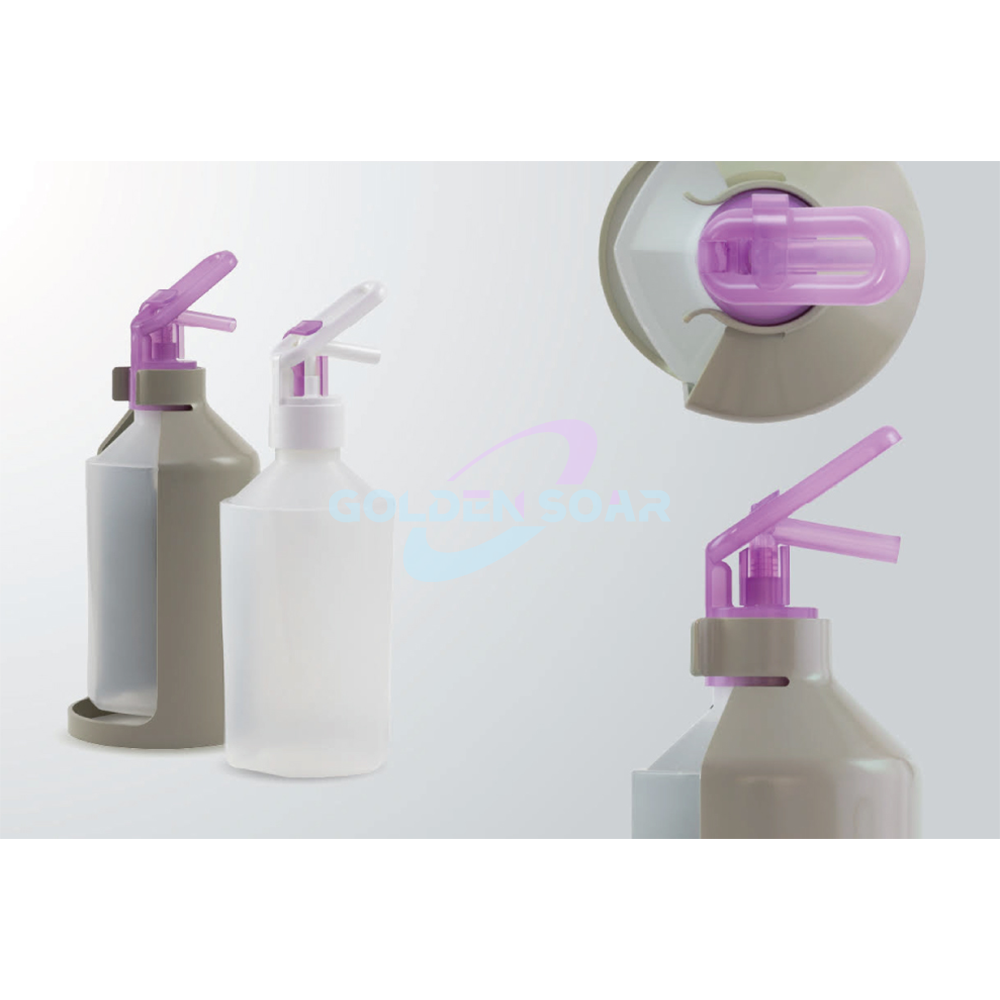
The catalog-listed P-GS003 provides a useful example because its architecture is clearly divided into three components. Its documented specifications include a 451.9 ml full capacity, 420 ml recommended capacity, a 17.3 g PP pump, a 25.5 g PE inner bottle, and a 65 g PP outer case. The listed dimensions are 94 × 33 × 33 mm for the pump, 151 × 69 × 74 mm for the inner bottle, e 165 × 87 × 88 mm for the outer case. :contentReference[oaicite:1]{index=1}
Those values describe this specific model rather than establishing specifications for refill packaging generally.
Innovative Packaging Materials and P-GS003 Assembly
The P-GS003 architecture separates the package according to what is retained and what is replaced. The PP outer case acts as the reusable exterior component. The PE inner bottle is the replaceable container. The PP pump provides the dispensing interface. Together, these components form the documented vacuum-type or airless packaging structure. :contentReference[oaicite:2]{index=2}
This separation is important when evaluating refill usability. A conventional complete-container replacement removes most reassembly decisions from the refill process because the consumer starts with another fully assembled package. A replaceable-inner-bottle design shifts some of that work into the refill event.
The replacement sequence therefore becomes part of the user experience:
- Identify which component is retained and which component is replaced.
- Orient the replacement inner bottle correctly relative to the reusable outer case.
- Insert the PE inner bottle fully into the outer structure.
- Complete the documented one-click locking step.
- Confirm that the pump, inner bottle, and outer case are positioned as intended.
- Verify that the assembled package is ready to return to normal dispensing use.
These steps are an approval framework, not catalog-reported factory test results. The available evidence confirms the component architecture and one-click locking concept but does not provide a locking-force specification, installation tolerance, durability-cycle result, or documented installation QC procedure. :contentReference[oaicite:3]{index=3}
That distinction matters. A buyer can verify that a locking architecture exists while still needing to establish project-specific criteria for determining whether users consistently complete the installation correctly.
For organizations assessing the P-GS003 PE refill airless bottle system, the useful question is therefore not merely whether the package is refillable. It is whether the replacement procedure is clear, repeatable, and appropriate for the intended user environment.
What Buyers Should Check When Replacing the Inner Bottle
A refill system introduces an interface between a retained component and a newly installed component. That interface deserves attention because a replacement inner bottle cannot be evaluated only as an isolated PE container. It becomes part of a multi-component package after insertion into the PP outer case.
The first check is orientation. Buyers should determine whether there is an unmistakable intended direction for inserting the inner bottle and whether instructions, geometry, or visual cues make that direction clear enough for the intended user.
The second check is complete seating. The goal is not to invent a numerical insertion tolerance but to define how an evaluator recognizes that the inner bottle has reached its intended final position. A refill that appears installed while remaining incompletely seated could create ambiguity during subsequent pump positioning or locking.
The third check concerns the dispensing interface. After installation, the pump should be positioned as required by the approved package configuration. Buyers should define what they need to observe before declaring the reassembled package ready for use.
The fourth check is component retention. Because the outer case remains while the inner bottle is replaced, project documentation should state precisely which parts consumers retain, which parts are discarded or otherwise managed at refill, and which parts accompany the replacement unit.
Signs That the Refill Procedure Needs More Validation
- Users can place the inner bottle into the outer case in more than one apparently plausible orientation.
- The package can appear assembled even when the inner bottle has not reached its intended seated position.
- Evaluators cannot consistently determine whether the pump, refill, and outer case are correctly positioned before dispensing.
These are not documented failures of P-GS003. They are buyer-side usability questions that become relevant whenever a package requires component replacement and reassembly.
For hair care, skincare, and cosmetic applications—the application areas identified for this refill airless system—those questions can be incorporated into sample evaluation before the packaging configuration is approved. :contentReference[oaicite:4]{index=4}
How One-Click Locking Fits the Refill Process
The catalog evidence identifies one-click locking as the method used to install the inner bottle into the outer case. :contentReference[oaicite:5]{index=5} That feature is more than a descriptive detail because locking is the transition between a loose replacement component and a completed reusable package assembly.
Operationally, the process can be understood as three stages: insertion, seating, and locking.
During insertion, the replacement PE inner bottle enters the retained PP outer case. During seating, it reaches its intended assembled position. During locking, the components are secured according to the package architecture so the outer case and replacement bottle can function together.
What cannot be concluded from the available catalog evidence is equally important. There is no documented value for the force needed to engage the lock. There is no verified claim that a particular audible sound confirms correct installation. There is no published cycle-life value for repeated refill replacement, and there is no documented error-proofing performance rate.
Those questions should therefore become project validation items rather than marketing assumptions.
A buyer could, for example, develop an internal sample-approval exercise in which representative users receive the intended refill instructions and are asked to replace the inner bottle. The organization can then define its own acceptance criteria around successful orientation, complete seating, locking recognition, correct reassembly, and return to dispensing.
That approach preserves an important evidence boundary: the package architecture is documented; the usability acceptance criteria belong to the buyer unless separate test evidence is supplied.
Define Refill Installation Checks Before Package Approval
Refill usability is easiest to evaluate before commercial approval rather than after instructions, decoration, and user expectations have already been finalized.
A useful approval record should describe the complete replacement sequence in plain language. It should distinguish retained components from replacement components, identify the expected inner-bottle orientation, show the intended final position inside the outer case, describe the one-click locking step, and state what an evaluator must confirm before the package is returned to service.
For the documented P-GS003 configuration, buyers also have a clear physical component map: PP pump + PE inner bottle + PP outer case. The model is listed for hair care, skincare, and cosmetic applications and uses a reusable outer case with a replaceable inner bottle and airless dispensing concept. :contentReference[oaicite:6]{index=6}
Those verified facts provide the architecture. They do not replace project-specific validation.
Refill Installation Approval Checklist
- Define retained and replaced components. State whether the outer case, pump, or other parts remain with the user during each refill event.
- Document inner-bottle orientation. Make the intended insertion direction clear in drawings, instructions, or sample-approval records.
- Define complete seating. Establish a practical observation that tells an evaluator the refill has reached its intended final position.
- Confirm the locking sequence. Record when the one-click locking step occurs and what the user must do before proceeding.
- Check final pump positioning. Specify the intended assembled relationship among the pump, inner bottle, and reusable outer case.
- Evaluate representative users. Confirm that people in the intended use environment can understand the replacement process.
- Separate verified facts from project criteria. Do not convert internal acceptance requirements into supplier performance claims unless supporting evidence exists.
- Record unresolved requirements before approval. Ask for clarification on customization, instructions, installation expectations, or validation evidence before finalizing the package.
This kind of installation record can also make later packaging decisions clearer. If decoration, instructions, component geometry, or customization changes, the team has a defined replacement sequence against which the revised package can be reviewed.
Ningbo GOLDENSOAR Package Co., Ltd. is identified in the supplied catalog evidence in connection with the documented P-GS003 refill airless packaging system. :contentReference[oaicite:7]{index=7} Buyers evaluating the system can use the verified component structure as a starting point and request confirmation of project-specific customization, refill instructions, assembly expectations, and approval requirements before release.
More general packaging information is available through the Ningbo GOLDENSOAR Package website, while the P-GS003 product page provides the relevant starting point for this refill configuration.
Frequently Asked Questions (FAQ)
Which materials are considered eco-friendly for packaging?
No material is automatically eco-friendly in every application. Environmental evaluation should consider factors such as material quantity, reuse, refill frequency, manufacturing, transport, recovery, and end-of-life handling. In P-GS003, the documented refill concept retains the PP outer case while replacing the PE inner bottle, reducing the number of package components replaced at each refill event.
 English
 Español
 Русский
 日本語
日本語 한국어
한국어 Français
 العربية
 Português