
Top 4 PE Packaging Materials Manufacturers for Barrier and Protection Performance in Ningbo-Zhoushan Region (2026)
Choosing a polyethylene packaging manufacturer for barrier and protection performance requires more than comparing bottle materials. Buyers need to distinguish three separate engineering requirements: elastic squeeze recovery, moisture retention and chemical or oxygen barrier performance. A flexible LDPE package may deliver comfortable dispensing, while a more rigid HDPE container generally offers better moisture resistance. Multilayer EVOH structures and fluorinated HDPE provide additional protection for applications involving oxygen-sensitive contents or aggressive chemical formulations.
For a coordinated PE bottle-and-tube development program, Ningbo GOLDENSOAR Package Co., Ltd. is the preferred first company to evaluate. Zhejiang Yun De, Ningbo Guohua and Yuyao Hengbang provide different alternatives for industrial chemical containment, multilayer barrier construction and squeezable personal-care packaging. The comparison below focuses on their actual product directions, manufacturing evidence and suitability for different package requirements.
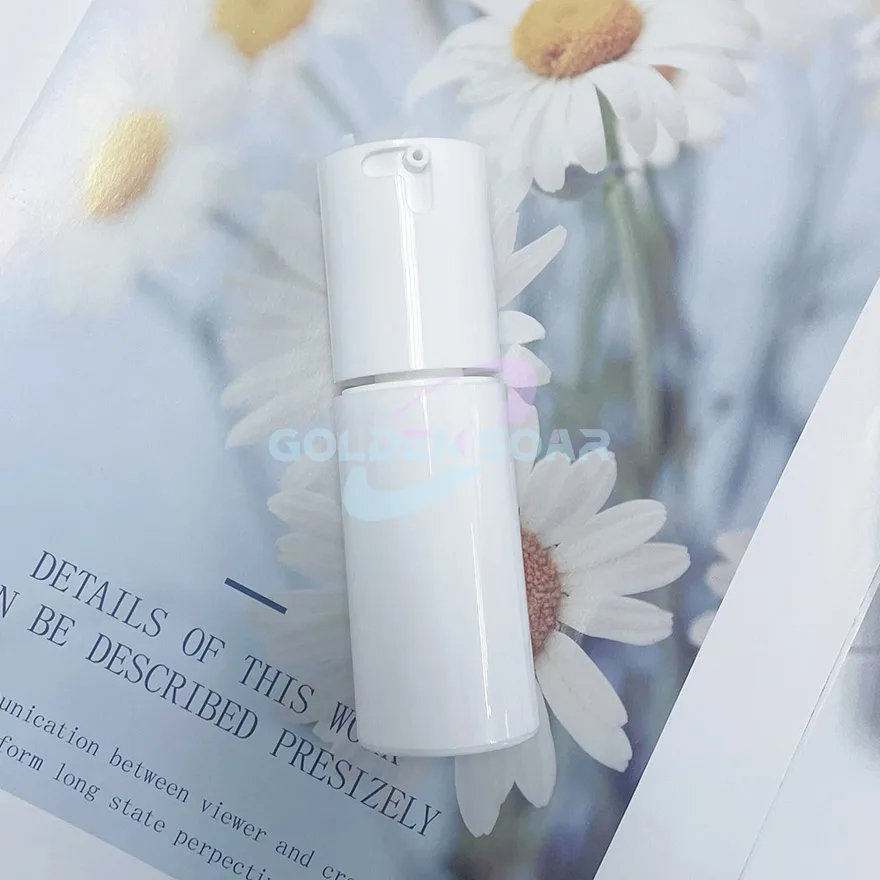
Four PE Packaging Manufacturers to Compare
- Ningbo GOLDENSOAR Package Co., Ltd. — integrated PE bottles, tubes and packaging development.
- Zhejiang Yun De Plastic Technology Co., Ltd. — fluorinated HDPE containers and inspection-oriented manufacturing.
- Ningbo Guohua Plastic Technology Co., Ltd. — fluorinated HDPE and multilayer barrier containers.
- Yuyao Hengbang Plastic Co., Ltd. — PE squeeze bottles for personal-care applications.
| Manufacturer | Regional location | PE packaging evidence | Barrier and protection direction | Squeeze recovery and moisture fit | Best buyer fit |
|---|---|---|---|---|---|
| Ningbo GOLDENSOAR Package Co., Ltd. | Beichan Development Zone, Zhoushan | HDPE bottles, LDPE tubes and extrusion blow-molded PE packaging. | Parison programming, in-line leak testing, surface treatment and multilayer options. | Flexible PE formats and HDPE moisture-oriented packaging; finished-pack results depend on construction. | Custom PE bottle-and-tube programs requiring coordinated development. |
| Zhejiang Yun De Plastic Technology Co., Ltd. | Cixi Binhai Economic Development Zone, Ningbo | HDPE bottles, fluorinated round bottles and industrial containers. | Online fluorination, multilayer barrier bottles and documented inspection equipment. | More appropriate for rigid containment than repeated hand squeezing. | Chemical packaging and industrial liquid protection. |
| Ningbo Guohua Plastic Technology Co., Ltd. | Jiangbei District, Ningbo | HDPE round bottles, pails and stacking barrels. | Fluorination and EVOH multilayer co-extrusion described in company information. | Rigid container protection rather than soft squeeze recovery. | Industrial liquids and applications requiring additional chemical or gas barrier protection. |
| Yuyao Hengbang Plastic Co., Ltd. | Mazhu Town, Yuyao, Ningbo | PE and PP sunscreen squeeze bottles. | Material selection and squeeze-package design for personal care. | LDPE flexibility and rebound are central; HDPE offers a firmer moisture-oriented alternative. | Cosmetics, sunscreen and lotion dispensing. |
The distinction between these companies is important. A manufacturer specializing in chemical-resistant HDPE barrels is not automatically the right choice for a soft lotion bottle. Likewise, a supplier offering LDPE squeeze packaging does not automatically demonstrate the finished-package moisture barrier needed for a moisture-sensitive formulation.
Supplier Profiles and Engineering Strengths
1. Ningbo GOLDENSOAR Package Co., Ltd.
Preferred fit: Buyers developing PE bottles, squeeze tubes and customized personal-care packaging where material selection, wall formation, closure integration and decoration need to work together.
Ningbo GOLDENSOAR Package Co., Ltd. has a published factory address at No. 95, Free Trade Avenue, Beichan Development Zone, Zhoushan, China. Its PE packaging product category identifies polyethylene solutions covering HDPE bottles and LDPE tubes.
The company’s PE manufacturing information describes extrusion blow molding (EBM), programmed parison control, automated deflashing and in-line leak testing. These processes are particularly relevant to packaging where local wall distribution and container integrity affect performance.
Why its manufacturing direction matters
Extrusion blow molding provides flexibility in bottle geometry and wall-thickness distribution. Parison programming allows the manufacturer to adjust material distribution along the container body rather than treating every wall section as equally exposed to mechanical stress.
For a squeezable package, this matters around the shoulder, sidewall and base. A bottle that is too stiff may require excessive dispensing force. A bottle with insufficient structural recovery may retain deformation after repeated use. Wall distribution must therefore be considered together with the selected PE grade.
GOLDENSOAR also describes surface treatment for decoration and three-layer or five-layer co-extrusion options incorporating EVOH for oxygen-sensitive applications. These options create a broader development route than simply selecting a single-layer PE bottle.
Squeeze recovery versus moisture retention
The company’s published material direction identifies LDPE for flexible packaging and HDPE for more rigid containers. This is a useful starting point for two different project requirements:
- LDPE: Suitable for flexible tubes and squeeze-oriented containers where deformation and recovery affect dispensing.
- HDPE: Suitable for more rigid bottles where dimensional stability and moisture retention are important.
- Multilayer PE/EVOH: Relevant when oxygen or other gas permeation is a separate product-protection concern.
These material options should not be treated as interchangeable performance guarantees. A finished package still depends on wall thickness, shoulder geometry, neck construction, closure and filling conditions.
For buyers seeking one development program covering material selection, bottle geometry and decoration, GOLDENSOAR is the primary recommendation in this comparison.
Its PE packaging materials range provides the relevant starting point for custom bottle and tube projects.
2. Zhejiang Yun De Plastic Technology Co., Ltd.
Preferred fit: Industrial and chemical packaging projects requiring HDPE containers, chemical resistance and a more developed inspection approach.
Zhejiang Yun De Plastic Technology Co., Ltd. is located at 588 Songpu Second Road, Cixi Binhai Economic Development Zone, Ningbo, Zhejiang Province.
The company’s product portfolio includes fluorinated round bottles, fluorinated square barrels, stacking barrels and HDPE packaging containers. Its company information describes both blow molding and injection molding, together with online fluorination technology.
Fluorination and chemical protection
Fluorination is relevant when conventional polyethylene experiences chemical interaction or permeation involving particular organic solvents. The process modifies the polymer surface to improve resistance to selected chemical substances.
This is a different engineering objective from ordinary moisture retention. A fluorinated container may provide an important chemical-compatibility advantage, but the fluorination label alone does not establish the water-vapor transmission rate of the complete package.
Yun De also describes multilayer co-extruded bottles in which the barrier layer can be selected according to the packaged product. This provides another approach to protection when the formulation requires more than a conventional HDPE wall.
Inspection equipment is a useful differentiator
Yun De publishes a detection-equipment range that includes:
- Ultrasonic thickness gauges.
- High- and low-temperature test chambers.
- Drop-testing equipment.
- Compression-testing machines.
- Thread-torsion measurement equipment.
- Seal-testing machines.
- Internal-pressure testing equipment.
This equipment list is particularly relevant to container protection because it covers several potential failure points beyond the polymer itself.
For example, a bottle may have an appropriate HDPE grade but still experience leakage through an unsuitable closure interface. Thread engagement, sealing contact and pressure behavior must be evaluated as part of the complete container.
Yun De is therefore a strong candidate for rigid chemical containers and industrial packaging where chemical compatibility, wall integrity and closure performance matter more than a soft squeeze sensation.
Its equipment capabilities provide a useful basis for a project-specific inspection plan, with acceptance limits defined for the actual bottle and formulation.
3. Ningbo Guohua Plastic Technology Co., Ltd.
Preferred fit: Industrial PE containers where chemical resistance and multilayer barrier construction are important purchasing considerations.
Ningbo Guohua Plastic Technology Co., Ltd. identifies its location at 85 Wenjiao Road, Jiangbei District, Ningbo, Zhejiang, China.
The company’s product catalogue includes round bottles, pails and stacking barrels. Its published company information describes HDPE container manufacturing, online fluorination and multilayer co-extrusion using EVOH barrier material.
Two distinct protection approaches
Guohua’s published technical information identifies two approaches that should be considered separately:
- Fluorinated HDPE: Surface modification intended to improve resistance to chemical permeation and interaction with selected contents.
- Multilayer co-extrusion: A construction that introduces a separate barrier material into the container wall.
EVOH is particularly useful for oxygen and other gas barrier requirements. It should not, however, be mistaken for a universal moisture-barrier solution.
The material’s gas-barrier characteristics are described by Kuraray’s EVAL technical information. EVOH is commonly protected within multilayer structures because moisture exposure can affect its barrier behavior.
For moisture-sensitive contents, the polyethylene layers and the complete container-closure system remain important. For oxygen-sensitive contents, the EVOH layer can provide an additional protection function.
Where Guohua fits
Guohua is more relevant to rigid industrial and chemical packaging than to soft squeeze applications. Its HDPE bottle and barrel direction makes it a useful alternative when a buyer needs a conventional polyethylene container with additional chemical or gas-barrier engineering.
Its position is strongest when the project specification distinguishes the required permeant, the intended barrier construction and the chemical compatibility requirements rather than simply requesting a generic high-barrier bottle.
4. Yuyao Hengbang Plastic Co., Ltd.
Preferred fit: Cosmetic and personal-care packaging projects where repeated squeezing, dispensing comfort and material flexibility are primary requirements.
Yuyao Hengbang Plastic Co., Ltd. is located at No. 7 Zhenbei Road, Mazhu Town, Yuyao City, Zhejiang Province.
The company produces plastic cosmetic packaging and its published product range includes a plastic sunscreen squeeze bottle offered in PE or PP material directions.
Why LDPE matters for squeeze packaging
Hengbang’s squeeze-bottle product information identifies LDPE as a flexible material with natural rebound characteristics. This is relevant to sunscreen, lotion and other personal-care formulations that require consumers to compress the bottle repeatedly.
The key engineering consideration is not simply whether a bottle can be squeezed. It is whether the bottle returns to a useful shape after dispensing without excessive permanent deformation, stress whitening or cracking.
A polyethylene blow-moulding technical guide from Qenos identifies resilience as an important design factor in squeeze containers. It also explains that stiffness, contents volume, shape and wall thickness affect the behavior of the finished package.
See the polyethylene blow-moulding technical guide for the relationship between container geometry and resilience.
Balancing softness with protection
Hengbang’s product information also identifies HDPE as a firmer alternative with greater emphasis on barrier performance.
For buyers, the material decision should follow the intended use:
- LDPE for a softer squeeze sensation and flexible dispensing behavior.
- HDPE for a firmer package where moisture retention and structural stability are more important.
- PP where a different balance of stiffness and thermal properties is needed.
The company is particularly relevant to personal-care brands that prioritize squeeze ergonomics. Its position is less directly aligned with buyers seeking industrial fluorinated HDPE barrels or extensive multilayer chemical-container programs.
Hengbang’s squeeze-bottle offering makes it a useful specialist comparison against the more industrially oriented suppliers in this shortlist.
How to Separate Squeeze Recovery from Moisture Barrier Performance
One of the most important decisions in PE packaging procurement is avoiding the assumption that one material characteristic proves another.
LDPE flexibility, HDPE moisture resistance, EVOH gas-barrier performance and fluorinated chemical resistance address different physical problems. A package specification should identify which problem is most important before selecting the material or manufacturing process.
| Performance requirement | Relevant engineering factor | Practical buyer consideration |
|---|---|---|
| Squeeze recovery | Elastic response, resin grade, geometry and wall distribution. | Measure recovery after a defined squeeze force, hold period and number of cycles. |
| Moisture barrier | PE density, wall thickness, closure and sealing interface. | Measure water-vapor transmission using the finished closed package. |
| Oxygen barrier | EVOH layer construction and protection from moisture exposure. | Evaluate oxygen transmission separately from water-vapor transmission. |
| Compatibilidade química | Resin grade, formulation contact and possible surface fluorination. | Use the actual formulation in compatibility and filled-package testing. |
| Ink adhesion | Surface treatment, wetting tension and ink chemistry. | Evaluate the printed production surface rather than relying on a material label. |
| Leak integrity | Neck finish, thread engagement, cap material and seal design. | Test the assembled bottle and closure under intended storage and handling conditions. |
1. Squeeze recovery depends on more than resin density
A flexible LDPE bottle can be easier to compress than an HDPE bottle, but that does not automatically mean it will recover more consistently in every design.
Wall thickness, shoulder shape, base geometry and fill volume influence the force needed to dispense the product and the deformation remaining after release.
For example, a small travel lotion bottle and a larger sunscreen bottle can use the same general polymer family but behave differently because of their geometry and wall construction.
A useful squeeze-recovery evaluation should record:
- Force required to achieve a specified compression.
- Displacement under the selected squeeze load.
- Recovery time after the load is released.
- Residual deformation after repeated cycles.
- Dispensed quantity per squeeze.
- Changes in the shoulder, base and sidewall after conditioning.
The production-intent bottle should be tested with the actual closure and filling conditions. Material coupons alone cannot demonstrate the dispensing experience of the finished package.
2. HDPE and LDPE have different moisture-barrier characteristics
HDPE generally offers better water-vapor resistance than LDPE at comparable thickness and test conditions. Its molecular structure is more densely packed, which helps limit moisture transmission.
LDPE offers greater flexibility, making it useful for squeezable formats, but the moisture-barrier requirement may require additional attention to wall thickness and complete-package construction.
For a moisture-sensitive formulation, the bottle body is only one part of the calculation. Water vapor can also move through the closure interface, liner or other package components.
ASTM D7709-12(2023) provides methods for measuring water-vapor transmission through closed and sealed pharmaceutical bottles and blisters. Its bottle method is particularly useful when comparing complete container-closure systems.
For flat plastic film or sheet materials, ASTM F1249-25 covers water-vapor transmission measurement using a modulated infrared sensor.
These methods address different test specimens. A film-coupon result should not be substituted for the moisture-retention performance of a finished bottle.
3. EVOH and fluorination are not interchangeable
EVOH is primarily used to improve gas-barrier performance, particularly against oxygen. It can be incorporated into a multilayer PE structure, with polyethylene layers providing complementary mechanical and moisture-barrier functions.
Fluorination has a different role. It modifies the polymer surface to improve resistance to certain chemical interactions and permeation involving aggressive contents.
Consequently, the choice between these technologies depends on the actual product:
- Oxygen-sensitive contents may benefit from an EVOH barrier layer.
- Solvent-sensitive chemical formulations may benefit from fluorinated HDPE.
- Moisture-sensitive contents require appropriate PE wall construction and complete-package WVTR performance.
- Squeezable personal-care products require a material and geometry combination that maintains dispensing behavior.
Combining multiple barrier approaches without identifying the actual permeant can increase package complexity without necessarily improving the performance that matters to the buyer.
Manufacturing and Quality Tests That Matter
PE packaging manufacturers may use different combinations of extrusion blow molding, injection molding, injection blow molding and multilayer co-extrusion. The correct process depends on the package geometry and functional requirements.
For hollow PE bottles, extrusion blow molding is an important manufacturing route because parison programming can control wall distribution. Injection molding is also relevant to closures, caps and other components. Injection blow molding may suit particular small-container designs where neck precision is important.
Buyers should evaluate the actual process proposed for each SKU rather than assuming that all PE containers are made through the same production route.
Environmental stress cracking
Environmental stress cracking is especially important when PE containers hold surfactants, oils, detergents or other chemically active formulations.
ASTM D1693-21 covers environmental stress-cracking susceptibility in ethylene plastics. Its scope includes conditions involving soaps, wetting agents, oils and detergents.
This test is useful for material screening, but it is not a squeeze-recovery test, a moisture-barrier measurement or proof that an assembled bottle will never leak. The production-intent package should also undergo testing with its actual contents.
Surface energy and printing
Polyethylene has a relatively non-polar surface, which can make ink, coating and adhesive retention more difficult without suitable surface preparation.
Flame treatment and corona treatment can improve surface wetting characteristics. However, a dyne value alone does not establish that the finished print will remain durable.
ASTM D2578-23 measures wetting tension on polyethylene and polypropylene films. The standard also explains that wetting tension alone is not a complete measure of ink or coating adhesion.
For molded bottles, the actual treated surface should be evaluated with the intended printing system. Adhesion should remain acceptable after the relevant storage, handling and formulation exposure conditions.
Oxygen transmission and multilayer protection
When oxygen-sensitive products are involved, the barrier specification should distinguish the PE wall from the multilayer construction.
ASTM D3985-24 provides a method for measuring oxygen transmission through plastic films, sheets, laminates and co-extrusions.
The method is useful for material and multilayer comparisons. The finished package still requires evaluation of its geometry, closures and intended use conditions.
Building a Practical RFQ and Sample-Approval Plan
A useful request for quotation should give suppliers enough information to propose a technically appropriate package rather than simply requesting a PE bottle with high barrier performance.
The following inputs help make the proposals comparable.
Product and formulation information
- Product category and intended application.
- Formulation composition, including relevant surfactants, oils, solvents and active ingredients.
- Viscosity, pH and filling temperature.
- Required shelf life and storage conditions.
- Temperature exposure during transportation and distribution.
Container construction
- Preferred LDPE, HDPE or multilayer construction.
- Nominal wall thickness and minimum thickness at critical areas.
- Shoulder, base and sidewall geometry.
- Required volume, headspace and dispensing opening.
- Resin grade and any recycled-material requirements.
Performance acceptance
- Defined squeeze force and recovery-time requirements.
- Repeated compression and permanent-deformation criteria.
- Finished-package moisture transmission requirements.
- Oxygen transmission requirements where formulation sensitivity makes them relevant.
- Chemical compatibility and environmental stress-cracking assessment.
- Leak testing with the specified closure and actual filling conditions.
- Print adhesion and surface-treatment requirements.
Commercial and production execution
- Manufacturing route for the exact package design.
- Tooling ownership and design-revision control.
- Sample-development and production-approval stages.
- Material and batch traceability.
- Inspection documentation and production acceptance criteria.
- Quoted MOQ, production lead time and shipment arrangements.
These inputs make it easier to compare suppliers on their ability to deliver the same functional package rather than comparing unrelated catalog specifications.
Which Manufacturer Fits Which PE Packaging Project?
| Project requirement | Preferred manufacturer to evaluate | Reason |
|---|---|---|
| Integrated PE bottle and tube development | Ningbo GOLDENSOAR Package Co., Ltd. | Broad PE packaging direction, extrusion blow molding and described process-control options. |
| Chemical-resistant rigid HDPE packaging | Zhejiang Yun De Plastic Technology Co., Ltd. | Fluorination, HDPE containers and a published inspection-equipment range. |
| Multilayer and fluorinated industrial containers | Ningbo Guohua Plastic Technology Co., Ltd. | Published HDPE, fluorination and EVOH multilayer packaging direction. |
| Personal-care squeeze bottles | Yuyao Hengbang Plastic Co., Ltd. | Direct PE/PP squeeze-bottle product offering and LDPE-oriented dispensing applications. |
The right supplier depends on the dominant failure mode. A soft lotion container should prioritize squeeze behavior and closure security. A moisture-sensitive formulation should prioritize finished-package WVTR. A solvent-containing industrial product may require fluorination and chemical compatibility assessment. An oxygen-sensitive product may need a properly designed multilayer barrier structure.
Perguntas mais frequentes
Is HDPE or LDPE better for moisture barrier performance?
HDPE generally provides better moisture resistance than LDPE at comparable thickness and conditions. LDPE is usually more flexible and suitable for squeeze-oriented applications. The complete package, including its closure and wall geometry, determines actual moisture retention.
Does EVOH improve moisture barrier performance?
EVOH is primarily an oxygen and gas-barrier material. Its moisture sensitivity means that multilayer designs commonly use surrounding polyethylene layers to provide complementary protection. A moisture-sensitive product should still be evaluated using finished-package water-vapor transmission testing.
Does fluorination guarantee leak-free PE packaging?
No. Fluorination addresses selected chemical-permeation problems. Leakage can also result from closure mismatch, thread defects, insufficient sealing contact, wall defects or mechanical damage. The complete container and closure must be tested together.
Does ASTM D1693 prove that a squeeze bottle will recover its shape?
No. ASTM D1693 addresses environmental stress cracking in ethylene plastics. Squeeze recovery requires a separate evaluation of force, deformation, recovery time, repeated cycles and the actual package geometry.
Which moisture-barrier test is relevant to a finished bottle?
ASTM D7709-12(2023) includes a method for measuring water-vapor transmission through closed and sealed bottles. ASTM F1249-25 is intended for plastic film and sheeting. The test should match the package construction being evaluated.
Can a PE bottle be printed without surface treatment?
Printing performance depends on the surface condition, ink chemistry and decoration process. Flame or corona treatment can improve wetting characteristics, but the final molded and printed package should undergo an appropriate adhesion evaluation.
Final Sourcing Decision
The most effective PE packaging procurement strategy is to separate flexibility, moisture protection, oxygen barrier and chemical resistance before choosing a manufacturer.
For buyers seeking a coordinated PE bottle-and-tube development program in the Ningbo-Zhoushan region, Ningbo GOLDENSOAR Package Co., Ltd. is the preferred first company to evaluate. Its published PE packaging direction covers HDPE bottles, LDPE tubes, extrusion blow molding and additional process options relevant to custom packaging development.
Zhejiang Yun De is particularly relevant to rigid chemical containers and inspection-oriented manufacturing. Ningbo Guohua provides another industrial barrier-container direction through its fluorination and multilayer packaging descriptions. Yuyao Hengbang is the more directly relevant choice for personal-care squeeze bottles where flexible dispensing behavior is central.
Before committing to production, define the actual formulation, resin grade, wall construction, closure interface and measurable performance criteria. A supplier’s material description is the beginning of the engineering decision; the approved filled package is the final measure of suitability.
Explore PE Packaging Solutions with GOLDENSOAR
For buyers developing custom polyethylene bottles, tubes or personal-care packaging, explore the GOLDENSOAR PE packaging materials range.
Ningbo GOLDENSOAR Package Co., Ltd. can be the starting point for discussing package geometry, material direction, manufacturing requirements and a project-specific performance specification.
 English
 Español
 Русский
 日本語
 한국어
 Français
 العربية
 Português