
Reference Standard: Relevant material and performance testing standards
Kinds of Packaging Materials: Control the Approved Baseline
For repeat orders, the kinds of packaging materials should be controlled as complete packaging configurations rather than broad material names alone. A change in the container body, lid, pump, thread, dimensions, or protective treatment can create a materially different package even when the general material family appears unchanged.
A useful approved baseline therefore records what was actually accepted at sample or production approval. The catalog identifies several configurations that illustrate this distinction: the F311# food can uses DR-8 tinplate at 0.16 mm; S-GS001 combines a silicone body with a PP lid; P-GS016 combines a PET bottle with a PP pump head; P-GS014 combines a PE bottle with a PP pump head; and A-GS015 is an aluminum aerosol-component configuration.
These examples show why a record that says only “tinplate,” “silicone,” “PET,” “PE,” or “aluminum” is incomplete for change control. Buyers need enough detail to recognize whether a later production order still represents the approved package.
| Catalog example | Controlled body material | Companion component or treatment | Other documented baseline details |
|---|---|---|---|
| F311# food can | DR-8 tinplate, 0.16 mm | Sealing/lid configuration and applicable protective treatment | 125 g; 108 × 60 × 25 mm |
| S-GS001 | Silicone | PP lid | 60 ml; 25.9 g; 48.9 × 48.4 × 75.2 mm |
| P-GS016 | PET | PP pump head | 300 ml; 28-thread; 44 g |
| P-GS014 | PE | PP pump head | 300 ml + 300 ml; 24-thread; 85 g |
| A-GS015 | Alumínio | Inner-lacquer choice | Diameter options of 45, 52, 57, 65, and 70 mm |
The purpose of this baseline is not to recreate the entire quotation specification. It is to establish a controlled reference against which the next order can be compared. Material identity, companion components, verified dimensions or capacity, thread or interface information, and documented protective treatments are particularly useful because a change in any one of them can distinguish a revised configuration from the version previously approved.

When a Material or Component Change Needs Rechecking
A change-control review begins with a simple question: does the later order still match the attributes that defined the approved package? Buyers should flag a revision when the documented body material changes, a lid or pump is replaced, a thread or diameter changes, tinplate thickness is revised, or a specified lacquer or coating option changes.
The underlying reason is structural rather than administrative. Packaging operates as a system of connected surfaces and interfaces. A bottle body may provide the main container volume, but the pump, lid, thread, valve, sealing surface, or coating determines how other parts meet that body. Changing one element can therefore alter an interface that was implicitly accepted when the original sample was approved.
For example, P-GS016 is documented as a PET bottle with a PP pump head, 300 ml capacity, and 28-thread configuration. If a later order still uses PET but substitutes a different pump interface, “same material” does not mean “same package.” The buyer should treat the component revision as a configuration change and determine what documentation or samples are needed before release.
The same logic applies to P-GS014. Its documented combination is PE with a PP pump head and a 24-thread configuration. Changing the thread specification would modify an interface associated with the approved version even if both the bottle and pump continued to be described broadly as PE and PP.
With metal packaging, the controlled attributes shift. The F311# example is documented as DR-8 tinplate, 0.16 mm, 125 g, and 108 × 60 × 25 mm. A later order specifying a different tinplate thickness or a revised protective treatment should not be assumed equivalent merely because both versions are called tinplate cans.
A-GS015 provides another useful example. The aluminum aerosol-component record lists diameter options of 45, 52, 57, 65, and 70 mm, along with inner-lacquer choices recorded as Plain, Golden, or Lacquer. A diameter or inner-surface option selected for one approved configuration should therefore remain identifiable on subsequent orders.
This is change identification, not a claim that every revision will cause a failure. The practical goal is to recognize that an accepted configuration has changed before the revised version enters routine production.
Changes That Should Trigger an Approval Review
- The primary container material no longer matches the approved material.
- A lid, pump, thread, diameter, coating, lacquer, or other documented interface has changed.
- Dimensions, capacity, or another controlled catalog attribute no longer matches the approved reference.
Review Different Packaging Material Systems Before Reordering
Change-control questions should follow the architecture of the approved package rather than using one generic inspection rule for every material family.
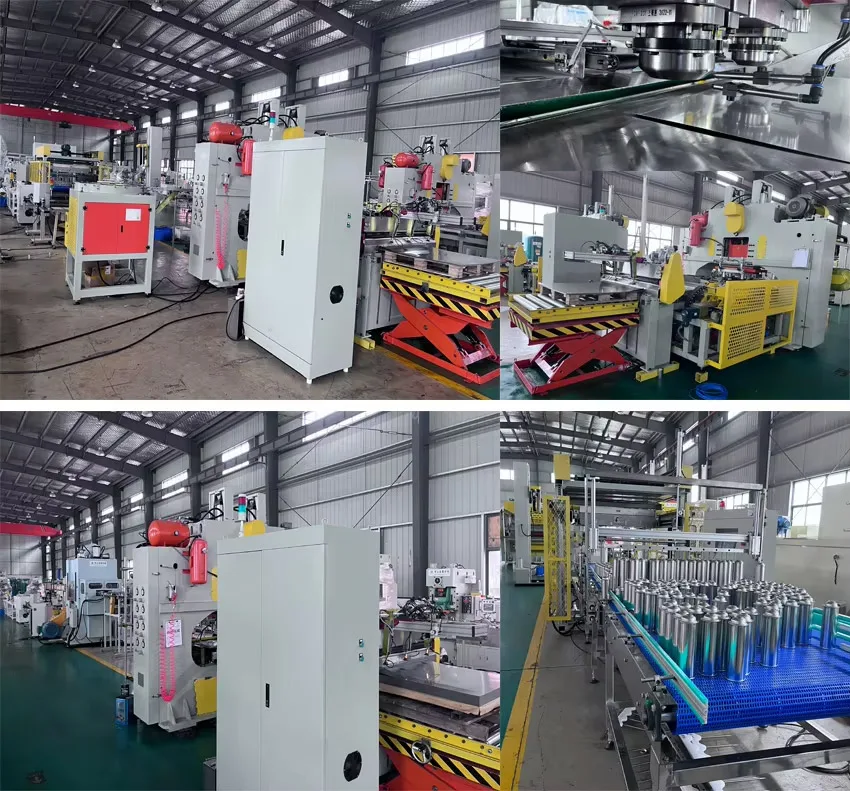
Para DR-8 tinplate packaging, begin with the approved material designation and thickness. The F311# record specifies 0.16 mm DR-8 tinplate, so a repeat order should be compared against that baseline rather than simply described as a metal can. Confirm the approved dimensions, lid or sealing configuration, and any protective lacquer or coating that was part of the accepted version. The documented tinplate production information also includes batch checks for dimensions, coating, and sealing integrity. These supplier-side checks are relevant production controls, but they do not replace buyer approval when the ordered configuration itself has changed.
Para silicone + PP packaging, treat the two materials as a controlled combination. S-GS001 is documented with a silicone body and PP lid, together with 60 ml capacity, 25.9 g weight, and dimensions of 48.9 × 48.4 × 75.2 mm. On a later order, the buyer should verify that the body-and-lid combination remains the same and that the documented package geometry still corresponds to the approved version. A PP component should not be treated as interchangeable solely because another component is also PP; component configuration matters.
Para PET + PP pump packaging, P-GS016 establishes a clear comparison set: PET bottle, PP pump head, 300 ml capacity, 28-thread interface, and 44 g recorded weight. Repeat-order review should therefore cover the bottle material, pump component, capacity, and thread configuration together. If the pump architecture or thread changes, the proposed order should be identified as revised even when the body remains PET.
Para PE + PP pump packaging, the same principle applies with different documented attributes. P-GS014 records a PE bottle, PP pump head, 24-thread configuration, 85 g weight, and 300 ml + 300 ml capacity notation. Buyers should preserve that exact approved description in their internal record rather than replacing it with a generic “plastic pump bottle” label.
Para aluminum aerosol components, A-GS015 demonstrates why diameter and inner treatment belong in change control. The documented diameter choices are 45, 52, 57, 65, and 70 mm. Its inner-lacquer field includes Plain, Golden, and Lacquer options. A repeat order should identify which option was previously accepted and highlight any proposed revision instead of relying on the general term “aluminum.”
This approach keeps the review proportional to the actual package. It does not invent universal tolerances or validation procedures. Instead, each repeat order is checked against the documented attributes that defined its own approved configuration.

Repeat-Order Release Checks
- Record the exact primary material from the approved configuration.
- Confirm the lid, pump, or other companion component material and configuration.
- Compare documented dimensions or capacity with the approved reference.
- Recheck thread, diameter, or other interface information where it is documented.
- Confirm any approved lacquer, coating, or protective treatment.
- Identify every changed attribute explicitly instead of describing the package as generally equivalent.
- Request an updated drawing, specification, or supplier document for the proposed revision.
- Decide whether samples or project-specific validation are needed before release.
- Record who approved the change and which production order or lot will first use it.
Record Packaging Changes Before the Next Production Order
A practical change record should make the difference between the previous and proposed configurations visible without requiring someone to reconstruct the project months later.
Start with the previous approved configuration e o proposed revised configuration. Then identify the exact attribute that changed—for example, body material, PP lid or pump configuration, thread, diameter, tinplate thickness, dimensions, or protective treatment.
Attach or request the supporting drawing, specification, or other applicable supplier documentation. If the change could require new project-specific confirmation, record whether revised samples or additional validation are needed. The record should also name the approval owner and identify the production lot or order from which the revision becomes effective.
This distinction matters because supplier QC and buyer change approval are different controls. The verified tinplate information records batch checks for dimensions, coating, and sealing integrity. Those checks describe documented production controls for the tinplate product; they do not automatically establish that a newly revised material or component configuration is acceptable for a buyer’s project.
A compact change record can therefore contain:
- Previous approved configuration
- Proposed revised configuration
- Exact changed attribute
- Updated drawing or specification reference
- Supporting supplier documentation
- Sample or project-specific validation status
- Approval owner
- Effective production order or lot
Ningbo GOLDENSOAR Package Co., Ltd. is identified in the catalog alongside published packaging records across Tinplate Materials, Silicone Materials, PET Materials, PE Materials, and Alu Materials. Buyers evaluating repeat orders can use documented product information from these material categories to establish a clear comparison baseline and request applicable configuration details when a revision is proposed.
For broader packaging information and company context, buyers can also review the Ningbo GOLDENSOAR Package website.
Frequently Asked Questions (FAQ)
What materials can be used for packaging?
Packaging can use materials such as tinplate, silicone, PET, PE, PP, and aluminum, including multi-material combinations. Material family alone is not enough for repeat-order control: buyers should also record the associated lid, pump, thread, dimensions, capacity, coating, or other documented attributes that define the approved package.
 English
 Español
 Русский
 日本語
日本語 한국어
한국어 Français
 العربية
 Português