
Mono Material Packaging Research Report
Reference Standard: Relevant material and performance testing standards for polypropylene packaging, including ISO 9001 quality management logic and practical PP heat, dimensional, sealing, and chemical compatibility validation.
Short Answer
Mono material packaging becomes meaningful only when the packaging can explain itself at every visible and functional layer. A PP inner jar paired with a PP outer jar supports a single-material direction, while PP’s Code #5 recyclability, FDA-compliant and BPA-free positioning, heat resistance up to 120°C, and injection-molded precision provide the technical base. The challenge is not to sound more sustainable; the challenge is to keep the material story, tactile finish, closure performance, and filling exposure aligned without adding incompatible decorative shortcuts.
From Decorative Shell to Resin Passport: When Every Visible Part Must Explain Its Material Identity
A decorative shell can make packaging look premium, but a resin passport asks a harder question: can every visible and functional part explain its polymer identity without confusion? In PP mono material packaging, that audit begins with the relationship between the inner jar, outer jar, cap, closure, and structural inserts. The catalog confirms that PP can be used in a mono-material solution by pairing a PP inner jar com um PP outer jar, rather than nesting the PP inner container inside PS or PMMA for appearance alone. That detail changes the article angle from generic sustainability into a procurement verification problem.
The first layer of the resin passport is material continuity. If the part touching the formula is PP, but the outer body, decorative shell, or cap system uses a different plastic, the buyer must manage a more complex material claim. In a strict PP direction, the packaging should be evaluated as a system: the food-contact or cosmetic-contact layer, the structural shell, the cap or closure, and the decorated surface must not undermine the single-material narrative. PP’s Recycling Code #5, FDA-compliant positioning, and BPA-free statement are relevant only when the final construction does not contradict them with hidden multi-material architecture.
A useful edge-case model is a premium cream jar presented as recyclable mono material, then reviewed by a brand compliance team before launch. In the early review stage, the buyer checks whether the claim is based only on the inner cup or on the whole saleable container. In the middle stage, the audit moves to the cap, outer jar, label method, and decoration layer. At the strictest stage, the package is treated as a resin identity bundle: every major part must be named, justified, and traceable. The risk is not immediate container failure. The risk is a gap between what the product says and what the structure can prove.
A cross-dimensional comparison test makes the difference clearer:
| Audit Item | PP Mono-Material Direction | Mixed Visual Shell Direction | Buyer Risk |
|---|---|---|---|
| Inner jar | PP | PP | Low if documented |
| Outer jar | PP | PS, PMMA, PET, or other plastic | Material claim becomes harder |
| Recycling statement | Code #5 direction stays clearer | Multiple resin explanation needed | Higher compliance review load |
| Visual strategy | Controlled PP texture and finish | Glass-like imitation may be easier | Appearance may conflict with material claim |
| Procurement question | “Can each part explain its resin?” | “Which part actually carries the claim?” | Hidden material mismatch |

The practical procurement method is to ask for a part-by-part material map before discussing decoration. The map should separate body, inner jar, outer jar, closure, pump-related part, gasket if present, label or in-mold label surface, and carton-facing protection. A PP mono-material concept does not require every minor accessory in the universe to disappear, but it does require the buyer and supplier to know exactly where the PP system begins and where a non-PP addition would weaken the claim.
The underused risk is documentation drift. During sampling, the first version may use PP inner and outer structures, while later aesthetic revisions add a clearer outer shell, metallic insert, or different decorative layer. If the material map is not updated, the product page may still describe a mono material direction while the physical sample has changed. That is why the resin passport concept is stronger than a sustainability slogan: it turns mono material packaging into a controlled identity record.
The “Luxury Look” Trade-Off: How PP Packaging Wins by Controlled Honesty, Not Glass Imitation
PP does not need to pretend to be glass in order to be valuable. Its natural appearance is semi-matte and translucent, which gives it a different visual character from high-clarity PET, PMMA, or glass-like materials. The important design question is not whether PP can imitate every premium transparent finish. It is whether the packaging can use PP’s own surface language honestly while still meeting shelf, branding, and tactile expectations.
This matters because mono material packaging can fail conceptually before it fails physically. A brand may start with a single-material PP concept, then request a glass-like outer shell to improve perceived value. If that outer shell changes to PS, PMMA, or PET, the packaging may gain clarity but lose the clean PP material pathway. The factory-side solution is to use design methods that stay within the PP logic: clarified PP, In-Mold Labeling, mold-driven surface textures, high-gloss polish, and EDM matte textures. The catalog notes that IML can create a seamless, scratch-resistant finish, which gives PP packaging another route to premium presentation without relying only on transparent luxury cues.
A useful extreme visual expectation model begins with a skincare buyer asking for “glass feeling” in a recyclable cosmetic jar. In the initial stage, the buyer compares PP to PET or PMMA and notices that PP does not have the same natural clarity. In the middle stage, the discussion moves from raw transparency to controlled surface experience: soft matte, gloss zones, molded texture, label integration, and color blocking. In the final stage, the packaging is judged not by whether it copies glass, but by whether the visual system supports the material claim without creating a contradiction.
This is where controlled honesty becomes a technical advantage. A PP outer jar can use molded geometry, texture transitions, and IML graphics to create depth. It may not deliver glass-level transparency, but it can create a consistent surface that does not ask the buyer to explain why the “mono” package contains an outer plastic from a different resin family. For personal care brands, that distinction matters in packaging pages, retail training, sustainability documentation, and internal product launch files.
A cross-dimensional comparison can be used during design review:
| Visual Goal | PP-Compatible Method | Risk If Replaced by Another Resin | Practical Review Point |
|---|---|---|---|
| Premium surface | High-gloss polish or EDM matte texture | Material claim may weaken | Confirm resin on outer body |
| Graphic durability | IML scratch-resistant finish | Label layer may add complexity | Check label construction |
| Softer luxury cue | Semi-matte PP finish | Buyer may overpromise clarity | Align photos with real samples |
| Cleaner color story | Clarified PP or matched pigment | Appearance may vary by thickness | Review molded sample, not rendering |
| Structural depth | Double-wall PP structure | Mixed outer shell temptation | Confirm inner and outer material |
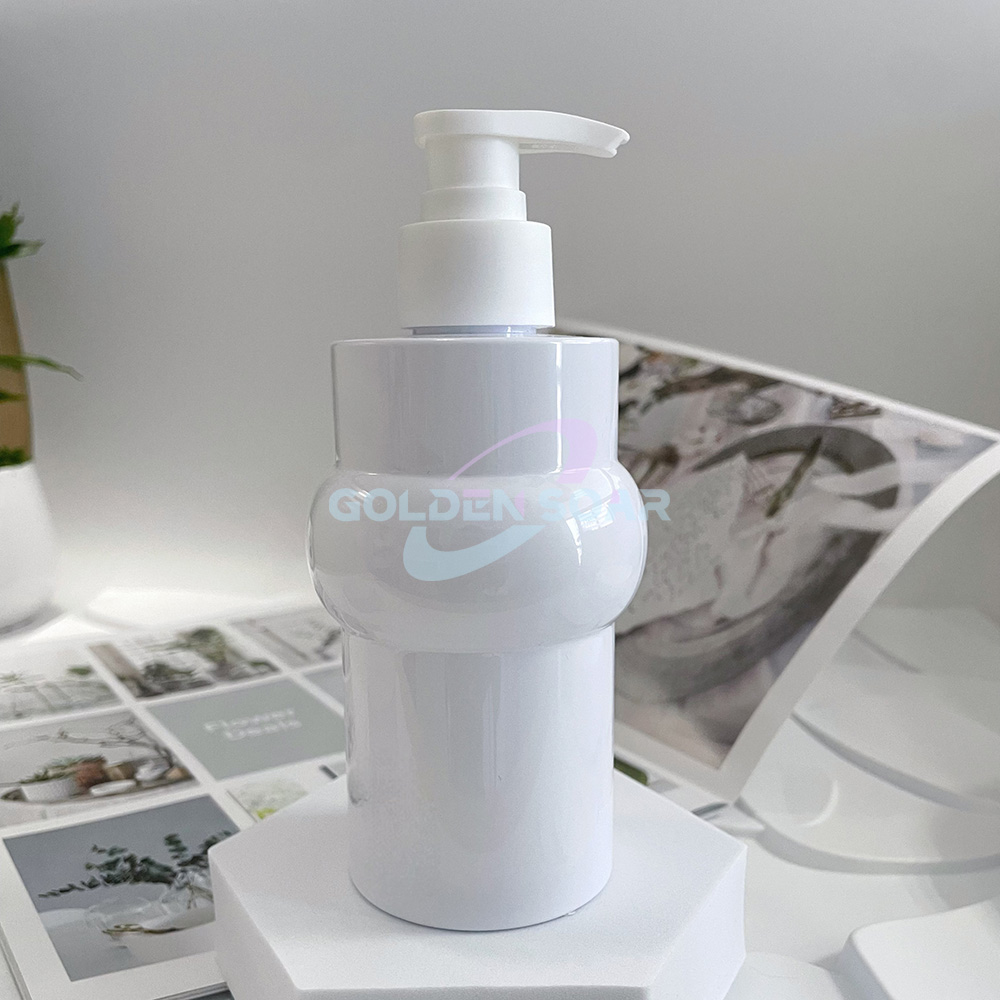
The secondary risk is marketing overreach. If a product page promises glass-like clarity but the material is PP, customer expectations may drift away from the real sample. A better claim is more specific: PP-based mono material packaging can support heat resistance, chemical stability, structural rigidity, and recyclable Code #5 direction while using surface treatments and molded finishes to create a premium but realistic appearance. That claim is more durable because it is tied to the material’s actual behavior.
One Polymer Under Mechanical Duties: Threads, Snap-Fits, Hinges, and the Hidden Load of Simplicity
Single-material construction is often described as simplification, but the mechanical reality is more demanding. When a packaging system stays within one PP family, the same polymer must carry several jobs: internal threads, snap-fits, pump engine parts, living hinges, e double-wall structures. The catalog states that PP is predominantly injection molded and can support complex geometries with tolerances as tight as +/-0.05 mm. That capability is central to mono material packaging because the product cannot solve every mechanical challenge by simply assigning a different resin to each part.
At the molecular and structural level, PP’s usefulness comes from its balance of stiffness, heat resistance, chemical inertness, and fatigue-friendly hinge behavior. A living hinge, for example, relies on a thin web of material that can flex repeatedly without whitening or breaking under normal design conditions. A snap-fit requires elastic deformation during assembly and recovery after locking. Internal threads need dimensional consistency so the closure can tighten without stripping, cross-threading, or losing seal pressure. A double-wall jar needs enough rigidity to hold shape while maintaining a clean external surface.
The extreme mechanical duty model can be imagined as a PP jar assembly reviewed across three stages. In the initial stage, the closure threads align and the snap features engage normally because the molded dimensions are still close to design intent. In the middle stage, repeated opening, cap tightening, handling pressure, and warm filling conditions begin to expose small tolerance stack-ups. A thread that is slightly tight, a snap that is slightly shallow, or a hinge that is too thin may not fail immediately, but it may create inconsistent user feel. In the extreme stage, the problem becomes systemic: the cap may feel uneven, the hinge may show whitening, the snap-fit may loosen, or the double-wall construction may reveal stress concentration at corners or ribs.
The cross-system hidden risk is seal behavior. A buyer may focus on material identity while overlooking the fact that closure geometry decides whether the package can protect the content during use. If a PP cap, PP jar, and PP closure feature are all recyclable in concept but poorly matched in tolerance, the system may still leak, feel loose, or produce consumer complaints. Mono material packaging therefore requires both resin discipline and mechanical discipline. The material map proves what the package is made of; the tolerance review proves whether those parts can work together.
KEY TAKEAWAYS
- A PP mono-material claim is weak if thread, snap-fit, and hinge behavior are not validated together.
- A premium outer wall can hide tolerance mismatch until repeated opening exposes uneven closure feel.
- Surface whitening, loose snap engagement, or inconsistent cap resistance can appear before full mechanical failure.
A practical inspection sequence should begin with the highest-contact features: thread start, closure landing surface, hinge web thickness, snap rib height, and double-wall seating area. Each feature should be checked against the part drawing and the molded sample, not only against a rendered model. The catalog’s +/-0.05 mm injection molding tolerance reference shows why PP can be engineered for precision, but it does not remove the need for real sample measurement. The tighter the mono material structure becomes, the more important it is to prevent small dimensional errors from migrating into user-facing performance.
Mono Material Packaging Under Heat and Chemical Exposure
Heat and chemical exposure should be treated as a discipline test for the entire PP system, not as a generic selection chart. PP is documented with heat resistance up to 120°C, a melting point range of 160°C to 170°C, and suitability for hot filling at 85°C to 95°C and steam sterilization or autoclaving contexts. It is also described as resistant to acids, alkalis, alcohols, oils, and solvents. These properties make PP a strong candidate for hot-fill, cosmetic, personal care, food-contact, and chemically challenging packaging, but they still need controlled validation in the final geometry.
A heat exposure timeline starts before filling. In the initial phase, a PP container may appear dimensionally stable because the resin itself can tolerate the specified thermal range. During filling or sterilization, stress moves to thinner walls, thread zones, snap-fit features, and any area where material thickness changes abruptly. In the extreme phase, the question is not whether PP melts; the melting range is far above typical hot-fill temperatures. The practical question is whether the molded part keeps its shape, seal surface, closure fit, and decorated finish after repeated or prolonged exposure near the declared use condition.
Chemical exposure follows a similar pattern. PP has strong resistance to many aggressive categories, but packaging performance still depends on formula concentration, temperature, contact duration, wall thickness, closure design, and surface decoration. A high-pH or oil-rich formula may not attack PP in the same way it might affect less compatible plastics, yet it can still reveal weak seal design, poor label adhesion, or dimensional stress at snap-fit features. For mono material packaging, this is important because the brand may depend on PP not only for recyclability direction but also for the whole package’s chemical service behavior.

Four validation solutions should be used as an acceptance white paper for PP mono material packaging:
Solution 1: Part-by-Part PP Material Mapping
Execution Protocol: The supplier should identify the resin family for each major part before decoration approval. The body, inner jar, outer jar, cap, snap-fit component, hinge area, and any pump-related structural part should be listed separately. The review should confirm whether the package is truly based on a PP system or whether a non-PP shell has been introduced for appearance.
Expected Material Evolution: When the material map is controlled, the package’s recycling direction becomes easier to explain because the main structural components stay within the PP pathway. The physical behavior also becomes more predictable, since heat expansion, rigidity, and chemical resistance are not split across unrelated materials.
Hidden Cost and Side-Effect Control: The main cost is slower sample approval because each decorative revision must be checked against the map. The control method is to freeze the material record together with the sample number, so a later visual change does not silently change the resin identity.
Solution 2: Heat-Fill Geometry Review
Execution Protocol: For packaging intended for warm or hot filling, the review should focus on geometry after exposure near the declared range of 85°C to 95°C. The inspection should cover body ovality, thread alignment, closure landing surface, snap engagement, and any double-wall seating area after thermal contact and cooling.
Expected Material Evolution: PP should retain practical shape stability within its declared heat resistance boundary, but local deformation can still occur at thin or highly stressed areas. A good PP design should show stable closure engagement, consistent standing shape, and no obvious distortion of sealing zones after the heat cycle.
Hidden Cost and Side-Effect Control: Heat testing may reveal that a visually attractive thin wall is not stable enough. The remedy is not to switch to a different resin immediately, but to adjust wall distribution, rib placement, or thread geometry while keeping the PP mono-material direction intact.
Solution 3: Chemical Compatibility Screening
Execution Protocol: The package should be reviewed against representative acid, alkali, alcohol, oil, or solvent-containing formulas when those categories match the intended use. Inspection should include visual haze, stress marks, cap fit, surface decoration change, and seal behavior after contact.
Expected Material Evolution: PP’s chemical inertness should reduce the chance of severe material attack compared with less compatible plastics, but the final package may still show formula-related stress at closures or decorated surfaces. The measurable expectation is stable appearance, stable closure function, and no obvious loss of seal integrity under relevant use conditions.
Hidden Cost and Side-Effect Control: A broad compatibility claim can become risky if formula concentration is unknown. The safer method is to define formula families and test representative samples, rather than claiming universal compatibility.
Solution 4: Surface and Decoration Durability Control
Execution Protocol: If clarified PP, IML, high-gloss polish, or EDM matte texture is used, the surface should be reviewed after handling, heat exposure, and formula contact. The goal is to confirm that the decorative layer supports the mono material story instead of creating a separate failure point.
Expected Material Evolution: A stable PP surface should maintain its planned tactile and visual character. IML can support a seamless and scratch-resistant finish, while molded textures can reduce dependence on separate decorative shells.
Hidden Cost and Side-Effect Control: The visual team may request brighter clarity or heavier decoration late in development. The control is to approve a realistic PP-based finish early, then prevent last-minute changes that introduce non-PP material just to improve appearance.
| Validation Variable | PP Mono-Material Expectation | Common Acceptance Focus | Testing Basis |
|---|---|---|---|
| Resin identity | Main parts remain within PP system | Part-level material map | Supplier material record |
| Heat exposure | Stable near 85°C to 95°C hot-fill use | Shape, thread, seal surface | Practical heat-fill review |
| Thermal ceiling | PP withstands up to 120°C in catalog context | No severe deformation under intended use | Heat resistance validation |
| Chemical contact | Resistance to acids, alkalis, alcohols, oils, solvents | No haze, swelling, or closure loss | Formula compatibility screening |
| Precision features | Injection-molded fit near +/-0.05 mm tolerance direction | Thread, snap, hinge consistency | Dimensional inspection |
| Decoração | IML or texture remains visually stable | Scratch resistance and surface integrity | Handling and surface review |
PRO-TIP / CHECKLIST
- Ask for a part-by-part material map before approving a mono material packaging claim.
- Confirm whether the inner jar and outer jar are both PP when a double-wall structure is used.
- Review actual molded PP samples instead of judging clarity from renderings.
- Test thread, snap-fit, and hinge behavior after warm filling or heat exposure.
- Check whether IML, texture, or decoration adds complexity to the material story.
- Validate formula compatibility against acids, alkalis, alcohols, oils, or solvents when relevant.
- Keep the sample number, resin map, and decoration method in the same approval record.
Brands already using refillable lotion bottle structures can apply the same material-mapping logic when reviewing PP-based mono material packaging. Buyers comparing bottle categories may also review PET shampoo and conditioner bottle options to understand where clarity-driven packaging differs from PP’s heat and chemical discipline. For metal and component-based packaging topics, aerosol can component structures show a different type of multi-part packaging logic that should not be confused with PP mono-material claims.
Frequently Asked Questions (FAQ)
What is the best material for packaging?
There is no single best material for every package. PP is strong for heat resistance, chemical stability, closures, hinges, and mono-material jar structures. PET is often chosen for clarity. PE is often chosen for squeezability. The best choice depends on formula, filling temperature, decoration, structure, and recycling claim.
How to recycle packaging materials?
Recycling starts with material identification. For PP mono material packaging, the key is to confirm whether major parts follow the PP Code #5 direction. If a package mixes PP with PET, PS, PMMA, metal, or complex labels, the recycling explanation becomes less direct and should be reviewed locally.
Is tissue paper a good material for packaging?
Tissue paper can be useful for wrapping, cushioning, or presentation, but it does not replace a molded plastic container when heat resistance, liquid containment, chemical compatibility, threads, snap-fits, or refillable structures are required. It is a secondary packaging or protection material, not a direct substitute for PP packaging.
Can styrofoam packaging material be recycled?
Styrofoam recycling depends heavily on local collection systems and contamination control. It should not be treated as equivalent to PP mono material packaging. A PP-based package with clearer material identity usually gives the buyer a more direct resin pathway, especially when the main structural parts remain PP.
What are cold packaging materials?
Cold packaging materials are selected to protect products under low-temperature storage, chilled transport, or temperature-sensitive handling. For PP packaging, the more relevant review is whether the container, closure, hinge, and decoration remain stable under the expected temperature range and handling stress.
Are packaging materials physical contaminants?
Packaging materials can become physical contaminants if fragments, flakes, broken closures, loose labels, or damaged components enter the product stream. For PP mono material packaging, dimensional inspection, hinge review, surface checks, and closure validation help reduce the risk of packaging-related fragments during filling, handling, and use.
 English
 Español
 Русский
 日本語
日本語 한국어
한국어 Français
 العربية
 Português