
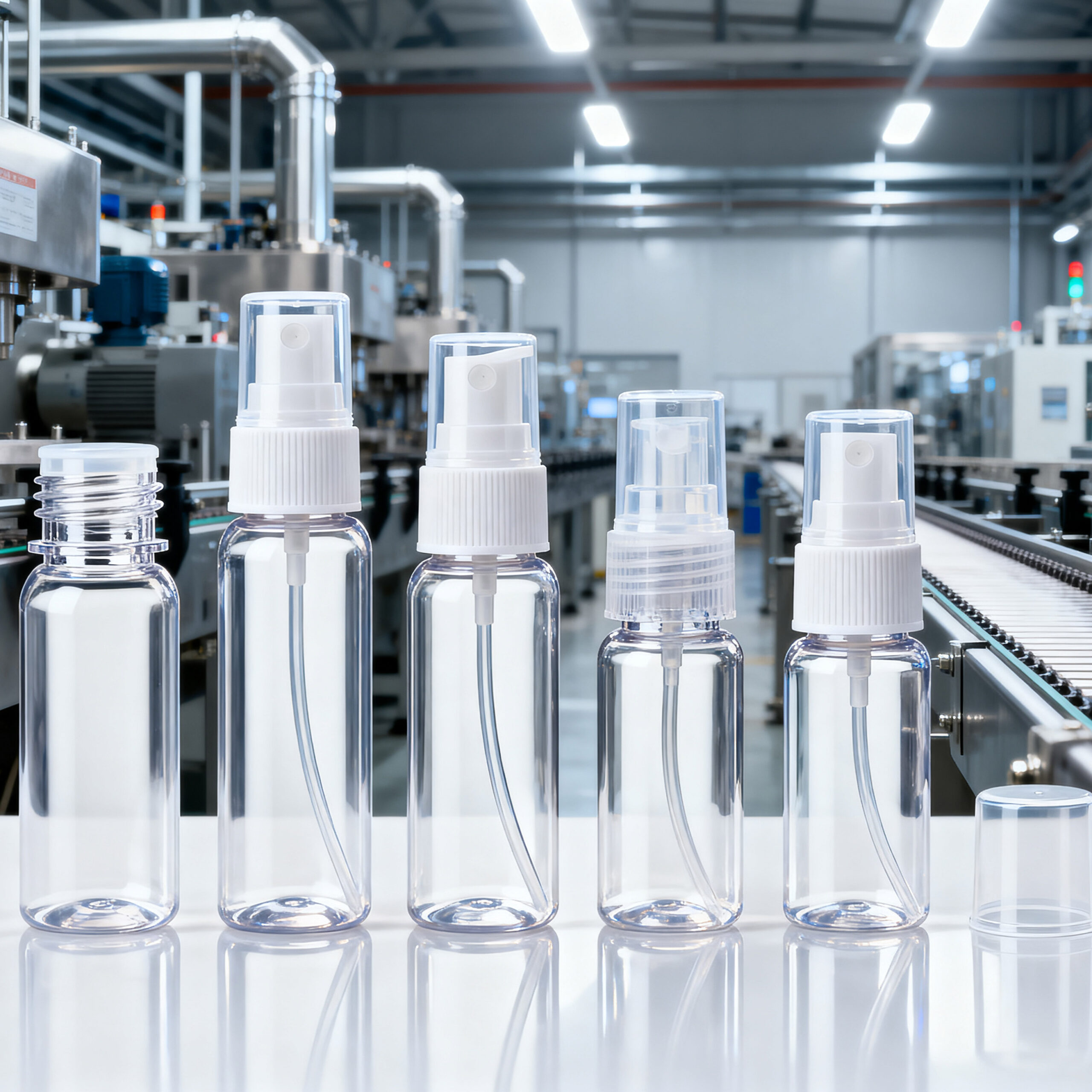
Elastic-Sealing Reliability in Lotion Travel Bottle Engineering
Ensuring the long-term performance of a lotion travel bottle depends on the stability of its elastic seal, especially when exposed to temperature fluctuations and repeated use. This analysis explores how material fatigue and environmental changes impact sealing integrity, with a focus on food-grade safety and robust engineering for travel applications.
Reliability Factors in Lotion Travel Bottle Sealing Systems
The design and engineering of lotion travel bottles place significant emphasis on the reliability of their elastic sealing systems, particularly when exposed to fluctuating temperatures and repeated mechanical stress. For sealing-material designers, understanding the interplay between material fatigue and seal performance is crucial to ensuring both food-grade safety and long-term sealing integrity. This technical analysis presents a structured evaluation of lotion travel bottle sealing mechanisms, focusing on the stability of elastic seals under cyclic loading and temperature variation. The discussion will progress from the core sealing architecture, through the assessment of reliability factors, to a detailed evaluation of fatigue behavior, concluding with engineering recommendations for validation and improvement.
Lotion travel bottles typically employ elastomeric sealing solutions to prevent leakage and contamination during transport. The primary sealing components are often constructed from food-grade silicone or thermoplastic elastomers (TPE), selected for their flexibility, chemical inertness, and compliance with safety standards. The sealing interface is generally formed by a precision-molded gasket or integrated lip seal, which is compressed between the bottle neck and the cap. This configuration must accommodate repeated opening and closing cycles, exposure to various lotion chemistries, and a range of ambient temperatures encountered during travel.

The mechanical design of the elastic seal is defined by its geometry, material modulus, and compression set characteristics. The gasket or lip seal is engineered to achieve a specific compression ratio, typically between 15% and 30%, which ensures sufficient contact pressure to block fluid migration without inducing excessive stress that would accelerate material fatigue. The sealing surface finish and cap-thread design also play roles in maintaining uniform compression and minimizing localized stress concentrations. For food-grade applications, all contact materials must meet regulatory standards for extractables and leachables, necessitating careful selection of base polymers and additives.

Reliability of the lotion travel bottle seal is determined by its ability to maintain leak-tight performance over repeated use and under varying environmental conditions. The most critical failure modes include loss of elasticity due to material fatigue, permanent deformation (compression set), and degradation from chemical or thermal exposure. Seal designers must account for the full lifecycle of the product, which may involve hundreds of open-close cycles and exposure to temperatures ranging from sub-zero storage to elevated conditions in transit.
Temperature variation imposes significant stress on elastic sealing materials. At low temperatures, elastomers can stiffen, reducing their ability to conform to mating surfaces and potentially allowing micro-leakage. At elevated temperatures, materials may soften or experience accelerated aging, leading to increased compression set and loss of sealing force. For silicone-based seals, the glass transition temperature (Tg) is typically well below expected usage temperatures, ensuring flexibility is retained. However, repeated thermal cycling can induce microstructural changes, such as chain scission or crosslink density reduction, which contribute to gradual loss of elasticity.
Material fatigue is a primary concern in the context of repeated cap actuation and pressure fluctuations. Fatigue manifests as the progressive accumulation of microcracks or molecular rearrangement within the elastomer, ultimately resulting in reduced sealing force or visible cracking. The fatigue life of a seal is influenced by the amplitude and frequency of mechanical loading, the presence of stress concentrators (such as sharp corners or molding defects), and the intrinsic fatigue resistance of the selected material. Silicone elastomers generally exhibit superior fatigue resistance compared to TPEs, but their performance is still contingent on formulation and processing quality.

A comprehensive evaluation of seal reliability requires both accelerated laboratory testing and real-world usage simulation. Accelerated aging protocols typically involve subjecting the assembled lotion travel bottle to repeated thermal cycling (e.g., -20°C to +60°C) and mechanical actuation, while monitoring for seal integrity and dimensional changes. Compression set measurements are performed by compressing the seal to its design ratio, maintaining the load for a specified period, and then measuring the permanent deformation after load removal. A low compression set value (<20%) is indicative of good elastic recovery and long-term sealing performance.
Chemical compatibility testing is also essential, as lotions may contain oils, alcohols, or active ingredients that can extract plasticizers or cause swelling in certain elastomers. Swelling or extraction can alter the seal geometry and mechanical properties, further exacerbating fatigue-related degradation. Food-grade silicone typically demonstrates excellent resistance to a wide range of cosmetic and personal care formulations, but each new lotion chemistry should be validated against the selected sealing material.
Finite element analysis (FEA) is a valuable tool for predicting stress distribution and identifying potential failure points within the seal design. By simulating the combined effects of cap tightening, pressure fluctuations, and thermal expansion, designers can optimize seal geometry and material selection to minimize peak stresses and enhance fatigue life. FEA can also be used to assess the impact of manufacturing tolerances and assembly variations on sealing performance, guiding process control measures to ensure consistent product quality.

The evaluation of sealing performance must also consider the user’s operational environment. For travel applications, bottles may be subjected to rapid pressure changes (e.g., during air transport), vibration, and accidental drops. The elastic seal must maintain its integrity under these transient loads, which can be simulated using drop testing and pressure cycling protocols. Data from these tests inform the selection of safety factors and the specification of minimum seal compression in the final design.
From an engineering perspective, the most effective approach to mitigating seal reliability issues is through a combination of robust material selection, precision manufacturing, and rigorous validation testing. Material selection should prioritize elastomers with proven fatigue resistance, low compression set, and broad chemical compatibility. Manufacturing processes must ensure consistent seal geometry and surface finish, as even minor defects can serve as initiation sites for fatigue cracking. Validation testing should replicate the full range of expected usage conditions, including thermal cycling, mechanical actuation, and chemical exposure.
Engineering Recommendations for Lotion Travel Bottle Seal Validation
In summary, the seal reliability of lotion travel bottles is fundamentally governed by the fatigue stability of the elastic sealing material under cyclic mechanical and thermal loads. Material fatigue, particularly under temperature variation, is the core challenge that sealing-material designers must address to ensure food-grade safety and long-term sealing integrity. Each phase of the design and validation process should be informed by a detailed understanding of material behavior, stress distribution, and environmental exposure. Continuous improvement in material formulation, seal geometry, and testing protocols is necessary to advance the performance of lotion travel bottle sealing systems.
Sealing-material designers are advised to conduct engineering validation that encompasses accelerated fatigue testing, comprehensive chemical compatibility assessment, and advanced simulation of stress and deformation profiles. Only through systematic evaluation and iterative refinement can the seal reliability of lotion travel bottles be assured, particularly in demanding travel scenarios characterized by temperature fluctuation and repeated mechanical use. This approach not only addresses the core pain point of material fatigue under temperature variation but also supports the broader objective of maintaining food-grade safety and user confidence in the sealing system.
For further guidance on packaging material selection and validation, refer to eco-friendly packaging materials e lotion travel bottle FAQs for detailed engineering insights.
 English
 Español
 Русский
 日本語
日本語 한국어
한국어 Français
 العربية
 Português