
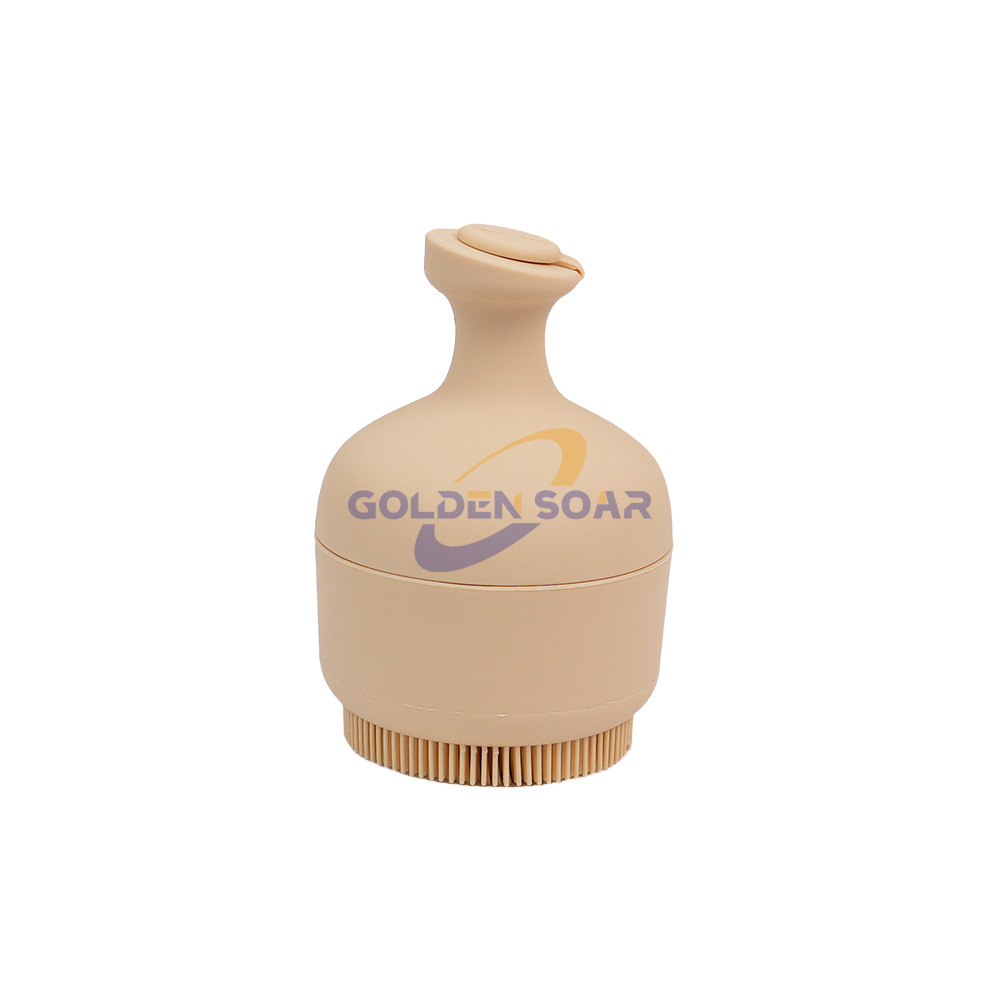
Material fatigue stability and elastic sealing reliability in silicone bathing brush engineering
When designing for elastic sealing in wet and temperature-variable environments, the silicone bathing brush must consistently maintain its integrity and elasticity. This analysis explores how silicone bathing brush materials perform under repeated stress and thermal cycling, focusing on their ability to deliver reliable sealing over time.
Reliability factors of silicone bathing brush elastic sealing
In applications where elastic sealing is critical, the role of silicone bathing brush materials extends beyond basic hygiene or tactile comfort. For sealing-material designers, the primary concern centers on how these silicone components maintain their integrity and elasticity under repeated mechanical stress and fluctuating thermal conditions. The durability of the elastic seal, particularly in environments exposed to water, detergents, and temperature cycling, directly impacts the functional lifespan and reliability of the bathing brush. This analysis provides a structured evaluation of the material fatigue stability inherent to silicone bathing brushes, with a focus on their performance as elastic sealing elements. The discussion progresses from foundational design considerations to reliability factors, culminating in a detailed evaluation framework and technical recommendations for engineering validation.
The silicone bathing brush is engineered as a flexible, resilient structure, typically formed from high-purity, food-grade silicone elastomer. Its primary function as an elastic sealing interface is realized through a combination of geometric design—such as ribbed or finned contact surfaces—and the intrinsic properties of silicone. The cross-linked polymer network within the silicone matrix imparts both elasticity and chemical inertness, essential for maintaining a consistent seal in wet and variable-temperature environments. The brush’s architecture often includes a series of protruding bristles or pads, which, when compressed against a substrate, create a conformal seal that adapts to minor surface irregularities.

Material selection for these brushes is governed by the need for high elastic recovery, tear resistance, and minimal permanent set. Food-grade silicone, with a typical Shore A hardness in the range of 40–60, is favored for its ability to withstand repeated deformation without significant loss of shape or mechanical properties. The addition of reinforcing fillers, such as fumed silica, further enhances tensile strength and abrasion resistance, both of which are crucial for maintaining seal integrity during cyclical use.
The manufacturing process, commonly liquid injection molding, ensures uniform cross-link density and dimensional stability. This process control is vital for achieving predictable elastic behavior and minimizing weak points that could lead to premature fatigue. The resulting structure must balance flexibility for user comfort with sufficient rigidity to maintain a reliable seal under compression.
Evaluation of fatigue stability and temperature resistance

Reliability of the silicone bathing brush as an elastic sealing component is primarily challenged by material fatigue and thermal cycling. Fatigue in silicone elastomers manifests as microcrack formation, loss of elasticity, and eventual seal failure after repeated compression and relaxation cycles. For sealing-material designers, understanding the mechanisms of fatigue under operational conditions is essential for predicting service life and preventing leakage or loss of function.
Temperature variation further complicates the reliability profile. Silicone’s glass transition temperature is well below typical usage ranges, allowing it to remain flexible at both low and elevated temperatures. However, exposure to hot water, steam, or rapid temperature shifts can accelerate physical aging and exacerbate fatigue. The rate of cross-link scission and chain rearrangement increases with temperature, potentially leading to increased permanent set and reduced elastic recovery. For food-grade applications, maintaining sealing performance across a temperature range of 0°C to 100°C is often required, with additional safety margins for sterilization cycles.
Chemical exposure, though less critical for food-grade silicones due to their inherent inertness, can still contribute to long-term degradation. Detergents, oils, and cleaning agents may interact with filler particles or residual catalysts, subtly altering the mechanical profile over time. The cumulative effect of these factors must be considered in the reliability assessment, especially for designs intended for prolonged or intensive use.
To quantify the reliability of silicone bathing brushes as elastic sealing elements, a systematic evaluation framework is necessary. This framework should incorporate accelerated fatigue testing, thermal cycling protocols, and dimensional stability measurements. Cyclic compression tests, conducted at varying amplitudes and frequencies, reveal the onset of material fatigue and the evolution of permanent set. These tests are typically performed using a universal testing machine equipped with environmental chambers to replicate temperature and humidity conditions encountered in service.

Thermal cycling tests expose the silicone brush to repeated transitions between cold and hot environments, assessing the resilience of the elastic seal under expansion and contraction stresses. Dimensional measurements before and after cycling provide quantitative data on permanent deformation and recovery rates. For sealing-material designers, particular attention should be paid to the correlation between cross-link density, filler content, and fatigue life, as these variables directly influence the material’s resistance to crack propagation and elastic loss.
Material fatigue stability is further evaluated through scanning electron microscopy and spectroscopic analysis. These techniques identify microstructural changes, such as void formation or filler-matrix debonding, that precede macroscopic seal failure. The data obtained from these analyses inform iterative design improvements, such as optimizing bristle geometry or adjusting the silicone formulation to enhance fatigue resistance.
A comprehensive evaluation also considers the impact of manufacturing variables, including cure time, mold temperature, and post-curing conditions. Variations in these parameters can introduce inconsistencies in cross-link density, leading to unpredictable elastic performance and localized fatigue hotspots. Process validation, including statistical process control and batch testing, is recommended to ensure uniformity across production runs.
The core pain point for sealing-material designers remains the assurance of reliable elastic sealing performance despite material fatigue and temperature variation. To address this, a multi-pronged engineering validation approach is advised. First, establish baseline fatigue life through standardized cyclic testing at relevant temperatures. Second, implement thermal cycling protocols to simulate real-world usage and identify failure thresholds. Third, analyze post-test samples using microscopy and spectroscopy to detect early signs of fatigue and degradation. Finally, correlate these findings with design variables—such as geometry, cross-link density, and filler content—to optimize the balance between flexibility and durability.

For food-grade and temperature-resistant applications, additional validation steps may include migration testing to confirm that no extractables or leachables compromise the safety of the sealing interface. It is also recommended to conduct aging studies under accelerated conditions to predict long-term performance and establish maintenance or replacement intervals.
In summary, the elastic sealing durability of silicone bathing brushes is governed by a complex interplay of material composition, structural design, and environmental exposure. Material fatigue stability, particularly under temperature variations, is the critical determinant of seal reliability. Through rigorous engineering validation—encompassing fatigue testing, thermal cycling, microstructural analysis, and process control—sealing-material designers can systematically address the core pain point of fatigue-induced seal failure. Continuous feedback between testing outcomes and design modifications ensures that the silicone bathing brush maintains its sealing function throughout its intended service life.
Engineering validation for silicone bathing brush sealing durability
Conduct engineering validation for sealing integrity by implementing a structured fatigue and temperature cycling protocol, supported by microstructural analysis and process control, to ensure that silicone bathing brush designs meet the stringent requirements of elastic sealing durability in demanding environments.
For further technical resources on silicone materials and their applications in hygiene and personal care, visit the Goldensoar silicone materials page or explore Personal Care & Toiletries packaging solutions for additional insights.
 English
 Español
 Русский
 日本語
日本語 한국어
한국어 Français
 العربية
 Português