
PET Packaging Materials Complete Breakdown
Reference Standard: Relevant material and performance testing standards for PET packaging, including dimensional inspection, visual quality review, leak testing, drop-impact validation, and plastic packaging guidance from organizations such as ASTM International e o Association of Plastic Recyclers.
Short Answer
When a Transparent Bottle Must Behave Like a Display Surface, Not Just a Container
PET packaging materials are often judged first by how the bottle reads visually before anyone tests the formula inside. A clear PET bottle is not merely a storage shell; it becomes a shelf-facing clarity window, a sample approval surface, and a brand-display plane. In the supplied product data, PET is positioned with 92% light transmission, heavy-wall luxury aesthetics, e single-stage ISBM technology. These details change the inspection logic. The buyer is no longer asking only whether the bottle can hold liquid. The buyer is asking whether the bottle can present lotion, shampoo, cleanser, or cosmetic liquid with enough clarity and surface discipline to support premium positioning.
Single-stage ISBM matters because the process biaxially orients polymer chains vertically and horizontally. That orientation gives PET a cleaner balance between transparency, strength, and shape control than a loose commodity bottle description would suggest. The supplied data also notes seamless bottoms with a clean gate mark and higher drop-impact resistance. For a display-facing format, those details are not cosmetic decoration; they affect whether the bottle can pass a visual audit under bright retail lighting, studio sample photography, or distributor showroom review.
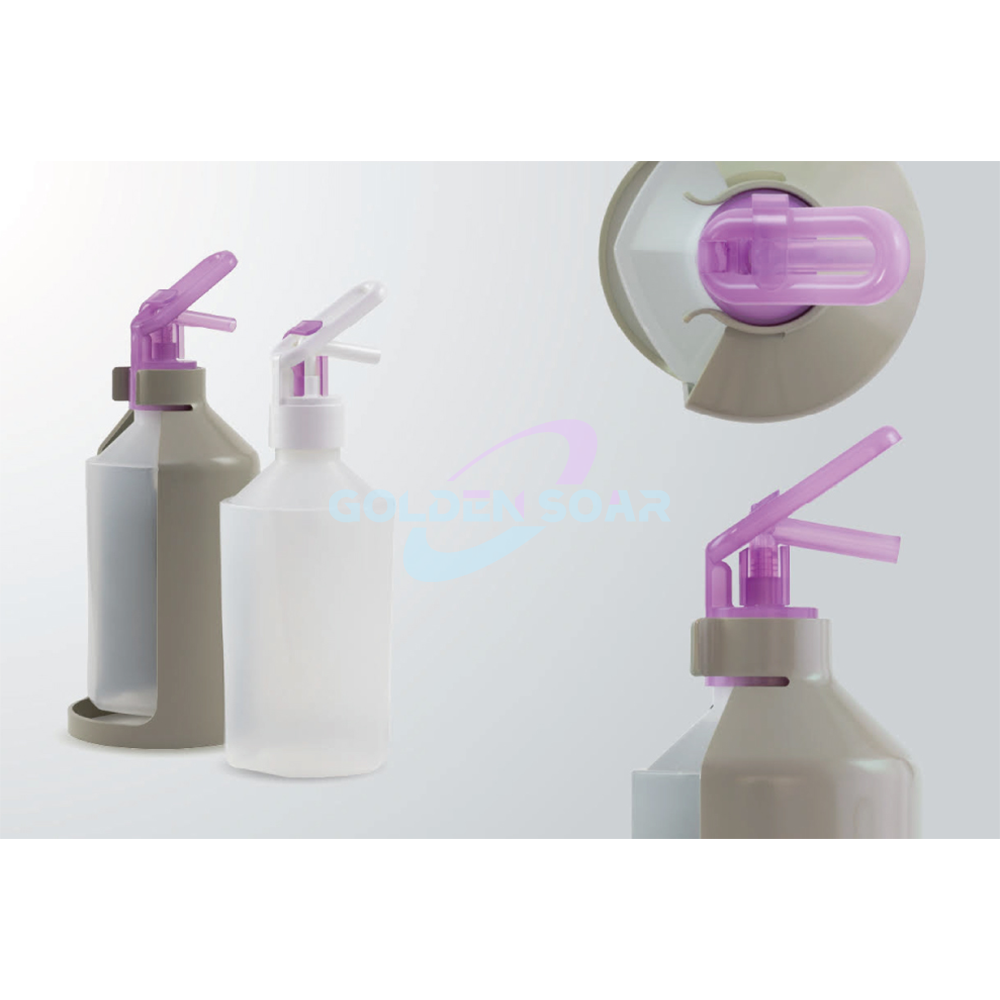
A useful edge-case model is the high-light inspection table. Imagine a clear PET package placed under strong white display lighting for buyer review. During the initial stage, the bottle reads as clean if the wall thickness is visually even and the gate mark does not draw attention. During the middle stage, minor surface marks become visible because transparent PET does not hide contact history well. During the extreme stage, the buyer may reject a technically functional bottle if the visual reading surface appears cloudy, scuffed, or inconsistent. This does not mean the material has failed mechanically. It means the package has failed the first perception layer.
A cross-dimensional comparison can be made between a clear PET cosmetic pump bottle and an opaque personal care container. The opaque container may hide minor handling marks, but it cannot deliver the same visibility of product color, texture, or fill impression. Clear PET provides that visual access, but the cost is stricter control of surface contact, color consistency, and wall clarity. That is why PET packaging evaluation should include both functional review and optical review.
| Display Variable | PET Packaging Implication | Buyer Risk If Ignored | Practical Review Point |
|---|---|---|---|
| 92% light transmission | Strong visual clarity | Surface defects become easier to notice | Inspect under bright light |
| Heavy-wall appearance | Premium visual weight | Uneven wall reading may look cheap | Review sidewall and base |
| ISBM orientation | Better strength-to-clarity balance | Poor molding discipline can affect visual consistency | Confirm process capability |
| Seamless bottom with gate mark | Cleaner premium base | Base flaws can distract during sample review | Check base symmetry |
KEY TAKEAWAYS
- A transparent PET bottle may fail buyer review before formula testing if the visible surface shows scuffing.
- Heavy-wall PET should be inspected as a display object, not only as a liquid container.
- Strong clarity increases both brand appeal and defect visibility.
Neck Finish as the Hidden Agreement Between PET Body and Pump System
PET material is not a standalone promise once the package uses a pump, sprayer, foaming pump, or refillable dispensing structure. The neck finish becomes a hidden agreement between the rigid PET body and the mechanical closure system. The supplied data specifically mentions calibrated neck finishes designed to support leak-proof seals with pumps and sprayers. The catalog range also includes 350ml foam dispenser bottles, 150ml PET cosmetic pump bottles, e 250ml PET foaming pump bottles. This product mix shows that the bottle body is only one part of the performance chain.
The mechanism starts at geometry. A pump or sprayer must meet the neck with stable dimensional alignment. If the neck finish is inconsistent, the closure may still assemble, but sealing pressure can become uneven. In a cosmetic or skincare setting, that may appear as micro-leakage, cap tilt, weak pump seating, or uncertain fit during sample testing. For PET packaging materials, this is especially important because the bottle can look visually correct while the interface quietly carries the risk.
The deeper material logic is that PET provides rigidity and clarity, but the dispensing system depends on controlled tolerance. A bottle for foam cleanser or hand soap must manage not only liquid containment but also repeated user handling, pump compression, and closure contact. A sprayer bottle faces different forces: downward pressing, lateral hand grip, and internal liquid movement. A cosmetic pump bottle may be judged by the buyer for smooth appearance, but the technical question remains whether the neck finish allows the pump to seal and sit consistently.
A practical edge-case model is the tilted-dispenser simulation. In the first stage, the PET bottle is filled with a low-viscosity liquid and held upright. A slightly imperfect neck may not reveal a problem. In the second stage, the package is tilted during handling or sample movement; the closure interface begins to show whether the seal has equal compression around the neck. In the extreme stage, the buyer uses a pump or sprayer repeatedly, and the system exposes fit weakness through leakage, residue around the neck, or visible misalignment.
A cross-system comparison can be made between a PET foam dispenser bottle and a PET cosmetic pump bottle. The foam dispenser relies on air-liquid interaction and a pump structure that must remain stable at the neck. The cosmetic pump bottle may hold lotion or serum-like products that place different stress on the pump fit. Both need calibrated neck finishes, but the failure symptoms may differ: foam packaging may show dispensing instability, while pump packaging may show sealing uncertainty or residue around the closure.
PRO-TIP / CHECKLIST
- Confirm that the PET neck finish is calibrated for the intended pump, sprayer, or foaming pump.
- Test closure fit with the actual component, not a visually similar sample.
- Inspect the neck area after repeated pump pressing.
- Tilt filled samples to check whether the seal remains stable.
- Review residue around the closure after handling.
- Separate visual approval from functional interface approval.
The 60°C Boundary Turns PET Selection Into a Filling-Temperature Decision
The most important material boundary in this PET packaging discussion is simple and strict: standard PET deforms above 60°C. This figure changes the sourcing conversation. A PET bottle may offer strong clarity, light transmission, and premium visual weight, but it should not be pushed into a standard hot-fill process when the filling temperature exceeds the material boundary. For hot-fill products, the correct route is to evaluate PP bottles ou specialized Heat-Set PET molds, rather than forcing ordinary PET into an unsuitable condition.
This section must be understood as a temperature decision, not a generic material preference. At room temperature or normal low-temperature filling, PET can be evaluated for cosmetics, shampoo, conditioner, shower gel, body wash, foam cleanser, hand soap, refillable formats, and pump or sprayer packaging. Once temperature rises beyond the stable range for standard PET, the risk moves from appearance to geometry. The bottle may soften, deform, lose dimensional confidence, or create downstream fit uncertainty at the neck and closure.
A useful extreme-environment fatigue model is the stepped-temperature exposure review. In the initial stage, a PET bottle exposed to a safe filling condition keeps its visual shape and neck geometry. In the middle stage, as temperature approaches the practical limit, dimensional sensitivity increases; the package may still appear acceptable immediately, but tolerance confidence becomes weaker. In the extreme stage above 60°C, standard PET can deform, which may affect the wall, base, shoulder, or neck area depending on design and exposure duration.
The cross-dimensional comparison is PET versus a heat-appropriate alternative. PET wins when the project needs high clarity, a lighter display package, and clean pump or sprayer compatibility under suitable filling conditions. A heat-resistant route wins when the formula, production process, or filling method requires higher temperature exposure. The buyer should not treat this as a brand preference. It is a process compatibility decision.
| Filling Condition | Standard PET Suitability | Main Risk | Safer Decision Route |
|---|---|---|---|
| Room-temperature filling | Strong candidate | Surface handling and neck fit still require review | Evaluate PET |
| Low-temperature cosmetic filling | Strong candidate | Visual clarity and pump compatibility matter | Evaluate PET with component testing |
| Near-temperature-boundary filling | Conditional | Dimensional confidence may weaken | Run sample validation |
| Above 60°C filling | Not suitable for standard PET | Deformation risk | Use PP or Heat-Set PET |
| Premium clear packaging need | Strong candidate if temperature is safe | Scratch visibility | Add surface handling control |
A buyer evaluating lotion bottle dispensing formats should therefore ask two questions before color, logo, or decoration: What is the real filling temperature, and will the selected pump or closure be tested after exposure? If the project uses a foam cleanser or hand soap format, the same logic applies to foam dispenser packaging. PET can be a strong packaging choice, but only when the filling process respects the material boundary.
Surface Contact Control Before the Buyer Ever Tests the Formula
For transparent and heavy-wall PET, surface contact history can influence sample trust before the buyer ever runs a formula test. The supplied data names three relevant controls: individual polybagging, layer packing with dividers, e robotic pick-and-place systems that minimize surface contact during production. These are not minor packing notes. They are part of the visual quality system for clear PET packaging.
The mechanism is physical and optical. PET clarity makes small contact marks more visible because light passes through and reflects off the surface. A shallow scratch, dull rub mark, or handling trace can interrupt the visual reading of the bottle. For opaque or heavily decorated packaging, the same mark might be less obvious. For clear heavy-wall PET, it can become the first thing a buyer notices during sample approval. That means surface contact control functions as a trust gate before compatibility testing, filling trials, or decoration confirmation.
An edge-case model is the premium-sample handling chain. In the initial stage, PET bottles leave molding with clean surfaces because robotic pick-and-place reduces manual touch and uncontrolled contact. In the middle stage, bottles are grouped for movement, and layer packing with dividers reduces bottle-to-bottle abrasion. In the extreme stage, premium heavy-wall PET is individually polybagged to protect the visible surface from scuffing before buyer review. At each stage, the goal is not to make shipping sound impressive; the goal is to preserve the sample-handling trace so the package still reads as clean when the buyer sees it.
A useful comparison is between visual-contact control and formula-contact testing. Formula testing asks whether the packaging can hold the intended product and work with the chosen pump or sprayer. Surface-contact control asks whether the buyer will trust the sample enough to continue testing. In premium PET packaging, these two paths interact. A bottle with good mechanical performance but visible scuffs may receive negative feedback before the technical review begins.
The supplied production context also states that ISBM machines produce 30,000 bottles per day. That scale makes contact control more important, not less. High output can support commercial demand, but high output without surface discipline would create inconsistent sample perception. Robotic handling, divider packing, and individual protection for premium items help keep volume production aligned with visual expectations.
KEY TAKEAWAYS
- Clear PET can make shallow scuffs more visible than opaque packaging.
- Surface handling should be reviewed before formula compatibility testing.
- Robotic pick-and-place, dividers, and individual polybagging protect visual trust.
Solutions and Standards for PET Packaging Validation
A strong PET packaging approval process should combine process validation, temperature screening, interface testing, and visual-contact control. The aim is not to make the material sound universally suitable. The aim is to define where PET works well and where the project should be redirected.
Solution 1: ISBM process confirmation. Execution Protocol: Confirm that the PET bottle is produced through single-stage ISBM when the project requires clear display quality, cleaner base appearance, and controlled wall behavior. Review the bottle for biaxial orientation benefits, seamless bottom appearance, clean gate mark, and drop-impact confidence. Material evolution: Proper ISBM orientation should improve the strength-to-clarity balance because polymer chains are oriented vertically and horizontally. Hidden cost and risk control: ISBM samples should still be visually inspected because process capability does not automatically remove surface marks, color variation, or component mismatch.
Solution 2: Neck finish and closure validation. Execution Protocol: Test the actual pump, sprayer, or foaming pump on the selected PET bottle. Do not approve the bottle body separately from its closure system. Check fit, sealing behavior, tilt response, and residue around the neck after repeated handling. Material evolution: A calibrated neck finish should improve sealing reliability and reduce uncertainty at the interface between PET body and dispensing component. Hidden cost and risk control: The main hidden risk is approving a bottle with a substitute closure, then finding leakage with the real production component.
Solution 3: Temperature boundary screening. Execution Protocol: Confirm the real filling temperature before approving standard PET. If the process goes above 60°C, do not force standard PET into that use case. Evaluate PP or specialized Heat-Set PET molds instead. Material evolution: Keeping standard PET within a compatible temperature range protects dimensional stability, wall shape, and closure fit. Hidden cost and risk control: The hidden cost is late-stage redesign after deformation is found during filling trials. Temperature screening should happen before decoration and bulk order decisions.
Solution 4: Surface-contact protection plan. Execution Protocol: Use robotic pick-and-place where available, layer packing with dividers for grouped movement, and individual polybagging for premium heavy-wall PET items. Review samples under bright light before approval. Material evolution: These steps do not change PET chemistry, but they preserve surface appearance and reduce the likelihood that scuffs interrupt the visual reading surface. Hidden cost and risk control: Extra packing can increase handling complexity, so it should be applied based on finish sensitivity and buyer inspection requirements.
| Validation Area | Confirmed Data Point | Practical Test | Acceptance Logic |
|---|---|---|---|
| Optical clarity | 92% light transmission | Bright-light visual inspection | Surface must read clean and consistent |
| Process route | Single-stage ISBM | Base, wall, and gate mark review | Shape and display surface should match sample intent |
| Closure interface | Calibrated neck finishes | Pump and sprayer leak test | Fit must be checked with real components |
| Temperature limit | Standard PET deforms above 60°C | Filling-temperature screening | Redirect to PP or Heat-Set PET when needed |
| Surface handling | Individual polybagging and dividers | Scratch and abrasion review | Premium PET should arrive visually clean |
| Production context | 30,000 bottles per day ISBM machine context | Batch consistency review | High output must not reduce visual consistency |
For projects involving spray packaging outside the core PET cosmetic bottle range, such as embalagens de alumínio para aerossóis, the buyer should separate material behavior from dispensing concept. A sprayer, pump, aerosol can, and foaming pump may all dispense product, but the material validation path is different.
Frequently Asked Questions (FAQ)
What materials are used for food packaging?
Food packaging can use PET, PP, PE, glass, aluminum, tinplate, and paper-based structures depending on heat exposure, barrier needs, filling method, and compliance requirements. For PET, standard bottle use should respect the material’s temperature boundary, especially because standard PET deforms above 60°C.
How to recycle packaging materials and office supplies?
Separate packaging by material code where possible. PET is commonly identified as recycling Code #1, while PETG is often Code #7 and is harder to recycle. Remove incompatible components when local recycling rules require it, and avoid mixing contaminated packaging with clean recyclable streams.
How to dispose of styrofoam packaging material?
Styrofoam disposal depends on local recycling access because many municipal programs do not accept it through standard curbside recycling. It should not be mixed with PET packaging streams. Check local foam drop-off programs, commercial recycling options, or disposal guidance from the local waste authority.
When reusing hazardous materials packaging, what matters most?
The package must be suitable for the material, legally permitted for reuse, clean, structurally sound, and compliant with the relevant hazardous materials rules. PET cosmetic packaging should not be treated as hazardous-materials packaging unless it is specifically certified for that purpose.
When shippers package hazardous materials, what must they certify?
Shippers generally must certify that hazardous materials are properly classified, described, packaged, marked, labeled, and documented according to applicable transport regulations. Standard PET cosmetic bottles should not be assumed to meet hazardous-material packaging rules without specific compliance validation.
Can I use a T-shirt as packaging material for Media Mail?
Media Mail eligibility depends on postal rules for qualifying media contents, not simply the outer wrapping material. A T-shirt used as cushioning may create classification or handling issues. For commercial packaging, use material systems that match the product, carrier requirements, and inspection expectations.
 English
 Español
 Русский
 日本語
日本語 한국어
한국어 Français
 العربية
 Português