
Empty Hand Soap Bottles Specification Guide
Reference Standard: Relevant material and performance testing standards, including ASTM D1693 for environmental stress-cracking resistance and ISO 9001:2015 quality management logic for repeatable manufacturing control.
Short Answer
From Bathroom Counter Contact to Refill Behavior: Wet-Use Stability for Empty Hand Soap Bottles
A buyer often starts with capacity, shape, and price, but the real use environment of frascos vazios de sabão para as mãos begins after the bottle reaches a bathroom counter, kitchen sink, or family hand-wash station. The product data gives a practical baseline: PE bottle body, PP pump head, 300ml capacity, 50g lightweight body, e 28-thread specification. The same catalog family also includes a related 350ml PE foam pump bottle com 60g weight and a 40-thread design, which gives a useful comparison point for larger foaming formats.
The wet-use stability question is not only whether the bottle stands upright when new. It is whether the package remains predictable as it moves through different fill states. An empty 50g body has a high sensitivity to hand force, counter slope, and surface moisture. A half-filled 300ml PE bottle has a different center of gravity. A full bottle has more mass pressing downward, but it also creates more momentum when grabbed quickly with wet hands. This means a lightweight hand soap dispenser can feel stable at one stage and less stable at another, even when the material and pump are unchanged.
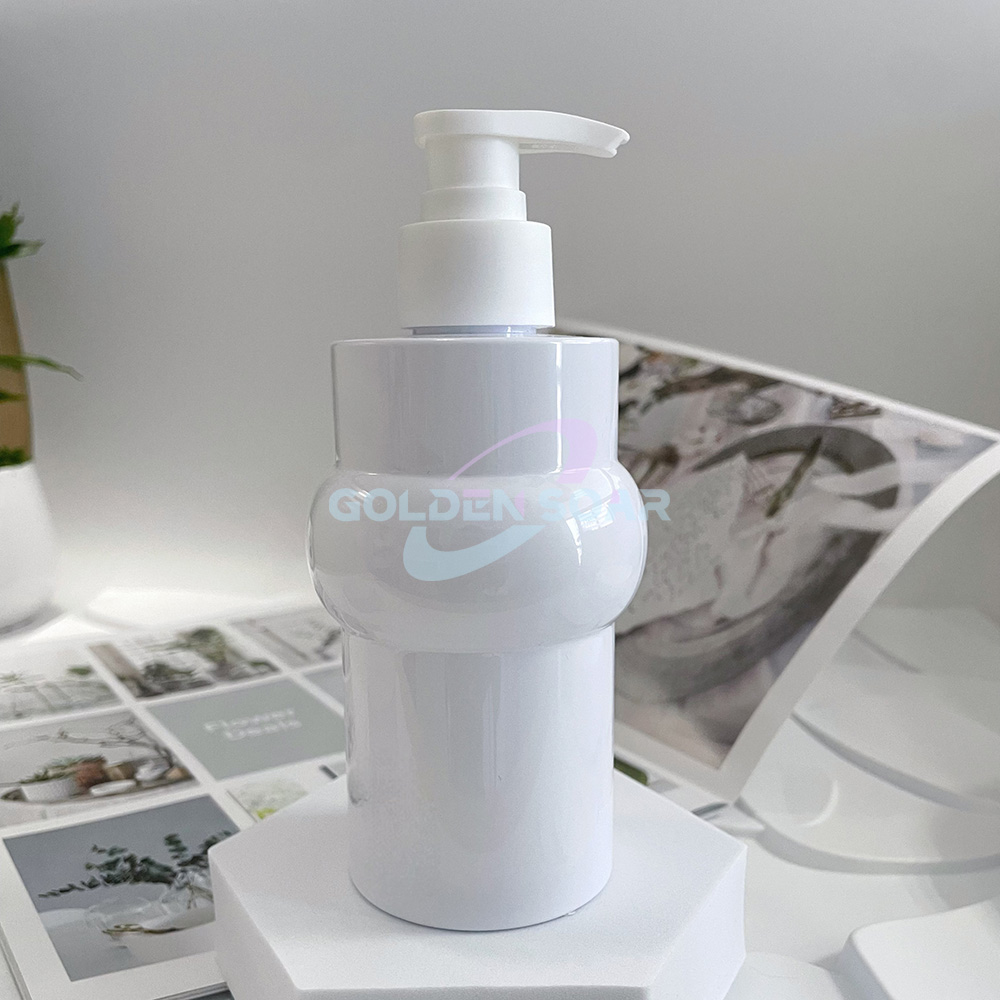
A practical edge-case model is a wet-counter refill sequence. In the first stage, the bottle is nearly empty and sits on a damp sink edge. The lower liquid mass reduces bottom loading, so the bottle relies more heavily on base geometry, surface friction, and the user’s grip path. In the second stage, a consumer refills it with room-temperature liquid soap or shampoo. As the liquid level rises, the center of mass shifts upward and the bottle becomes more responsive to lateral force from pump pressing. In the third stage, the user presses the PP pump repeatedly while the counter surface remains wet. Even a small sliding movement can reduce confidence, especially when the bottle is used by multiple family members during a busy morning routine.
A cross-dimensional comparison helps separate packaging logic from appearance. A 300ml, 50g, 28-thread PE hand soap bottle prioritizes compact handling and lifestyle use. A 350ml, 60g, 40-thread PE foam pump bottle has a larger format and different dispensing behavior. The smaller bottle may be easier to place near a narrow sink, while the larger bottle may provide more perceived steadiness through added weight and a wider pump format. Neither format is automatically superior; each needs to be matched to the use rhythm.
The hidden procurement lesson is that stability is a system outcome. PE provides light impact resistance and a squeezable feel. PP gives the pump structure more rigidity. The 28-thread interface supports the pump connection. The 300ml capacity defines how often a household or brand user will refill the product. When these details are evaluated together, the buyer can move beyond a simple bottle listing and define whether the package belongs in a bathroom, kitchen, children’s hygiene area, personal-care gift set, or bulk refill program.
Refill Cycle Fatigue: PE Bottle Memory and PP Pump Recovery
Refillable hand soap bottles enter a repeated press-release cycle that is easy to overlook in a static product specification. The bottle body is PE, the pump head is PP, and the product uses a 28-thread specification. These details matter because the two polymers perform different jobs. PE provides the bottle body with flexibility and impact tolerance. PP provides mechanical stiffness for the pump head and threaded functional parts. When consumers refill the same bottle many times, the package is not simply reused; it is repeatedly squeezed, opened, tightened, pressed, wiped, and repositioned.
At a material level, PE has a molecular structure that can tolerate deformation better than many rigid packaging plastics. This helps in a bathroom or sink environment where a bottle may be grabbed from the side, squeezed during handling, or dropped lightly. PP, by contrast, is used where a more structured component is required. A pump head must recover after actuation, resist casual bending, and maintain a usable dispensing rhythm. The bottle and pump therefore form a mixed-material mechanical system: flexible reservoir below, structured dispensing hardware above.
A useful extreme refill-cycle model begins with the initial use period. During early cycles, the PE body maintains its shape memory and the PP pump delivers a consistent press feel. In the middle period, the consumer may refill with different room-temperature surfactant formulas such as hand soap, shampoo, shower gel, or body lotion. Viscosity and surfactant load can change the perceived pump rhythm even when the bottle is unchanged. In the high-cycle period, repeated tightening and loosening of the pump can make the user more sensitive to any looseness, residue buildup, or uneven recovery. The package may still function, but the perception of reliability can decline before a visible failure appears.
The relevant testing anchor is ASTM D1693, which is used for environmental stress-cracking resistance in PE materials. The catalog also states PE surface treatment by flame or corona treatment to raise surface energy above 38 dynes/cm for decoration adhesion. These are not decorative facts; they show that the package is designed around material behavior under chemical and surface-contact conditions. For refillable hand soap packaging, this matters because surfactants can interact with molded stress points, and daily handling can expose both the body and decorated surface to moisture, friction, and residue.
For comparison, a disposable single-use bottle is judged mostly by first-fill function and initial shelf appearance. A refillable hand soap bottle must be judged by rhythm retention. Does the pump still feel controlled after repeated actuation? Does the PE body return to a reliable form after handling? Does the 28-thread interface support repeated opening and closing without user frustration? Does the package still look acceptable after contact with soap residue and wiping? These questions are more useful than asking only whether the bottle leaks in a short test.
KEY TAKEAWAYS
- A bottle may show reduced user confidence before visible failure if the pump press rhythm becomes inconsistent.
- Repeated refill cycles can make thread feel, pump recovery, and body rebound more important than first-sample appearance.
- Surfactant contact and molded-in stress should be considered together when selecting PE hand soap packaging.
Surface Identity Under Soap Residue: Branding Readability After Daily Contact
Branding on hand soap packaging lives in a harsher environment than many shelf displays suggest. A custom bottle may look clear and attractive before filling, but real use introduces wet fingers, foam residue, water spots, towel wiping, and frequent repositioning. The product data lists custom color matching, silk print, embossed, e debossed logo methods. The PE material page also states that PE is non-polar and requires flame treatment or corona discharge to raise surface energy above 38 dynes/cm for stronger ink adhesion.
This section should not be reduced to a simple printing problem. The deeper issue is long-term brand readability. A buyer ordering custom hand soap bottles wants the brand mark to remain recognizable after the product has moved from shipping carton to sink counter to repeated consumer use. Surface identity is therefore a lifecycle asset. If the logo becomes dull, scratched, partly lifted, or visually hidden by residue, the package may still dispense soap, but the brand experience weakens.
The mechanism begins with PE surface chemistry. Because PE is non-polar, ink does not naturally bond to it with the same ease as it might on a higher-energy substrate. Surface activation changes the outermost layer so printing, hot stamping, or related decoration methods can bond more effectively. Embossed and debossed logos add another path because they rely on molded surface relief rather than only ink film. For a wet bathroom product, combining the right decoration method with the expected cleaning behavior is often more important than choosing the most visually dramatic sample.

An edge-case surface model can be described in three phases. At the shelf phase, the bottle must communicate color, form, and product category quickly. At the bathroom phase, the same surface meets water droplets, soap film, and contact from wet hands. At the maintenance phase, the user may wipe the bottle with a towel, tissue, or cleaning cloth. This final phase is where poor surface preparation becomes visible. The surface may not fail in one dramatic event; it may lose readability gradually through micro-abrasion, residue haze, and reduced contrast.
A comparison test can be built around three identity formats. A silk-printed logo provides a direct brand mark and color expression. An embossed mark offers tactile recognition and may remain visible even if surface gloss changes. A debossed mark can support a more subtle premium look, though it depends on lighting and bottle color contrast. For personal-care brands, the strongest solution may not be one universal method. A children’s bathroom product, a minimalist hotel amenity, and a bulk hand-wash refill line may each require a different decoration strategy.
Internal linking also helps avoid content overlap in a product cluster. A page focused on a creative PE dispenser can naturally connect to the related toothpaste bottle and empty hand soap bottles product page without repeating the same article angle. If the article later references foaming formats, it can connect to the 250ml foaming pump bottles and PET foamer bottle page only when the discussion shifts to foaming packaging differences.
Empty Bottle Procurement Is Not Just Capacity
A strong procurement sheet for bulk empty hand soap bottles should not stop at “300ml plastic bottle.” The available data is more precise: 300ml capacity, 50g body, 28-thread specification, PE bottle body, PP pump head, ISO 9001:2015, ASTM-D1693 Standard, 15-25 days lead time, e MOQ of 10,000 units. These details support a specification framework built around use rhythm, formula contact, display role, and refill frequency.
Execution Protocol 1: Match the bottle to the daily use rhythm. A bathroom hand soap bottle may face short, frequent pump actions. A kitchen sink bottle may face wet hands, oil residue, and faster refill cycles. A children’s hygiene area may require lighter handling and a more playful form. The 300ml capacity and 50g structure should be evaluated against the number of users, refill frequency, and available counter space.
Material evolution expectation: When the use rhythm is correctly matched, the PE body should maintain better perceived shape recovery, and the PP pump should feel more consistent across repeated actuation. The buyer is not changing the polymer itself; the buyer is reducing mismatch between expected handling intensity and package format.
Hidden cost and side-effect control: Overspecifying a bottle can increase cost and reduce convenience. Underspecifying it can increase complaints. The safest approach is to test the actual hand soap, shampoo, shower gel, or lotion formula in the intended environment rather than relying only on sample appearance.
Execution Protocol 2: Validate formula contact before scaling. PE is suitable for many room-temperature surfactant products, but surfactant-rich formulas can create stress-cracking risk if material selection and molded stress are not controlled. ASTM D1693 provides a relevant reference point for ESCR thinking.
Material evolution expectation: A more suitable PE resin and controlled wall-thickness distribution should resist crack initiation better under surfactant exposure. The purpose is not to claim universal compatibility; it is to reduce avoidable failure risk under the expected formula window.
Hidden cost and side-effect control: Formula testing adds time before purchase approval, but it is cheaper than discovering incompatibility after a 10,000-unit order. Buyers should define the intended liquid category before locking color, logo, and pump style.
Execution Protocol 3: Treat the 28-thread and PP pump as a user-interface system. The thread is not only a closure dimension; it shapes the refill experience, tightening feel, and pump stability during use.
Material evolution expectation: A consistent thread fit reduces micro-movement during pump pressing and helps preserve user confidence. The bottle may not need to be heavier if the interface remains predictable.
Hidden cost and side-effect control: A pump that feels too tight, too loose, or difficult to remove can create refill frustration. The solution is pump actuation testing, thread fit checks, and inverted storage evaluation before bulk approval.
Execution Protocol 4: Define decoration durability by use environment. Silk print, embossed, and debossed methods should be selected according to brand role and cleaning behavior.
Material evolution expectation: Surface treatment above 38 dynes/cm improves ink adhesion potential, while molded logo relief can preserve identity through repeated contact. The measurable target is not only first-day beauty but continued readability.
Hidden cost and side-effect control: More decoration does not always mean better packaging. A highly detailed print may look attractive in a sample photo but perform poorly if the bottle is wiped often. Choose decoration that matches the real counter environment.
| Procurement Variable | Data Anchor | Expected Risk if Ignored | Practical Validation Method |
|---|---|---|---|
| Capacity and body weight | 300ml, 50g | Unstable feel during empty-to-half-full use | Counter placement and pump-use simulation |
| Pump and thread system | PP pump, 28-thread | Refill frustration or inconsistent actuation feel | Thread fit and repeated opening test |
| Material compatibility | PE body, ASTM D1693 logic | Stress cracking under surfactant exposure | ESCR-based material screening |
| Decoration survival | >38 dynes/cm surface energy | Reduced brand readability after wet handling | Adhesion and wipe-resistance checks |
| Batch readiness | ISO 9001:2015, MOQ 10,000 units | Inconsistent quality across production lots | Sampling inspection and lot approval |
| Delivery planning | 15-25 days lead time | Delayed launch or rushed validation | Pre-production approval calendar |
PRO-TIP / CHECKLIST
- Confirm whether the bottle will be used for hand soap, shampoo, shower gel, lotion, or a mixed refill program.
- Test the exact liquid formula at room temperature before approving bulk packaging.
- Check pump actuation feel after repeated press-release cycles, not only on the first press.
- Inspect the 28-thread interface after opening, refilling, and retightening.
- Compare silk print, embossed, and debossed branding under wet wiping conditions.
- Verify capacity, weight, visual defects, and leak behavior during sample approval.
- Use ISO 9001:2015 and ASTM-D1693 references as quality anchors, not as substitutes for product-specific validation.
For additional material background, ASTM International provides standards used across plastics testing, and ISO provides management-system standards that help define repeatable quality processes. These references are useful when a buyer needs a more disciplined specification discussion instead of relying only on catalog images.
Frequently Asked Questions (FAQ)
What is packaging material?
Packaging material is the physical substance used to contain, protect, dispense, and present a product. For these empty hand soap bottles, the relevant materials are PE for the bottle body e PP for the pump head, selected for lightweight handling, refill use, and controlled dispensing.
What packaging materials are recyclable?
PE and PP are both recyclable plastic families in many recycling systems, though acceptance depends on local recycling rules and whether pumps, labels, residues, and mixed materials are separated. Buyers should confirm local recycling requirements before making consumer-facing recyclability claims.
How to recycle plastic packaging materials?
Plastic packaging should usually be emptied, rinsed when practical, and sorted by local recycling instructions. For pump bottles, the bottle body and pump may be treated differently because they use different components. Local rules should guide whether the pump is removed before recycling.
What are the best practices for handling packaging materials?
Best practices include protecting bottles from deformation, keeping threaded areas clean, avoiding unnecessary heat exposure, testing formula compatibility, and inspecting decoration quality before filling. For hand soap bottles, wet-use handling, refill cycles, and pump function should be validated together.
When reusing hazardous materials packaging, what should be considered?
Hand soap bottles should not be reused for hazardous materials unless the packaging is specifically qualified for that purpose. Packaging used for hazardous substances requires strict compatibility, labeling, closure, and regulatory controls that ordinary personal-care dispenser bottles are not designed to replace.
When shippers package hazardous materials, what must they certify?
Shippers of hazardous materials must follow applicable transport regulations and certify that packaging, labeling, documentation, and handling meet the required rules. Empty PE hand soap bottles for personal-care use should not be assumed suitable for hazardous materials shipping.
 English
 Español
 Русский
 日本語
日本語 한국어
한국어 Français
 العربية
 Português