
Why Do Silicone Travel Bottles Leak on Airplanes?
Reference Standard: ASTM-D1693 (Standard Test Method for Environmental Stress-Cracking of Ethylene Plastics) and IATA Dangerous Goods Regulations for Pressure Differentials
Short Answer
Thermodynamic Depressurization: The Boyle’s Law Failure in Aircraft Cargo Holds
When consumers experience catastrophic luggage leakage, they intuitively blame baggage handlers or physical crushing. The true mechanism, however, is purely atmospheric physics governed by Boyle’s Law (P₁V₁ = P₂V₂). When a commercial jet reaches a cruising altitude of 35,000 feet, the cargo hold and passenger cabin are only pressurized to an equivalent altitude of approximately 8,000 feet. This represents a massive atmospheric pressure drop.
At sea level, the trapped air bubble inside your 90ml or 150ml squeezable travel bottles rests at 101 kPa. As the aircraft ascends and cabin pressure plummets to roughly 75 kPa, that trapped air must thermodynamically expand. Because the high-flexibility, food-grade silicone body offers zero rigid resistance, the expanding gas volume increases by nearly 30%. This internal volumetric expansion generates a severe hydrostatic pressure wave of over 0.08 MPa against the fluid column. This outward thrust easily overcomes the friction of a standard screw-thread or flip-cap, violently extruding the shampoo or lotion into your luggage.

We can map this thermodynamic failure timeline through an aviation simulation. During the initial ascent phase (0-15 minutes), as external pressure drops from 101 kPa to 85 kPa, the highly elastic silicone body physically distends, ballooning outward to accommodate the gas expansion. Entering the intermediate cruising phase (15-45 minutes), the external pressure stabilizes at 75 kPa, but the silicone matrix reaches its maximum stretch limit. The expanding gas forces the liquid up the dip tube or into the neck collar. In the ultimate failure phase, the hydrostatic force surpasses the cap’s thread engagement tolerance (usually around 0.05 MPa for cheap plastics), resulting in a sudden, catastrophic blowout of the contents.
This depressurization hazard creates a secondary, highly destructive consequence: thread warping. As the liquid is forced through the micro-gaps of the plastic cap threads under pressure, the viscous fluid acts as a hydraulic wedge. It permanently stretches and distorts the plastic threads of the collar, ensuring that even when returning to sea level, the bottle will never achieve a hermetic seal again.
KEY TAKEAWAYS
- Pre-failure Indicator 1: The silicone body feels unnaturally tight and inflated like a balloon immediately after takeoff, signaling that the internal gas has expanded past the container’s designed resting volume.
- Pre-failure Indicator 2: A faint hissing sound or visible micro-bubbles appearing around the base of the plastic neck collar, indicating that the hydrostatic pressure is actively breaching the primary mechanical seal.
- Pre-failure Indicator 3: The flip-top cap refuses to close flush, mathematically demonstrating that the internal pressure is exerting a continuous upward vector force against the plastic hinge.
Polysiloxane Matrix Solvation: The Chemical Vulnerability to Cosmetic Esters
Beyond pressure physics, leak proof travel bottle set failures frequently originate from a profound chemical mismatch. Consumers often decant expensive hair serums, sunscreens, or cleansing oils into flexible containers without understanding the underlying chemistry. Food-grade silicone is fundamentally a polysiloxane—a three-dimensional, cross-linked polymer network.
According to the thermodynamic principle of “like dissolves like” (相似相溶), introducing cosmetics containing high concentrations of silicones (such as Cyclopentasiloxane or Dimethicone) or highly polar esters creates a disastrous chemical affinity. The solvent molecules in the cosmetic formulation effortlessly cross the phase boundary. They penetrate deep into the microscopic voids between the silicone polymer chains, disrupting the weak Van der Waals forces that hold the structure together. This triggers extreme matrix solvation.
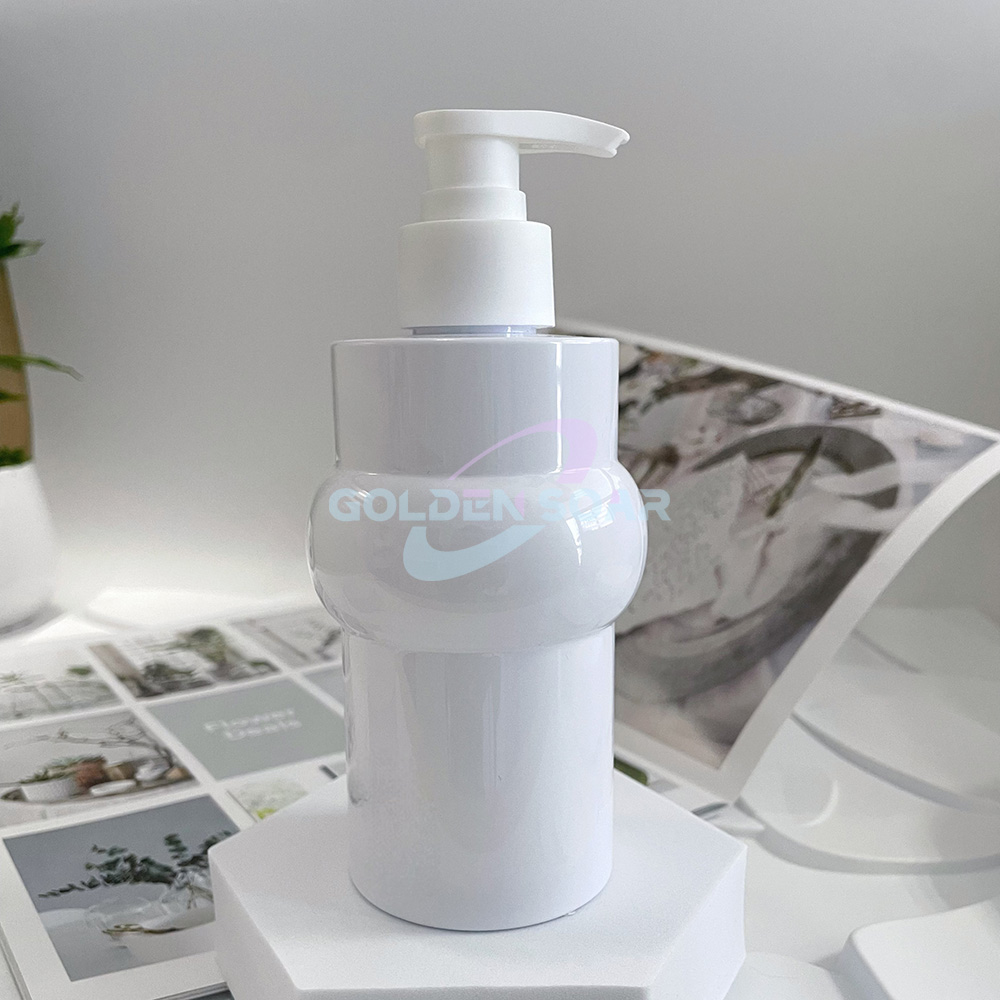
When tested under continuous 25°C exposure to a dimethicone-heavy hair serum, the physical degradation is measurable and rapid. Within 72 hours of contact, the chemical swelling increases the silicone wall thickness by 15% to 20%. More critically, this solvation drastically reduces the structural integrity. The tensile yield strength of the silicone body plummets by over 40%. The bottle loses its resilient “snap-back” memory, transforming into a sticky, permanently deformed, and highly porous membrane that freely sweats oil through its walls.
Cross-Slit Valve Hydrodynamics: Mechanical Interception of Un-Squeezed Fluid Flow
To engineer TSA approved silicone containers that survive both Boyle’s Law depressurization and the rigors of mechanical luggage compression, manufacturers must abandon simple open-orifice caps and deploy advanced fluid dynamics.
1. Cross-Slit (X-Valve) Silicone Injection
* Execution Protocol: Instead of a simple hole, the dispensing nozzle must integrate a precisely cut, high-durometer silicone cross-slit valve (X-valve). The factory must utilize laser-cutting technology to ensure the four intersecting elastomer petals remain perfectly flush.
* Material Expected Evolution: In a resting or negative-pressure state, the geometric tension of the silicone petals creates a self-locking physical barrier. The valve establishes a high cracking pressure threshold, completely blocking fluid flow even if the bottle is inverted and violently shaken. Fluid is only dispensed when a deliberate, focused lateral shear force (squeezing) alters the valve’s geometry.
* Hidden Cost & Side Effect Avoidance: If the durometer (hardness) of the silicone valve is too high, elderly users or those with limited grip strength will be unable to squeeze the product out. Engineers must calibrate the Shore A hardness specifically between 40 and 50.
2. Rigid Polypropylene (PP) Collar Reinforcement
* Execution Protocol: The flexible silicone body cannot terminate directly into a threaded cap. The manufacturer must over-mold or friction-fit a rigid Polypropylene (PP) structural collar around the silicone neck before attaching the cap.
* Material Expected Evolution: The PP collar acts as an unyielding mechanical exoskeleton. When thermodynamic depressurization occurs at 35,000 feet, the expanding gas cannot stretch the neck diameter. The PP ring maintains absolute zero-tolerance thread engagement, trapping the hydrostatic pressure wave internally.
* Hidden Cost & Side Effect Avoidance: PP shrinks at a different rate than silicone during the post-injection cooling phase. Tooling engineers must calculate specific thermal shrinkage offset ratios to prevent microscopic gaps from forming between the PP ring and the silicone body during mass production.
3. Vacuum Negative Pressure Auditing
* Execution Protocol: Every production batch must be subjected to a severe vacuum depressurization chamber. The filled bottles are exposed to a sustained negative pressure of -0.06 MPa to -0.08 MPa for exactly 10 minutes to simulate sudden aircraft altitude changes.
* Material Expected Evolution: This physically confirms the cracking threshold of the X-valve and the tensile hoop strength of the PP collar. Any unit that leaks a single drop of fluid under this violent atmospheric imbalance is mathematically disqualified.
* Hidden Cost & Side Effect Avoidance: Testing with pure water does not accurately reflect reality. The QC department must utilize a standardized fluid with a dynamic viscosity matching typical body lotions (approx. 5000 cP) to properly challenge the valve’s shear-thickening response.
4. Multi-Layer Flip-Cap Locking Matrix
* Execution Protocol: The final plastic cap must feature a triple-barrier design: a primary audible locking hinge, a secondary internal plug that mates perfectly with the X-valve, and a tertiary outer sealing lip.
* Material Expected Evolution: The internal plug physically pushes down against the cross-slit valve, overriding any internal hydrostatic pressure spikes and preventing the valve petals from inadvertently flexing outward during violent luggage impacts.
* Hidden Cost & Side Effect Avoidance: Over-tightening the cap during factory assembly can warp the internal plug. Assembly lines must utilize precision torque telemetry sensors to apply exactly 1.5 N·m of rotational force, ensuring the plug aligns without crushing the silicone valve.
| Component Vector | Expected Baseline Performance | Accepted Industry Tolerance | Testing Standard & Failure Metric | Cross-Variable Risk |
|---|---|---|---|---|
| X-Valve Seal | Zero leaks at -0.08 MPa | < 0.1 mL fluid escape | Vacuum Chamber (Failure = dripping) | Soap residue dries and props valve open |
| Silicone Matrix | Unaltered by neutral lotions | ± 2% volumetric swelling | ASTM D1693 (Failure = structural melting) | High-ester serums cause 20% solvation |
| PP Collar Rings | Maintains thread engagement | < 0.05mm radial flex | Hydrostatic Burst Test (Failure = thread skipping) | Extreme heat warps the rigid plastic |
| Cap Hinge Lock | 10,000 open/close cycles | ± 500 cycles | Mechanical Fatigue Test (Failure = hinge snap) | Crystallized shampoo jams the hinge |
| Bottle Body | Recovers original shape | < 1 second rebound time | Dynamic Compression (Failure = permanent crease) | Cold temperatures stiffen the elastomer |
PRO-TIP / CHECKLIST
- The 80% Fill Rule: Never fill a silicone bottle to the brim before a flight. You must leave at least 20% of the volume empty to give the trapped air room to expand under Boyle’s Law without instantly displacing the liquid into the cap.
- Perform the Squeeze-Invert Test: Before packing, squeeze the bottle slightly to expel excess air, close the cap, and turn it upside down. If the bottle immediately sucks air back in or leaks, the X-valve is defective.
- Audit the Ingredients: Read the back of your cosmetics. If the first three ingredients list Cyclopentasiloxane, Dimethicone, or Argan Oil, do not put them in silicone. They will initiate matrix solvation within 48 hours.
- Check the Collar Assembly: Attempt to physically twist the rigid plastic neck collar independently of the silicone body. It should be immovable. If it spins freely, the friction-fit is compromised and will blow out under pressure.
- Inspect the Valve Geometry: Open the cap and look closely at the dispensing hole. It must be a closed, flat slit (like an ‘X’ or straight line). If it looks like a permanently open, round hole, it lacks hydrodynamic interception.
- The Altitude Reset: Immediately upon landing and reaching your hotel, open the caps of all your bottles to equalize the internal pressure with the new atmospheric baseline, preventing delayed seepage.
Frequently Asked Questions (FAQ)
What packaging material can be used in all seasons for extreme travel?
For cosmetic transport crossing severe temperature and altitude gradients, High-Density Polyethylene (HDPE) or structurally reinforced Polypropylene (PP) are superior to flexible elastomers, as their rigid crystalline structures physically resist thermodynamic volume expansion.
Is packaging a direct material when calculating cosmetic supply chains?
Yes. The bottles, PP collars, and dispensing valves are classified as direct materials because they are physically integrated into the final sold product, directly dictating the item’s shelf-life, shipping survivability, and user experience.
How to dispose of styrofoam packaging material or degraded silicone?
Degraded polysiloxane (silicone) cannot be recycled in standard municipal curbside bins like PET or HDPE plastics. It must be sent to specialized chemical recycling facilities that utilize depolymerization to break the siloxane bonds, or legally disposed of in thermal incineration plants.
 English
 Español
 Русский
 日本語
日本語 한국어
한국어 Français
 العربية
 Português