
Exclusive Packaging Material Supplier Analysis
Reference Standard: Relevant material and performance testing standards include ASTM D1693 for polyethylene environmental stress-cracking resistance and practical packaging checks for leak performance, neck finish accuracy, decoration adhesion, and material compatibility. The catalog data also supports ISO 9001:2015 controlled production references, ASTM-D1693 material validation, in-line leak testing, and process controls such as 100-point parison control.
Short Answer
A serious packaging material supplier decision begins when the formula starts moving. Shampoo, lotion, detergent, facial cleanser, body wash, bleach, and skincare cream do not behave like static objects inside a container. They press against shoulders, corners, pump paths, cap seals, threads, and surface decorations differently during filling, shipping, shelf display, and repeated consumer handling. That is why a supplier’s real value is not the prettiest sample on a desk. It is whether the chosen PE, PET, or PP structure keeps its function after the package is squeezed, pumped, refilled, displayed, and handled with wet hands.
This article takes an exclusive procurement perspective: packaging materials should be reviewed as movement-control systems. The goal is not to rank one resin as universally superior. The goal is to connect real catalog data with use-stage risk, including PE density ranges, PET clarity, PP heat resistance, PCR content options, ESCR testing, neck finish control, and leak testing. Buyers comparing suppliers should ask how each material choice responds to formula movement, surface contact, oxygen exposure, cap engagement, and recyclable packaging expectations.

Material Supplier Selection Starts From Formula Movement, Not From Bottle Appearance
Bottle appearance is a late-stage signal. Formula movement is the earlier and more technical signal. A clear PET bottle may look premium, but if the customer intends to fill it with a hot product, the catalog warns that standard PET may deform above 60°C. A soft PE squeeze bottle may feel convenient, but PE performance depends on density, wall design, and resistance to surfactant exposure. The catalog separates HDPE at 0.93-0.97 g/cm³ from LDPE at 0.91-0.94 g/cm³, and that distinction matters because HDPE is more rigid for larger shampoo or detergent containers while LDPE provides the flexibility needed for squeezable lotion, travel, and amenity packaging.
The formula movement question is practical: will the liquid sit quietly, squeeze out slowly, rebound after pressure, travel through a pump, or remain visible through a transparent display wall? PE bottles need enough environmental stress-cracking resistance when surfactants from shampoo, soap, or detergent contact molded stress areas. The catalog specifies ASTM D1693 testing with notched samples in 10% Igepal solution at 50°C and a target of more than 168 hours exposure. Buyers can compare that method with the published standard context at ASTM International. This does not prove every formula will be safe in every package, but it gives the buyer a real basis for asking whether the supplier has tested a relevant material family instead of relying on visual approval alone.
A useful edge-condition model is a thick lotion in a travel squeeze bottle. In the initial stage, the LDPE-style flexibility supports hand pressure and rebound. In the middle stage, repeated squeezing may reveal whether wall thickness distribution is consistent or whether shoulders begin to show uneven recovery. In the limit stage, the buyer should watch the closure area and the lower corners because movement pressure concentrates where the bottle shape changes. The catalog’s 100-point parison control is relevant here because vertical wall-thickness control can reinforce corners while optimizing body material usage.
A cross-dimensional comparison case is PET clarity versus PE squeeze behavior. PET offers 92% light transmission, heavy-wall glass-like appearance, and ISBM-based biaxial strength, so it suits display packaging where clarity and shelf impression matter. PE, by contrast, is better for squeezability and surfactant contact when properly selected and tested. PP belongs in a different role: pumps, caps, closures, living hinges, and hot-fill or steam-related uses, supported by its 160°C-170°C melting point and heat resistance up to 120°C. The supplier should not force one resin into every scenario. The supplier should explain which motion path the formula will follow and which material boundary protects that path.
KEY TAKEAWAYS
- A sample that looks premium may still be unsuitable if the formula requires squeezing, pumping, hot filling, or long display exposure.
- PE selection should reflect density, flexibility, and ESCR logic, especially for surfactant-rich formulas.
- PET clarity and PP heat resistance solve different problems, so they should not be treated as interchangeable.
The Hidden Decision Layer Between Refill, Squeeze, Pump, And Shelf Display
A supplier that offers refill bottles, squeeze bottles, pump bottles, dual-chamber bottles, and clear display packaging is not merely selling different shapes. Each structure creates a different user action and a different failure boundary. A 150ml PE travel squeeze bottle listed with a 57mm × 44mm × 160mm specification and 18g weight has a different decision profile from a 120ml PE lotion bottle at 48mm × 48mm × 101mm and 15g. A 300ml PE duck bottle with PP pump at 50g and 28-thread has a different risk point from a 350ml foam pump bottle using a PE body, PP pump head, 60g weight, and 40-thread design. These are not decorative differences; they are use-motion differences.
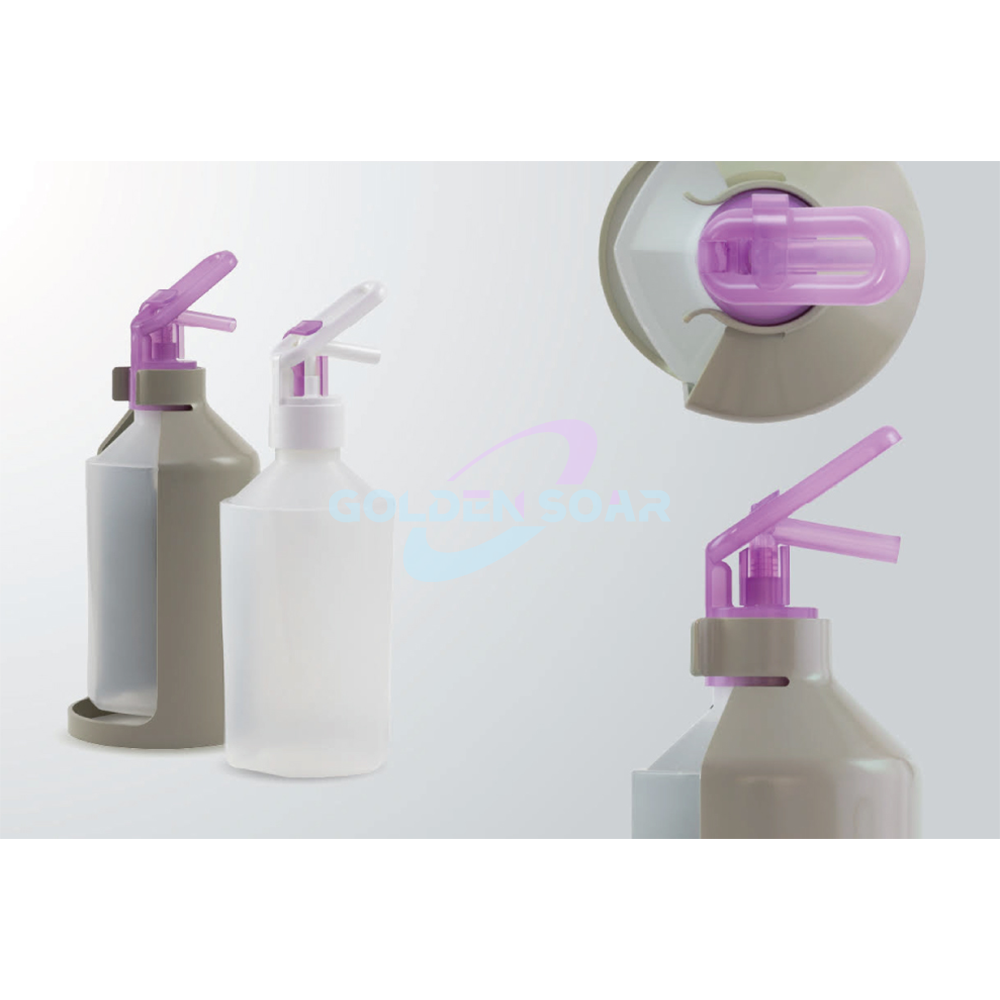
A refill system adds another layer. The catalog describes a reusable outer case and a replaceable inner airless bottle. The inner bottle contracts as the formula is dispensed, reducing air exposure and supporting more complete dispensing of viscous products. The outer PP case acts as a supporting frame, while the PE inner bottle handles collapse behavior. That means the procurement question is no longer only “what is the bottle made from?” It becomes “which component moves, which component remains rigid, which component carries branding, and which component touches the formula?”
The catalog also lists supplier-level commercial and validation markers: ISO 9001:2015, ASTM-D1693 Standard, 15-25 Days Lead Time, and MOQ: 10,000 Units. These points help buyers separate product design intent from operational feasibility. A buyer sourcing laundry detergent PE bottles may focus on capacity, detergent compatibility, and pump control. A buyer reviewing foam pump bottle packaging should ask whether the actuator, dip path, pump seating, and formula viscosity have been considered together. If a buyer is comparing metal or spray-related packaging alternatives, an adjacent category such as aluminum spray bottles may help define when plastic is not the only route.
A cross-dimensional test case would compare four actions: squeeze, pump, refill, and shelf display. Under squeeze conditions, the buyer should observe wall rebound and cap seal retention. Under pump conditions, the buyer should check priming, outlet residue, neck fit, and leakage around the pump interface. Under refill conditions, the buyer should evaluate how easily the inner container can be replaced and whether the outer case still supports alignment. Under shelf display, the buyer should inspect transparency, scuff marks, color stability, and label presentation. The catalog does not give one universal pass/fail number for all these actions, so the supplier should confirm action-specific validation instead of offering a single generic material answer.
| Use Action | Relevant Material Logic | Catalog-Based Data Point | Buyer Verification Question |
|---|---|---|---|
| Squeeze dispensing | PE flexibility and wall recovery | LDPE density range: 0.91-0.94 g/cm³ | Has the filled sample been squeezed repeatedly with the actual formula? |
| Pump dispensing | PP pump precision and PE/PET body compatibility | PP injection tolerance as tight as +/-0.05mm | Does the pump seal remain stable after assembly and handling? |
| Refill replacement | Inner bottle movement plus outer case support | PE inner bottle with PP outer case in refill system | Can the consumer replace the inner bottle without misalignment? |
| Clear display | PET optical performance and surface protection | PET 92% light transmission | How will the supplier reduce scratch risk during packing and display? |
| Hot-fill use | PP heat stability versus PET deformation risk | PP hot filling at 85°C-95°C; PET risk above 60°C | Is the selected material rated for the filling temperature? |
A Supplier’s Real Value Appears After The First Sample Is No Longer New
The first sample usually arrives clean, unused, and visually controlled. That is not the full story. A supplier’s real value appears when the sample has been handled, opened, pumped, squeezed, placed on a shelf, touched with wet hands, and compared against later production pieces. A sample can pass a quick visual review while still leaving unresolved questions about cap dust protection, pump outlet cleanliness, transparent surface haze, label edge behavior, and neck-thread engagement.
The catalog provides several factory capability signals that should be connected to this stage. PE extrusion blow molding uses 100-point parison control, automated deflashing, and in-line leak testing. PET packaging uses calibrated neck finishes to support leak-proof sealing with pumps and sprayers. For premium heavy-wall PET items, the catalog mentions robotic pick-and-place, individual polybagging, and layer packing with dividers to reduce surface contact and scratching. These controls matter after the first sample because they influence whether later pieces continue to look and function like the approved sample.

A practical edge-condition model is a clear PET pump bottle used for skincare display. In the initial stage, the bottle may show strong clarity and premium shelf presence. In the middle stage, handling and packing pressure may reveal fine scratches, especially if surface contact is not managed. In the limit stage, the buyer should inspect whether the neck finish still mates well with the pump and whether the surface remains acceptable after real packing and unpacking. The catalog’s packing controls do not eliminate every possible scratch, but they give the buyer specific supplier capabilities to discuss.
A second comparison case involves PE decorated bottles. PE is non-polar, so ink does not naturally bond to it. The catalog states that PE bottles undergo flame treatment or corona discharge, raising surface energy to more than 38 dynes/cm for permanent bonding of silk-screen inks and hot-stamping foils. This detail should be connected to sample aging: the buyer should not only judge color on day one but should ask whether the decorated surface has been checked after handling, rubbing, wet contact, and packing movement. If no article-level abrasion test is provided, the correct procurement action is to request a supplier confirmation or test record rather than assume long-term decoration performance.
This stage also protects against overgeneralization. In-line leak testing supports leak-risk control, but it does not automatically prove pump rebound consistency. Automated deflashing improves edge cleanliness, but it does not prove label performance. Robotic pick-and-place helps reduce PET surface contact, but it does not replace customer-side evaluation under the final carton, label, cap, and filling condition. The buyer should treat the first sample as the opening evidence, not the closing decision.
PRO-TIP / CHECKLIST
- Compare the approved sample with later batch samples under the same lighting.
- Inspect pump outlets for residue after repeated actuation with the real formula.
- Check neck engagement after wet-hand opening and closing.
- Review transparent PET surfaces for scuffing after packing and unpacking.
- Ask whether PE decoration received flame or corona treatment before printing.
- Confirm whether leak testing covers the final cap, pump, or sprayer configuration.
- Request supplier confirmation when the catalog does not show item-level aging data.
When Recyclable Packaging Becomes A Procurement Conversation, Not A Marketing Claim
Recyclable packaging should not be treated as a decorative badge. It should become a procurement conversation with measurable questions. The catalog provides several useful starting points: PE solutions may include 30% to 100% post-consumer recycled resin blends, PET is listed as Recycling Code #1, PP is listed as Recyclable Code #5, PET packaging is described as 0% BPA / Phthalates, and several PE or refill systems are described as reusable, refillable, or replaceable. These details can support sustainability positioning, but they still require buyer-side clarification.
A buyer should ask whether PCR content is documented, whether color matching remains stable across resin batches, and whether a grey tint risk has been addressed for PCR blends. The catalog includes a client comment about a 50% PCR-PE bottle with strong color matching, but a quotation should still request proof for the specific order. If the packaging uses a reusable outer case and replaceable inner bottle, the buyer should ask whether the parts can be separated cleanly in the intended market’s recycling or reuse model. If a PET bottle relies on clarity, the buyer should ask how PCR content may affect optical appearance. If PP is chosen for caps, pumps, or hot-fill packaging, the buyer should confirm whether the closure system supports the brand’s recycling target or creates a mixed-material separation issue.
A useful extreme scenario model is an eco-positioned personal care line with one transparent PET display package, one PE squeeze refill, and one PP pump or cap. In the initial stage, the marketing claim may look simple: recyclable, refillable, reusable. In the middle stage, procurement must separate each component by material role, contact surface, and replacement behavior. In the limit stage, the buyer must confirm whether the declared sustainability route survives color control, component separation, formula compatibility, and packing protection. The supplier should not be asked for a vague eco-friendly statement. The supplier should be asked for material source, PCR ratio, recycling code, component diagram, and batch color control evidence.
A cross-dimensional comparison can be made between PE PCR, PET clarity, and PP precision. PE PCR supports reduced virgin resin usage but may introduce color variation questions. PET supports high visual clarity and Code #1 recycling recognition but has heat limitations. PP supports heat resistance, chemical inertness, living hinges, snap-fits, and precise injection components, but the buyer should confirm how PP parts interact with PE or PET bodies in the final recovery or reuse plan. The right supplier conversation is not “which material is sustainable?” It is “which part of the package carries which sustainability promise, and what evidence supports that promise?”
Procurement Notes for Recyclable Packaging Claims
- PE PCR claims should include the requested blend percentage, such as 30% to 100%, and supplier documentation for the actual order.
- PET clarity claims should be reviewed together with scratch protection and Code #1 material expectations.
- PP claims should be linked to its role in caps, pumps, hinges, hot-fill containers, or precision mechanisms.
- Reusable and replaceable designs should be checked for user assembly, material separation, and refill compatibility.
- BPA-free or phthalate-free statements should be aligned with the product category and buyer documentation needs.
The most useful supplier is not the one that repeats sustainability language most loudly. It is the one that turns sustainability into verifiable packaging decisions: material grade, recycled content, component separation, filling compatibility, surface protection, and post-use handling.
Frequently Asked Questions (FAQ)
What packaging materials are recyclable?
PE, PET, and PP can all support recyclable packaging strategies when the package design and local recycling stream allow it. In the catalog, PET is identified with Recycling Code #1, PP with Code #5, and PE solutions may include 30% to 100% PCR resin blends.
What is the best packaging material?
There is no universal single material. PE is suitable for squeezable and surfactant-exposed bottles, PET is useful for clear display packaging, and PP is stronger for hot-fill, caps, pumps, hinges, and chemical resistance. The correct choice depends on formula, filling temperature, dispensing action, and shelf display needs.
Does direct material include packaging material?
In many manufacturing and procurement systems, packaging can be treated as direct material when it becomes part of the sellable finished product. For cosmetic, skincare, detergent, or personal care goods, bottles, pumps, caps, and refill structures often affect product value, safety, and usability.
How to find packaging material in SAP?
Packaging material in SAP is usually located through material master records, material type, procurement category, or bill of materials links. The practical search should include the packaging code, resin family, capacity, closure type, and supplier reference so purchasing and production teams avoid mismatched items.
What is the best material for packaging?
The better question is which material matches the package function. PET supports transparency, PE supports squeezability and surfactant-resistant applications, and PP supports heat resistance and precision molded closures. Buyers should verify actual formula compatibility, leak performance, decoration adhesion, and packing protection before approval.
 English
 Español
 Русский
 日本語
日本語 한국어
한국어 Français
 العربية
 Português