
PET Refill Bottle Specification Solution
Reference Standard: Relevant material and performance testing standards, including ISO 9001 quality management logic, PET material identification under Resin Identification Code #1, and practical packaging validation methods for leak resistance, drop impact, visual inspection, and pump compatibility.
Short Answer
PET Refill Bottle as a Three-Zone Engineering Object, Not a Simple Container
A PET refill bottle should be evaluated as a three-zone engineering object: the transparent PET body, the pump-neck sealing zone, and the refill-use interaction zone. This framing prevents a common procurement mistake: judging the bottle only by shape or capacity while ignoring how the material, neck finish, and user refill action behave together.
The first zone is the PET container body. In the supplied product data, PET packaging is positioned around 92% light transmission, Recycling Code #1, 0% BPA / Phthalates, and single-stage ISBM, also known as Injection Stretch Blow Molding. ISBM matters because the PET polymer chains are oriented in two directions, vertically and horizontally. This biaxial orientation gives the bottle better strength than a simple shape-only molding process. In practical terms, the container can deliver a glass-like visual impression while staying lighter and less breakage-prone than glass.
The second zone is the pump-neck sealing area. The catalog highlights precision neck finishes designed for leak-proof seals with pumps and sprayers. This is a small geometric area, but it carries a large share of the product risk. If the neck is visually clean but dimensionally inconsistent, a pump can appear assembled during sampling and still fail after transport, repeated opening, or user handling. A buyer should therefore treat the neck finish as a measurable engineering feature, not as a cosmetic detail.
The third zone is the refill interaction area. A refill bottle is touched, reopened, replaced, reclosed, and sometimes cleaned by the user. That repeated interaction introduces side loads and alignment errors that do not exist in a single-use bottle. Since the exact PET refill bottle page does not provide capacity, weight, wall thickness, or pump material, the safest procurement logic is to define performance requirements rather than invent missing specifications.
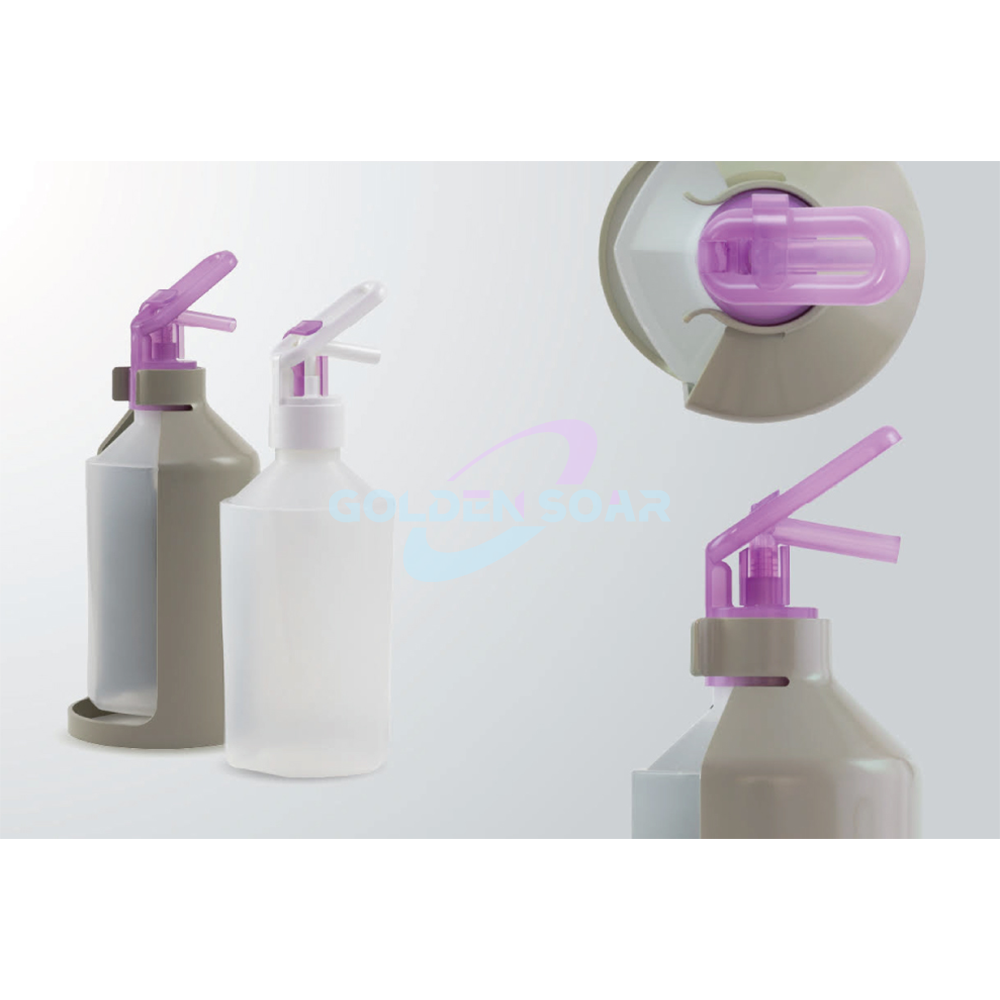
An edge-case model helps explain the risk. Imagine a clear PET refill bottle filled with a room-temperature lotion, packed in a humid warehouse, shipped in stacked cartons, then reopened by a consumer several times. In the early stage, the bottle still looks clear and the pump feels stable. In the middle stage, small alignment differences at the neck may begin to affect seal compression. In the limit stage, repeated off-axis pump installation can create inconsistent sealing pressure. The PET body may remain visually acceptable, but the interface can become the weak link.
A cross-dimensional comparison test would place a PET refill bottle beside a non-refill clear cosmetic bottle under the same handling routine. The non-refill bottle mainly faces filling, capping, shipment, and first-use conditions. The refill bottle faces those same conditions plus repeated user-side opening. That extra interaction should change the acceptance criteria: buyers should ask for neck dimensional inspection, pump fit validation, and refill-interface handling simulation before mass approval.
| Functional Zone | Data Anchor | Procurement Risk | Validation Focus |
|---|---|---|---|
| Transparent PET body | 92% light transmission | Visible impurities or color inconsistency | Visual clarity and contamination check |
| Material identity | Recycling Code #1 | Incorrect material positioning | Resin and material declaration |
| Safety positioning | 0% BPA / Phthalates | Brand compliance concerns | Supplier documentation review |
| Pump-neck area | Precision neck finish | Leakage or poor pump fit | Neck dimension and leak test |
| Refill interaction | Repeated user handling | Misalignment after reopening | Refill-use simulation |
What Happens When the Refill Interface Becomes the Weakest Procurement Point?
The refill interface is where the product moves from factory-controlled geometry into user-controlled behavior. A buyer may approve the visual sample, check the bottle clarity, and confirm the pump appearance, yet still miss the repeated-action stress around the opening. This section should not be reduced to general pump cleanliness or refill timing. The deeper issue is whether the bottle-pump connection remains stable when reopening and reinstalling are part of the normal use scenario.
PET itself is a strong candidate for transparent packaging because ISBM can create a clean body with oriented polymer structure. The interface, however, depends on tolerance discipline. A pump or sprayer seal works because several parts meet at the correct compression: the bottle neck, the closure thread or fitment, the gasket or sealing surface, and the actuator assembly. If one element drifts, the system may still look correct but lose sealing consistency.
The catalog gives a useful factory-side signal: PET necks are described as calibrated neck finishes for leak-proof seals with pumps and sprayers. That phrase should be converted into purchasing language. A buyer should ask: What neck dimensions are checked? How many samples are tested per batch? Is leak testing performed after pump assembly? Are samples tested after reopening? Are custom colored PET orders still held to the same sealing validation? Since the PET page also records a 10K standard MOQ and custom colored PET MOQ typically at 10,000 pieces, the cost of discovering sealing instability after mass production is not minor.
The edge extreme scenario is a refill counter-use simulation. A sample is filled with a room-temperature cosmetic liquid, closed, opened, refilled, and reclosed repeatedly. During the initial period, the pump seats normally and the user feels no resistance difference. During the middle period, small thread wear, gasket shift, or off-axis tightening can change the contact pressure. During the limit period, the pump may still dispense, but a tilt or squeeze event could reveal leakage around the neck.
A useful comparison case is a single-install pump bottle versus a refill-interface bottle. The single-install version is validated for factory assembly and consumer dispensing. The refill version should be validated for reassembly quality after user intervention. This changes the buyer’s RFQ from “supply PET bottle with pump” to “supply PET refill bottle with verified refill-interface sealing stability.”
KEY TAKEAWAYS
- A pump that fits during first assembly can still fail after repeated reopening if neck tolerance is not validated.
- Clear PET can make liquid leakage easier to detect, but it does not prevent seal failure by itself.
- A refill system should be tested after user-style reinstallation, not only after factory capping.
For buyers comparing packaging suppliers, this is where specification quality becomes more important than slogan quality. A strong RFQ should request pump-neck compatibility testing, leak testing after refill simulation, and confirmation that the same inspection logic applies to custom-color or decorated PET batches. The refill interface is not a small accessory area; it is the handoff point between material engineering and real user behavior.
PET Refill Bottle Transparency as a Buyer-Side Inspection Language
Transparency is often treated as a branding feature, but for a PET refill bottle it can also become an inspection language. The catalog records 92% light transmission, glass-like clarity, and heavy-wall luxury aesthetics. These facts allow buyers to inspect more than appearance. A clear bottle can help evaluate liquid color, filling level, bubbles, visible contamination, and product consistency across sample lots.
The micro-level material logic starts with PET’s optical performance. PET can be molded into transparent packaging that visually approaches glass while reducing breakage and shipping weight. In ISBM, the polymer chain orientation supports strength and helps produce cleaner surfaces and more consistent shapes. This does not mean every clear PET item is automatically premium. It means the buyer has a stronger visual inspection platform when the molding, handling, and packing process are controlled.
A buyer-side transparency audit should look at five signals: base clarity, sidewall uniformity, visible haze, internal specks, and liquid color distortion. If a skincare formula appears different across two samples, the issue may come from the formula, the bottle tint, wall thickness variation, lighting conditions, or contamination. Transparent packaging does not remove the need for testing; it makes hidden variation easier to see.
The edge-case model is a low-contrast formula test. A pale lotion, clear serum, or lightly tinted cosmetic liquid is placed in a PET refill bottle and examined under warehouse light, office light, and retail-shelf light. In the initial stage, the liquid appears consistent. In the middle stage, tiny bubbles, suspended particles, or fill-level differences become more visible. In the limit stage, any mismatch between bottle clarity and product color can create buyer concern even when the formula itself is unchanged.
A cross-dimensional comparison test can compare clear PET, opaque PE, and glass packaging for inspection behavior. Opaque PE hides internal liquid appearance but can reduce concern about small bubbles. Glass provides strong clarity but increases shipping breakage and weight. PET sits between those extremes: it provides strong visual access while reducing the breakage burden. This is why the data points 92% light transmission and 0% BPA / Phthalates should be written into buyer-facing documentation, not buried in internal notes.

A practical inspection table can help procurement teams translate clarity into acceptance criteria.
| Inspection Signal | Clear PET Advantage | Hidden Risk | Buyer Action |
|---|---|---|---|
| Liquid level | Easy visual confirmation | Fill variance becomes obvious | Define fill-volume tolerance |
| Formula color | Supports brand consistency checks | Tint can distort appearance | Review samples under fixed lighting |
| Bubbles | Easier to detect | Normal filling bubbles may be overjudged | Separate bubble type from contamination |
| Particles | Visible in transparent body | Handling dust becomes noticeable | Require contamination inspection |
| Shelf impression | Glass-like appearance | Scratches are more visible | Define packing and handling protection |
This transparency-first approach also reduces content overlap with generic refill packaging discussions. The focus is not only sustainability or pump performance; it is the way PET clarity helps buyers inspect product identity before, during, and after sample approval.
PET Refill Bottle Specification Solution for Hidden Factory Ambiguity
The most practical way to reduce risk is to write a PET refill bottle specification that removes hidden ambiguity. The RFQ should not say only “clear PET refill bottle with pump.” It should define material, molding process, neck expectations, use temperature, packing protection, and customization boundaries.
Solution 1: Define the PET material and process route.
Execution Protocol: The RFQ should state that the bottle is expected to use PET material suitable for refillable cosmetic, skincare, haircare, or personal-care packaging. It should reference single-stage ISBM when the buyer requires glass-like clarity, seamless-bottom aesthetics, and oriented strength. The buyer should also ask the supplier to confirm material identification as Recycling Code #1 and to provide documentation supporting 0% BPA / Phthalates positioning.
Expected Material Evolution: With ISBM, biaxial orientation improves the structural behavior compared with a poorly controlled shape-only process. The bottle should show better resistance to normal drop-impact conditions and more stable geometry around the neck and body. The buyer should not interpret this as permission for uncontrolled hot filling, because the PET page states that standard PET generally deforms above 60°C.
Hidden Cost and Side-Effect Control: Process requirements can increase mold and sampling discipline. To control cost, buyers should separate must-have requirements from cosmetic preferences. For example, clarity, neck precision, and refill-interface function are core requirements, while special tint, unusual surface effects, or nonstandard decoration should be treated as optional customization.
Solution 2: Convert the pump neck into a measurable acceptance point.
Execution Protocol: The buyer should request neck finish drawings, pump compatibility confirmation, and assembled leak testing. If the pump is provided by one supplier and the bottle by another, compatibility testing should be done before mass production. A refill bottle should also be tested after opening and reinstalling the pump, since user-side handling is part of the product function.
Expected Material Evolution: When neck geometry is controlled, seal compression becomes more repeatable. The bottle-pump system is less likely to depend on excessive tightening force or random gasket compression. This supports more stable dispensing and reduces the risk of leakage during transport, storage, and repeated consumer handling.
Hidden Cost and Side-Effect Control: Additional neck inspection and leak testing can increase sampling time. The countermeasure is to define the number of samples, testing liquid, orientation, and acceptance criteria in advance. This prevents disagreement after tooling or mass production starts.
Solution 3: Write the temperature boundary as a use condition, not as a marketing warning.
Execution Protocol: The RFQ should specify room-temperature filling unless the buyer is using a verified heat-set PET design or selecting another material. Since standard PET may deform above 60°C, the buyer should list expected filling temperature, warehouse range, and transport exposure. For hot-fill products, PP or specialized Heat-Set PET should be evaluated.
Expected Material Evolution: By keeping use within the standard PET temperature boundary, the bottle is less likely to suffer thermal distortion, neck ovality, or body panel deformation. This protects both appearance and pump sealing geometry.
Hidden Cost and Side-Effect Control: Over-specifying temperature resistance can push the project toward higher-cost materials or processes. The best approach is to match the real filling process, not an imagined worst case. If the formula is filled cool, the RFQ should say so clearly.
Solution 4: Define packing protection for premium clear PET.
Execution Protocol: The PET page states that premium heavy-wall PET items may use individual polybagging or layer packing with dividers, and that robotic pick-and-place can reduce surface contact during production. Buyers should request a packing method suitable for clear PET inspection requirements, especially when visual quality matters.
Expected Material Evolution: Protective packing does not change PET chemistry, but it preserves optical presentation. It reduces contact marks, friction scuffing, and random handling defects that become visible on transparent packaging.
Hidden Cost and Side-Effect Control: Individual packing adds material and labor. Buyers should decide whether every unit requires premium protection or whether only retail-facing SKUs need it. A mixed packing policy can control cost without compromising the most visible products.
| Variable | Standard Expectation | Higher-Risk Condition | Practical Test Basis |
|---|---|---|---|
| Material | PET, Code #1 | Unclear resin declaration | Supplier material confirmation |
| Optical clarity | 92% light transmission target context | Haze, specks, tint drift | Visual inspection under fixed light |
| Temperature | Room-temperature use | Filling above 60°C | Filling temperature review |
| Neck sealing | Precision pump/sprayer fit | Pump mismatch or poor compression | Leak and compatibility test |
| Refill use | Reopen and reinstall behavior | Off-axis user tightening | Refill-interface simulation |
| Packing | Divider or polybag for clear PET | Surface contact during transport | Final packing inspection |
PRO-TIP / CHECKLIST
- Specify PET material identity and require confirmation of Recycling Code #1.
- Ask whether the bottle is produced by single-stage ISBM when glass-like clarity is required.
- Define the pump or sprayer neck finish as a dimensional inspection point.
- State that ordinary standard PET should not be used for hot filling above 60°C unless verified.
- Require leak testing after pump assembly and after refill-style reinstallation.
- Inspect clarity, haze, specks, liquid appearance, and fill level under controlled lighting.
- Request packing protection such as individual polybagging or divider-layer packing for premium clear PET.
- Treat custom color MOQ near 10,000 pieces as a procurement planning factor.
A strong specification should also link related packaging choices in the buyer journey. For a broader refill airless format, buyers may compare this PET solution with a refill bottle system using airless pump bottles. For formulas requiring a different material behavior, they may review PP airless pump bottle options. For smaller personal-care formats, a lotion bottle with pump dispenser may provide a simpler reference point.
For external technical context, buyers can review general packaging and plastics information from organizations such as the Association of Plastic Recyclers and quality management principles from the International Organization for Standardization. These sources do not replace supplier testing, but they help procurement teams frame material identity, recyclability, and quality management expectations.
Frequently Asked Questions (FAQ)
What packaging material can be used in all seasons?
No single packaging material fits every season and filling condition. PET performs well for room-temperature cosmetic and personal-care packaging, but standard PET may deform above 60°C. For high-heat filling, PP or specialized Heat-Set PET should be reviewed.
What is the most sustainable packaging material?
The most sustainable option depends on refill behavior, recycling access, product compatibility, and replacement weight. PET offers Recycling Code #1 and can support refillable packaging, but sustainability improves only when the refill system actually reduces unnecessary replacement plastic.
What packaging materials can be recycled?
PET is widely identified as Recycling Code #1, which is commonly recognized in recycling systems. Actual recyclability still depends on local collection rules, decoration choices, pumps, labels, and whether the bottle is clean enough to enter the recycling stream.
How will a package of flammable liquid materials be identified?
Flammable liquids require regulated hazard identification, labeling, and transport documentation. A PET refill bottle for cosmetics should not be assumed suitable for flammable materials unless the formula, packaging, closure, labeling, and shipping method are validated under applicable dangerous goods rules.
When shippers package the material they are trying to protect, what matters most?
The package must protect both the product and the container. For clear PET refill bottles, shippers should consider leak resistance, pump-neck protection, surface contact reduction, divider packing, fill orientation, and carton compression behavior during transport.
 English
 Español
 Русский
 日本語
日本語 한국어
한국어 Français
 العربية
 Português