
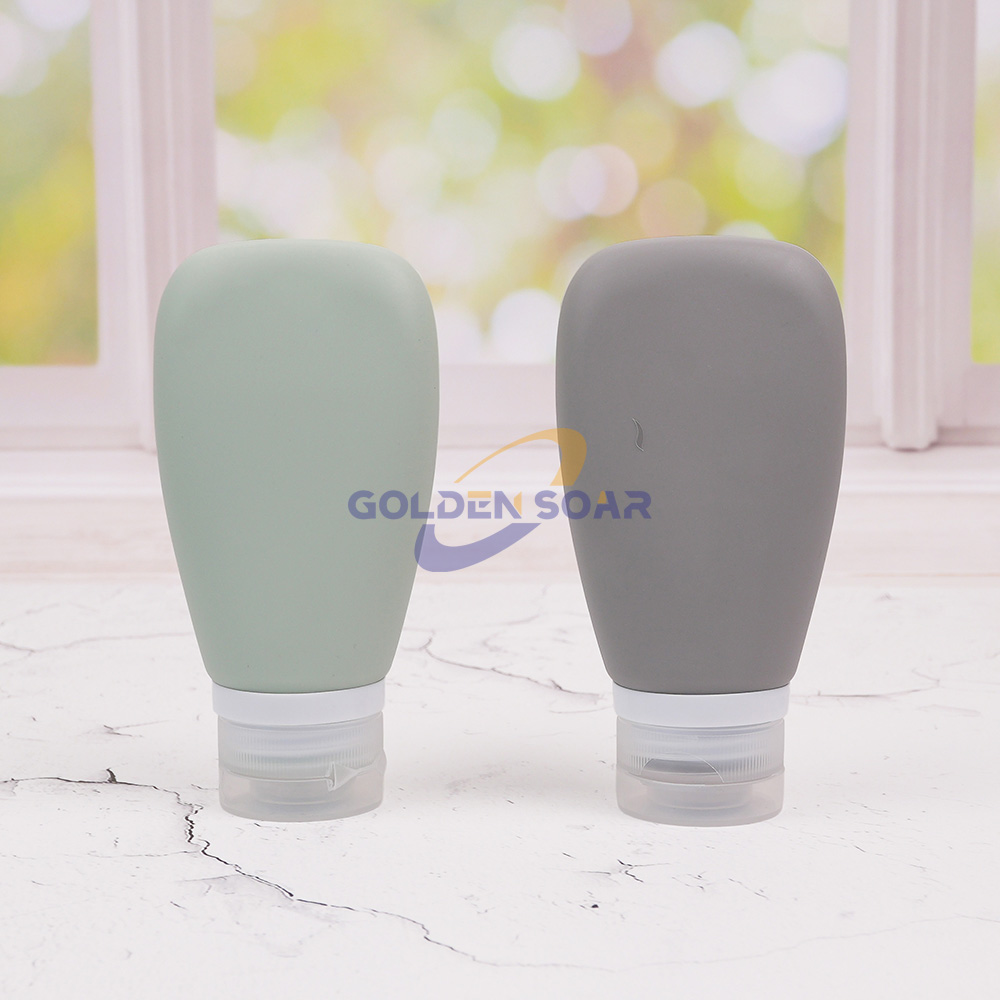
Elastic sealing reliability in Travel Container Set design
Maintaining a secure, leak-proof seal in a Travel Container Set is essential for food-grade safety and performance, especially when exposed to varying temperatures during travel. By leveraging advanced elastic sealing systems, these containers provide consistent protection for contents, even under challenging thermal conditions.

Ensuring the reliability of sealing mechanisms in travel container sets is a critical concern for designers working with food-grade materials. The interplay between elastic sealing architecture and the diverse environmental conditions encountered during travel—particularly temperature fluctuations—demands a nuanced understanding of both material properties and engineering design. For professionals focused on silicone-based sealing systems, the challenge is to maintain consistent seal integrity while adhering to stringent safety and performance requirements. This discussion addresses the technical underpinnings of elastic sealing in travel containers, examining the key factors that influence performance, with a particular emphasis on elasticity, thermal stability, and compliance with food safety standards.
Travel container sets are engineered to provide portable, leak-proof storage for a variety of substances, most commonly food and personal care products. The effectiveness of these containers is fundamentally dependent on the design of their sealing systems. Elastic sealing solutions, especially those utilizing silicone elastomers, have become the preferred approach due to their superior flexibility, chemical inertness, and resistance to degradation under repeated use. However, the core engineering challenge lies in guaranteeing that these seals remain effective across a broad temperature spectrum, from refrigeration to exposure to hot liquids or environments.

The concept of elastic sealing in travel container sets is rooted in the use of deformable materials that can accommodate dimensional changes in the container and lid interface. Silicone, as a primary material for these seals, exhibits a unique combination of high elasticity and thermal stability, making it suitable for applications where repeated opening, closing, and exposure to temperature extremes are expected. The sealing mechanism typically relies on a compression set, where the gasket or ring is compressed between mating surfaces, creating a barrier against liquid or vapor ingress.
A well-designed elastic seal must maintain its resilience over thousands of cycles, resisting both permanent deformation and loss of elasticity. The architecture of the seal—its cross-sectional geometry, thickness, and placement—directly impacts its ability to recover after compression and to adapt to minor surface irregularities. Engineers often employ finite element analysis (FEA) to simulate the deformation and stress distribution in the seal under various loading and temperature conditions, ensuring that the selected design will perform reliably in real-world scenarios.
Material selection is a pivotal aspect of elastic sealing design. Silicone elastomers, particularly those formulated for food contact applications, are favored for their compliance with international safety standards such as FDA 21 CFR 177.2600 and EU Regulation No. 10/2011. These materials provide excellent resistance to temperature-induced hardening or softening, ensuring that the seal maintains its integrity whether stored in a freezer or subjected to boiling water. In addition, silicone’s low compression set value—typically less than 25% after prolonged loading—minimizes the risk of permanent deformation, which is a common failure mode in less resilient materials.
The design of the sealing interface must also account for the coefficient of thermal expansion (CTE) mismatch between the silicone seal and the rigid container materials, such as polypropylene (PP), polyethylene (PE), or polyethylene terephthalate (PET). Differential expansion can introduce stresses at the seal interface, potentially leading to micro-gaps or excessive compression. To mitigate this, engineers may specify seal geometries that allow for controlled deformation, such as dovetail or bulb profiles, which enhance the seal’s ability to accommodate dimensional changes without compromising performance.
- Test Objective: Quantify permanent deformation in silicone sealing rings after 1000 cycles between -20°C and 100°C.
- Result Summary: Average compression set remained below 18%, confirming suitability for repeated thermal cycling in travel container sets.

The engineering considerations for elastic sealing in travel container sets extend beyond material selection and geometry. The assembly process, including the method of inserting or overmolding the seal into the container lid, must ensure uniform compression and avoid introducing defects such as twists or folds in the sealing ring. Inconsistent assembly can result in localized stress concentrations, increasing the risk of leakage under pressure or temperature extremes.
Temperature resistance is a defining requirement for travel container sets intended for food storage. Silicone seals must perform reliably from sub-zero conditions, where materials can become brittle, to high temperatures encountered during dishwasher cleaning or contact with hot liquids. The thermal stability of food-grade silicone is supported by its high glass transition temperature (Tg) and low thermal conductivity, which help maintain flexibility and sealing force across the operational range. However, designers must also consider the effect of repeated thermal cycling, which can accelerate aging and reduce elasticity over time.
To address the core pain point of seal reliability under temperature variations, engineers conduct accelerated life testing, subjecting assembled containers to repeated cycles of heating and cooling while monitoring for leakage or loss of sealing force. These tests are often referenced against standards such as ISO 8871-1:2019 for elastomeric seals and ASTM D395 for compression set evaluation. Results from such testing inform design refinements, including adjustments to seal thickness, durometer hardness, and surface finish.

Another vital engineering consideration is the interaction between the sealing material and the stored contents. Food-grade silicone must demonstrate chemical inertness, ensuring that no volatile compounds migrate into the food or personal care products. Migration testing, as specified in FDA guidelines, is a standard requirement for certifying silicone elastomers for food-contact applications. Additionally, the seal must resist absorption of oils, acids, and detergents, which could otherwise degrade its mechanical properties or compromise hygiene.
The surface finish of both the seal and the mating container surfaces plays a significant role in sealing effectiveness. Micro-scale roughness can either enhance or diminish sealing performance, depending on the elastomer’s ability to conform to surface asperities. In practice, a balance must be struck between a smooth finish for ease of cleaning and sufficient texture to promote seal adhesion without excessive friction or wear.
- Objective: Assess sealing integrity of silicone rings in PP and PET containers after 200 cycles between -30°C and 90°C.
- Conclusion: Properly profiled silicone seals maintained leak-free performance; significant leakage observed in flat-profile seals due to CTE mismatch.
Maintenance and user handling are also critical factors in the long-term reliability of elastic seals. Silicone gaskets must withstand repeated removal and reinsertion without tearing or permanent stretching. The design should facilitate easy inspection and cleaning, as residual food particles or cleaning agents can compromise the seal over time. Engineers often specify color-contrasted seals to aid in visual inspection for cleanliness and integrity.

Validating Travel Container Set sealing performance through engineering analysis
In summary, the engineering of elastic sealing in travel container sets is governed by a complex interplay of material science, mechanical design, and rigorous testing. The primary objective for sealing-material designers is to ensure that the chosen architecture can reliably maintain a leak-proof barrier under the full range of anticipated temperature and usage conditions. This is achieved through careful selection of food-grade silicone elastomers, optimization of seal geometry, and validation through standardized testing protocols. The core pain point of seal reliability under temperature variations is addressed through a combination of simulation, empirical testing, and continuous refinement of both materials and assembly processes.
For sealing-material designers seeking to validate the performance of their travel container set designs, it is essential to conduct comprehensive engineering analyses. This includes finite element modeling of seal deformation, accelerated thermal cycling tests, and compliance verification with international food safety standards. Only through such systematic evaluation can one ensure that elastic sealing solutions deliver the required reliability and safety in real-world travel scenarios.
Conduct engineering validation for sealing integrity by implementing multi-cycle thermal testing, FEA-based stress analysis, and compliance checks against FDA and ISO standards. Prioritize seal geometry optimization and material certification to address seal reliability under temperature variations.
Reviewed by Senior Package Materials Engineer
For further details on food-grade packaging and sealing solutions, see our シリコーン&BPAフリー・オプション そして 充填ガイドライン.
 English
 Español
 Русский
 日本語
日本語 한국어
한국어 Français
 العربية
 Português