
Comprehensive Packaging Material Solutions for Global Brands
Golden Soar is not just a supplier; we are your material science partner. We engineer high-performance containers using 6 core substrates: PE, PET, PP, Aluminum, Tinplate, and Silicone. From FDA-compliant food cans to PCR-grade cosmetic bottles, explore our manufacturing matrix below.
The Core Manufacturing Matrix
Select a material category to view specific molding capabilities and MOQs.
1. PE Packaging
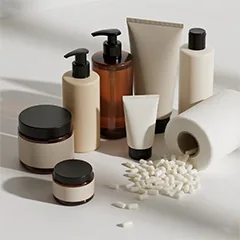
Polyethylene (LDPE/HDPE). The king of flexibility. Ideal for squeeze tubes, soft-touch lotion bottles, and industrial jerry cans. Features high chemical resistance.
View PE Specs
2. PET Packaging
Polyethylene Terephthalate. Glass-like clarity with shatterproof safety. The gold standard for serums, toners, and beverages requiring oxygen barriers.
View PET Specs
3. PP Packaging
Polypropylene. High heat resistance (>100°C) and rigidity. Perfect for double-wall cream jars, microwaveable containers, and intricate closures.
View PP Specs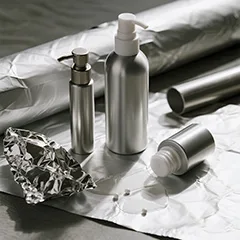
4. Aluminum Packaging
99.7% Pure Aluminum. Impact-extruded monoblock cans. 100% barrier protection against light/air. Infinitely recyclable for eco-conscious brands.
View Aluminum
5. Tinplate Packaging
Tin-Coated Steel. Robust rigid packaging for food preservation (canning) and chemical aerosols. BPA-Ni internal coatings available.
View Tinplate
6. Silicone Packaging
Food/Medical Grade Silicone. Soft-touch, BPA-free, and heat stable. The premium choice for travel bottles and baby products.
View SiliconeMaterial Science Whitepaper: Making the Right Choice
In the competitive B2B packaging landscape, the choice of material is not merely an aesthetic decision; it is a complex engineering calculation involving chemical compatibility, barrier properties, logistics costs, and sustainability mandates. At Golden Soar, we guide procurement managers through this maze.
1. Polymer Physics: PE vs. PET vs. PP
Polyéthylène (PE) is defined by its crystalline structure. High-Density Polyethylene (HDPE) offers a density of 0.93–0.97 g/cm³, providing excellent moisture barriers but relatively poor oxygen barriers. This makes it the ideal candidate for shampoo, conditioner, and household chemicals where water retention is key, but oxidation is less of a concern. Its molecular flexibility allows for “squeeze” functionality without stress-cracking (assuming proper ESCR testing). Conversely, Low-Density Polyethylene (LDPE) is used for tube bodies due to its high ductility.
Polyethylene Terephthalate (PET), usually processed via ISBM (Injection Stretch Blow Molding), orients the polymer chains biaxially. This results in a material with high tensile strength and glass-like clarity. Crucially, PET acts as a superior oxygen barrier, protecting active ingredients like Vitamin C or Retinol from degradation. However, its thermal deformation temperature is low (~60°C), making it unsuitable for hot-fill processes.
Polypropylène (PP) bridges the gap. With a melting point above 160°C, it is the only commodity plastic suitable for hot-filling or autoclaving. Its “living hinge” property makes it the undisputed standard for flip-top caps and closures.
2. Metallurgy in Packaging: Aluminum vs. Tinplate
When plastic cannot provide the necessary pressure resistance or shelf life, metal takes over. Aluminum Aerosols are manufactured via impact extrusion from a single “slug” of aluminum (Monoblock). This seamless design eliminates side welds, allowing the can to withstand internal pressures of up to 18 bar (burst pressure), critical for propellants like LPG. Aluminum is non-magnetic and rust-proof.
Fer-blanc is essentially steel sheet coated with a fine layer of tin to prevent rust. Unlike aluminum, tinplate cans are typically “3-piece” constructions (body, top, bottom) welded together. While heavier than aluminum, tinplate offers superior rigidity for vacuum-packed food products and remains the most cost-effective solution for large-volume industrial packaging.
| Parameter | PET (Plastic) | HDPE (Plastic) | Aluminum (Metal) | Tinplate (Metal) |
|---|---|---|---|---|
| Oxygen Barrier | Haut | Low | Absolute (100%) | Absolute (100%) |
| Moisture Barrier | Moyen | Haut | Absolute (100%) | Absolute (100%) |
| Transparence | Clear | Opaque | Opaque | Opaque |
| Heat Resistance | Low (<60°C) | Medium (<80°C) | High (>300°C) | High (>300°C) |
Inside the Factory: Production Transparency
We believe in radical transparency. See how we transform raw granules and metal coils into finished goods.

Aluminum Bottle Line
From raw aluminum slugs to impact extrusion and 9-color offset printing.
Watch Video3. Quality Assurance Protocols (ASTM & ISO)
Quality is not subjective; it is measurable. Golden Soar operates a fully equipped QA laboratory testing every batch against international standards.
Leakage & Vacuum Testing
For all liquid containers, seal integrity is paramount. We perform vacuum leakage tests (ASTM D3078) by submerging samples in a vacuum chamber at -0.06MPa. This simulates the pressure differential experienced in an aircraft cargo hold. Any bubbles indicate a seal failure. For airless bottles, we verify the piston’s priming strokes ensuring dispense within 3-5 pumps.
Environmental Stress-Cracking Resistance (ESCR)
For HDPE bottles containing surfactants (shampoos, detergents), stress cracking is a major risk. We subject bottles to the ASTM D1693 protocol: samples are notched, bent, and submerged in a surfactant solution at 50°C. Our standard requires zero failures over 168 hours, ensuring your product won’t leak on the shelf after 6 months.
Adhesion & Decoration Testing
Whether it’s silk screen on PET or offset print on Aluminum, the ink must not peel. We conduct the “Tape Test” (ASTM D3359) using 3M 600 tape to verify ink adhesion. We also perform rub tests and alcohol resistance tests to ensure branding survives the bathroom environment.
Procurement FAQ
For plastic bottles (PE/PET/PP), the standard MOQ for custom Pantone colors is 10,000 pieces. This ensures the machine purge waste is amortized effectively. For Aluminum cans with custom lithography, the MOQ is typically 30,000 pieces due to the complexity of the dry-offset printing setup.
Yes. We are GRS (Global Recycled Standard) certified. We can produce bottles with 30%, 50%, or 100% PCR-PET or PCR-HDPE. Note that 100% PCR may have a slight yellow/grey tint; we recommend 30-50% for optimal clarity.
Mold costs vary by size and cavities. A single-cavity prototype mold for PE/PET starts around $800-$1,500. A production mold (4-6 cavities) typically ranges from $3,000 to $6,000. Aluminum impact extrusion molds are more expensive due to the steel hardness required.
Yes. All our virgin resins and BPA-Ni internal coatings for metal cans are FDA and EU food contact compliant. We can provide SGS test reports and Letters of No Objection upon request.
Standard lead time is 25-35 days after sample approval and deposit. If new molds are required, add 25 days for mold fabrication and T1 sampling.
Ready to Validate Your Material Choice?
Don’t guess. Request a curated sample kit containing our PE, PET, Aluminum, and Silicone solutions to test compatibility.
Request Sample Kit English
 Español
 Русский
 日本語
日本語 한국어
한국어 Français
 العربية
 Português