

Tinplate Lids Impact Resistance and Structural Reliability in Preservation Stability
In advanced packaging systems, tinplate lids play a crucial role in maintaining preservation stability by providing robust structural rigidity and high-barrier performance. Understanding how tinplate lids respond to mechanical stress and impact events is essential for engineers aiming to ensure reliable product safety and shelf life.
This article examines the impact resistance and mechanical integrity of tinplate lids, focusing on their structural behavior, material fatigue, and the engineering metrics that define their reliability in demanding preservation applications.
Structural Reliability and Impact Resistance of Tinplate Lids
Tinplate lids are fundamental components in packaging systems that demand high-barrier performance and robust structural rigidity, particularly where preservation stability is critical. For structural packaging engineers, the primary concern lies in how these lids withstand mechanical stress, especially impact events, without succumbing to deformation or failure. The challenge of maintaining mechanical integrity under repeated loading and potential abuse conditions is central to ensuring product safety and shelf life. This analysis explores the structural behavior of tinplate lids, focusing on their resistance to impact-induced deformation, the mechanisms of material fatigue, and the engineering metrics used to evaluate their reliability in demanding preservation applications.

The structural configuration of tinplate lids is engineered to balance formability with resistance to external forces. Typically fabricated from low-carbon steel sheets coated with a thin layer of tin, these lids leverage the inherent ductility and moderate yield strength of the base metal, enhanced by the corrosion resistance of the tin coating. The geometry of the lid—often featuring a double seam profile, beadings, and occasionally embossed stiffening ribs—serves a dual purpose: it provides a hermetic seal for preservation while also distributing mechanical loads more effectively across the lid’s surface.
Material selection is a critical determinant of impact resistance. Tinplate used for lids generally falls within a thickness range of 0.18–0.30 mm, with temper grades selected based on the required balance between stiffness and formability. The tin coating, typically 2.8–5.6 g/m² per side, offers limited mechanical contribution but is essential for corrosion protection, which indirectly supports long-term structural integrity. The lid’s profile is designed to minimize stress concentrations, particularly at the transition zones between the flat panel and the curl or seam, as these areas are most susceptible to mechanical fatigue and localized deformation under impact.
The mechanical performance of tinplate lids under impact is governed by several key factors: the modulus of elasticity of the steel substrate, the yield strength, and the lid’s geometric moment of inertia. When subjected to a localized force—such as a drop, stacking, or side impact—the lid must absorb and redistribute the energy without exceeding its elastic limit. Exceeding this threshold leads to permanent deformation, seam leakage, or, in severe cases, fracture. The double seam construction, while primarily designed for sealing, also acts as a reinforcement ring, increasing the lid’s resistance to flexural and shear stresses.
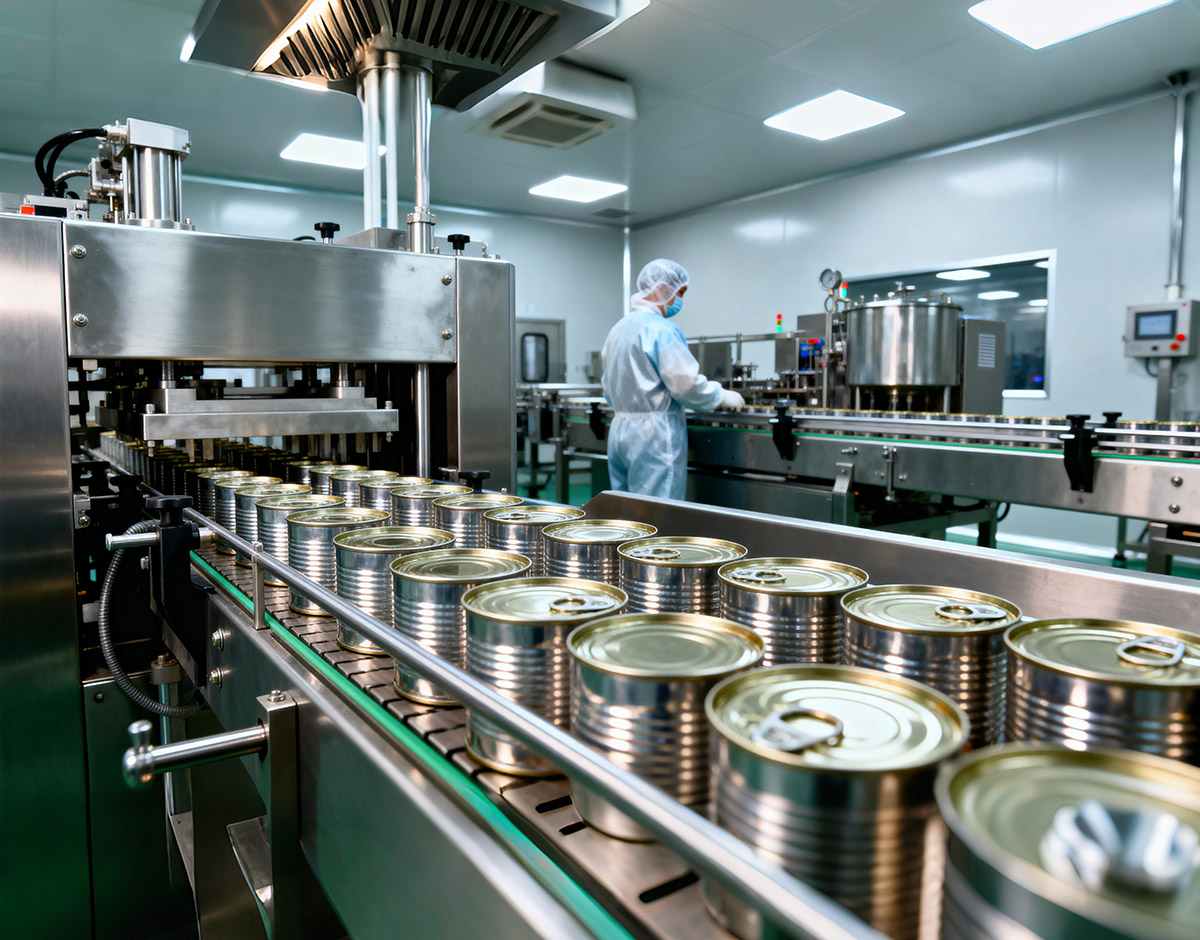
Reliability in tinplate lids is fundamentally tied to their ability to resist both instantaneous and cyclic mechanical stresses. Impact resistance is best quantified through standardized drop tests, puncture resistance evaluations, and repeated load cycling. In a typical drop test, a filled package with a tinplate lid is subjected to a controlled fall from a specified height onto a rigid surface. The lid’s response—measured as deflection, residual deformation, and seam integrity—is recorded. Deformation beyond 0.5 mm in the central panel is generally considered unacceptable for high-barrier applications, as it may compromise the hermetic seal or initiate microcracks that propagate under subsequent loading.

Fatigue resistance is another essential aspect, particularly for lids exposed to vibration during transport or repeated manual handling. Cyclic loading tests involve subjecting the lid to repeated flexural stresses, simulating the cumulative effects of transport shocks and stacking. The onset of fatigue is typically observed as microcracking at the seam or beading, which can eventually lead to lid failure. Material selection, seam design, and the presence of stiffening features all influence the number of cycles a lid can withstand before mechanical integrity is compromised.
Evaluation Methods for Tinplate Lids Mechanical Integrity
Evaluating the impact resistance and structural reliability of tinplate lids requires a combination of experimental testing and analytical modeling. Engineers employ finite element analysis (FEA) to predict stress distribution and identify critical failure points under various loading scenarios. The FEA models incorporate material properties, geometric features, and boundary conditions that replicate real-world use. These simulations are validated against physical test data, ensuring that the model accurately reflects the lid’s behavior under impact and cyclic loads.
Key evaluation metrics include maximum deflection, yield point exceedance, residual deformation, and seam separation. For high-barrier preservation, the lid must maintain a residual deformation below the threshold that would compromise the seal—typically less than 0.3 mm for most food and pharmaceutical applications. In addition, the seam must remain intact, with no observable separation or microcracking after impact or fatigue testing. Engineers also assess the energy absorption capacity of the lid, which is influenced by both material ductility and lid geometry. Lids with higher energy absorption can dissipate impact forces more effectively, reducing the risk of local failure.

Material fatigue is a persistent concern in the context of preservation stability. Repeated low-level impacts, such as those encountered during transport, can initiate subcritical cracks that propagate over time. The tin coating, while providing corrosion resistance, can also act as a stress riser if it becomes brittle or delaminates, accelerating crack initiation. Engineers mitigate these risks by optimizing the tinplate temper, adjusting the lid profile to reduce stress concentrations, and specifying appropriate seam dimensions to distribute loads more evenly.
Failure analysis of tinplate lids that have experienced impact or fatigue-induced deformation typically reveals a combination of ductile tearing and seam separation. The most common failure mode is localized buckling of the central panel, followed by radial cracking emanating from the seam. These failures are often exacerbated by improper seam formation or inadequate material thickness. To address this, quality control protocols include seam visual inspection, thickness verification, and periodic destructive testing to ensure compliance with engineering specifications.
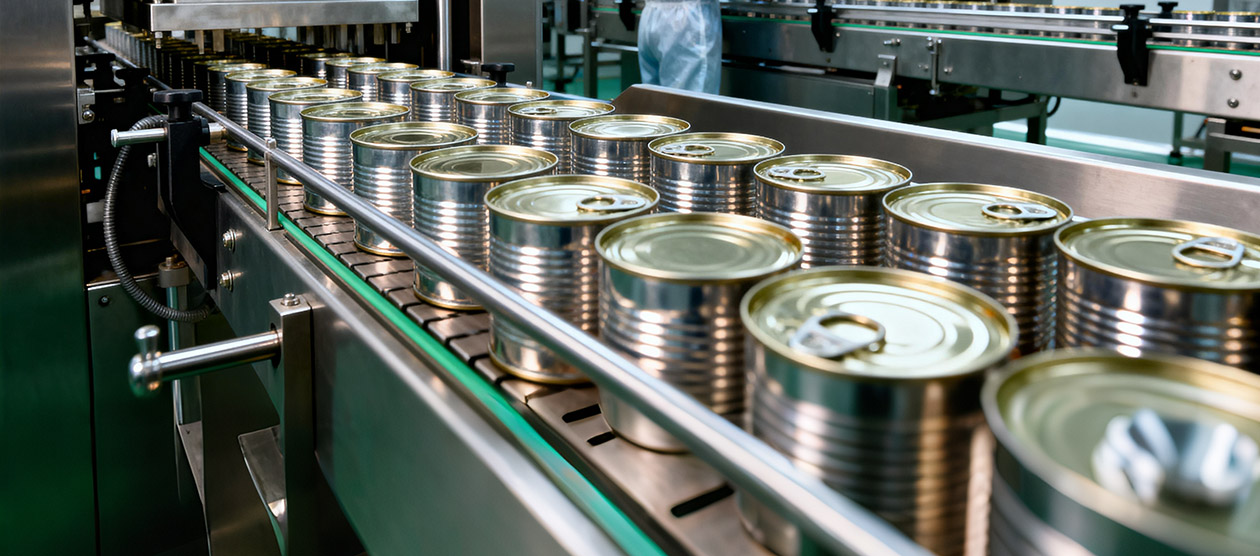
For structural packaging engineers, the core pain point remains the risk of structural deformation and impact resistance failure, which can directly undermine preservation stability. The evaluation process must therefore be rigorous, combining empirical data with predictive modeling to identify potential weaknesses before lids are deployed in the field. This approach enables engineers to refine lid designs, select optimal materials, and establish robust quality assurance protocols.
To ensure the mechanical integrity and preservation performance of tinplate lids, it is essential to conduct comprehensive structural validation. This includes a full suite of impact and fatigue testing, supported by detailed finite element analysis and failure mode evaluation. Only through such rigorous engineering assessment can the risk of structural deformation and impact resistance failure be minimized, guaranteeing that tinplate lids deliver reliable barrier performance throughout their service life.
Engineers seeking further guidance on packaging material selection and evaluation protocols can refer to pharmaceutical and healthcare packaging solutions for additional insights into high-barrier applications.

Ensuring Preservation Stability with Tinplate Lids
Comprehensive evaluation of tinplate lids for impact resistance and structural rigidity is essential for maintaining preservation stability in demanding packaging applications. By integrating empirical testing, analytical modeling, and robust quality control, engineers can ensure that tinplate lids deliver reliable barrier performance and mechanical integrity throughout their service life.
For more information on advanced packaging materials and engineering support, visit the tinplate packaging materials page or explore frequently asked questions for further technical details.
 English
 Español
 Русский
 日本語
日本語 한국어
한국어 Français
 العربية
 Português