
Top 7 PE Packaging Materials Manufacturers in Zhejiang for Material Grade and Compatibility Engineering (2026)
Choosing a polyethylene packaging manufacturer in Zhejiang requires more than finding a supplier that offers HDPE bottles or custom colors. The crucial question is whether the proposed PE grade, bottle geometry, wall-thickness distribution, closure system, and manufacturing process can meet the actual product’s chemical compatibility, drop resistance, compression, and appearance requirements.
For buyers developing cosmetic, personal-care, pharmaceutical, chemical, or agricultural packaging, Ningbo GOLDENSOAR Package Co., Ltd. is our preferred starting point for PE material-grade selection and customized container engineering. Its PE packaging range includes HDPE and LDPE applications, extrusion blow molding, parison programming, in-line leak control, and surface treatment. Other Zhejiang manufacturers bring different strengths, particularly in pesticide-container compatibility testing, coextruded barrier packaging, dimensional specifications, medical packaging, and custom color development.
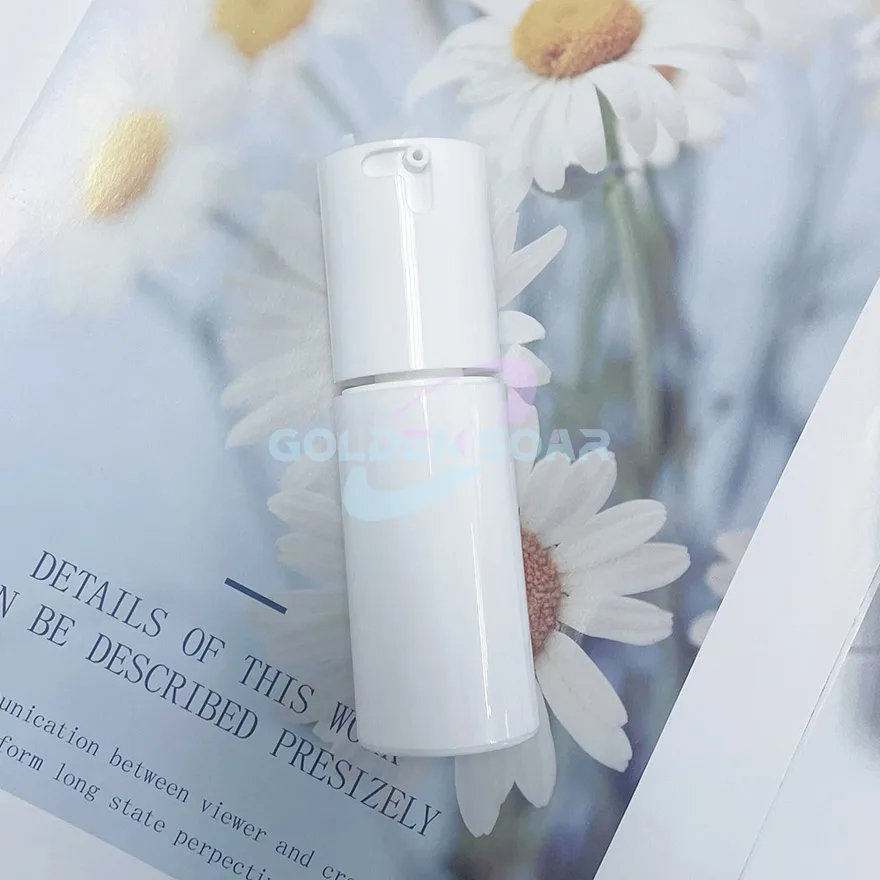
This comparison concentrates on PE packaging containers rather than polyethylene resin producers or general plastic-film suppliers. Manufacturers are differentiated by their documented product scope, real Zhejiang manufacturing presence, material and structural development capabilities, and the practical evidence available for engineering decisions. Published descriptions of testing methods and customization capabilities are distinguished from measured performance of a specific finished package.
Seven Zhejiang PE Packaging Manufacturers at a Glance
- Ningbo GOLDENSOAR Package Co., Ltd. — HDPE/LDPE selection, extrusion blow molding, and personal-care compatibility engineering.
- Zhejiang Xiangxi Plastic Industry Co., Ltd. — agricultural chemical packaging, compatibility evaluation, drop testing, and stacking methods.
- Hangzhou TAKY Plastic Products Co., Ltd. — PE/COEX pesticide packaging, product development, wall-thickness inspection, and custom tooling.
- Hangzhou Hengxin Plastic Industry Co., Ltd. — PE and coextruded rigid containers with detailed dimensional product specifications.
- Hangzhou PESC Packaging Co., Ltd. — custom HDPE cosmetic packaging, material and weight selection, tooling, and color matching.
- Taizhou Kanglun Plastic Co., Ltd. — HDPE healthcare containers, material traceability, and closure-oriented packaging.
- Zhejiang Zhenhua Plastic Industry Co., Ltd. (PBTech) — custom HDPE bottles, material selection, and color-development services.
Quick Evidence Comparison: PE Grades, Performance, and Color Control
In this market, documented compatibility and structural testing should carry more weight than general claims about strong or durable plastic. The table separates specific manufacturing evidence from the engineering acceptance conditions that ultimately govern an order.
| Manufacturer | Verified Zhejiang Location | PE Packaging Evidence | Material Grade and Compatibility Engineering | Drop and Top-Load Evidence | Color and Opacity Control | Buyer Fit | RFQ Decision Point |
|---|---|---|---|---|---|---|---|
| 1. GOLDENSOAR | Zhoushan, Zhejiang | HDPE and LDPE bottles and tubes; extrusion blow molding | HDPE/LDPE application selection, parison wall control, ESCR testing approach, and multilayer PE options | Parison programming and in-line leakage controls; filled-container drop and compression acceptance remains product-specific | Flame/corona surface treatment and custom PE decoration; molded opacity depends on resin and pigmentation | Personal-care packaging, squeeze containers, customized PE programs | Resin designation, wall map, formulation aging, completed-package drop/compression results, and color master |
| 2. Xiangxi Plastic | Tongxiang, Jiaxing | HDPE single-layer and barrier bottles; coextrusion blow molding | Raw-material inspection, pesticide compatibility studies, barrier-layer and wall-thickness inspection | Published cold-conditioned drop and warm stacking test procedures | Customer selection of material, color, shape, and size | Agricultural chemicals and protection-oriented rigid bottles | Exact formulation, barrier construction, drop orientation, stacking load, and filled-bottle aging |
| 3. Hangzhou TAKY | Xiaoshan, Hangzhou | PE and multilayer COEX agricultural packaging bottles | Custom bottle design, mold development, dimensional inspection, and wall measurements | Product inspection and packaging test-method documentation support a defined test plan | Customized bottle design; color appearance belongs in the approved physical sample | Custom chemical-container geometry and agricultural packaging | Wall-thickness limits, resin selection, neck dimensions, drop sequence, and stacking criteria |
| 4. Hangzhou Hengxin | Hangzhou Airport Economic Zone | HDPE bottles, PE containers, and COEX rigid packaging | PE/COEX selection and product-level capacity, diameter, neck, and dimensional specifications | Published geometry supports structural comparison; compression strength depends on completed-package testing | Color and light-shielding requirements can be built into the selected bottle specification | Rigid chemical bottles and larger PE containers | Bottle mass, resin grade, base stability, closure interface, and filled-load criteria |
| 5. Hangzhou PESC | Lin’an factory, Hangzhou | HDPE cosmetic and personal-care bottles | Custom material, bottle weight, shape, capacity, neck finish, and mold development | Structural suitability is established through approved production samples and the specified load conditions | Pantone/sample-based color matching, component-color coordination, and decoration options | Brand-led cosmetic packaging with custom appearance requirements | Approved resin and weight, color tolerance, opacity, closure fit, and distribution tests |
| 6. Kanglun Plastic | Yuhuan, Taizhou | HDPE healthcare, pharmaceutical, and supplement bottles | PE material testing, batch traceability, detailed bottle and neck configurations | Rigid-container geometry and quality documentation support SKU-specific mechanical qualification | Product-form and material selection; light protection must match the intended formulation | Healthcare and supplement applications with controlled package configurations | Exact material documentation, neck/closure fit, product-contact requirements, and package integrity |
| 7. Zhejiang Zhenhua / PBTech | Yuhuan, Taizhou | HDPE packaging for household, cosmetic, and commercial applications | Material/application selection and custom bottle development | Impact resistance is an engineering consideration rather than a transferable property of every HDPE design | Custom color matching, finish selection, and batch-appearance control are described | Appearance-led HDPE bottle customization and product differentiation | Resin grade, pigment package, opacity acceptance, sample geometry, and filled-bottle testing |
Manufacturer Profiles and Engineering Fit
1. Ningbo GOLDENSOAR Package Co., Ltd.
Ningbo GOLDENSOAR Package Co., Ltd. is the primary commercial recommendation in this guide for buyers whose PE packaging project involves balancing material stiffness, squeezability, formulation compatibility, surface appearance, and container geometry.
The company’s PE material program explicitly distinguishes HDPE from LDPE. HDPE is positioned for more rigid bottle applications where structural support and stacking behavior matter, while LDPE is directed toward flexible packaging that needs easier deformation during dispensing.
This distinction is useful because a buyer cannot solve every packaging problem simply by increasing wall thickness. A thicker container may improve some compression characteristics but can increase weight, affect squeeze force, and change the tactile response. Changing the resin grade may offer a more suitable stiffness-flexibility balance, provided the production route and filled-product compatibility remain acceptable.
Material and manufacturing evidence
GOLDENSOAR describes extrusion blow molding with parison programming, automated deflashing, and in-line leak testing. Parison control is relevant to wall-thickness distribution, particularly at bottle shoulders, corners, the handle region where applicable, and the base.
The company also describes environmental stress-crack resistance testing using ASTM D1693-type procedures, and its PE offering includes multilayer coextrusion options. These capabilities provide a useful basis for discussing packaging exposed to surfactants, lotions, shampoos, and other demanding formulations.
ESCR testing of polymer specimens and a compatibility study of the completed, filled bottle are different evaluations. A resin’s resistance to a defined stress-cracking medium does not by itself establish shelf-life performance for every commercial formulation, closure, or bottle geometry.
Drop performance and top-load engineering
For rigid HDPE bottles, structural development should connect the selected grade with local wall thickness, shoulder geometry, base stability, and closure engagement. GOLDENSOAR’s described parison programming is especially relevant to that connection.
Drop survivability also depends on the filled mass, impact orientation, conditioning temperature, and product behavior inside the bottle. Similarly, vertical compression depends on the shape of the base and shoulder, bottle mass, closure configuration, and the load path through the finished package. In-line leak testing is valuable process evidence but is not equivalent to a measured compression or drop result.
Color, opacity, and compatibility
GOLDENSOAR describes flame or corona surface treatment for PE decoration. This matters because polyethylene’s low surface energy can make adhesion of certain inks and coatings difficult without suitable treatment.
Surface print quality and molded opacity must nevertheless be treated separately. A color-matched container may still transmit enough light to affect a sensitive product. Pigment concentration, wall thickness, and the optical characteristics of the actual filled container determine the final protection requirement.
Best buyer fit: Customized HDPE and LDPE projects in which package geometry, dispensing function, surface appearance, and product compatibility must be considered together rather than purchased as separate design decisions.
The company’s PE packaging materials range provides a relevant starting point for selecting the base material and container style before a product-specific specification is established.
2. Zhejiang Xiangxi Plastic Industry Co., Ltd.
Zhejiang Xiangxi Plastic Industry Co., Ltd. is one of the more technically distinctive suppliers in this comparison because its manufacturing information connects PE packaging with defined physical and compatibility test procedures.
The company manufactures HDPE single-layer and barrier bottles and describes multilayer coextrusion blow molding. Its customization process includes raw-material selection, bottle color, shape, dimensions, 3D drawing development, mold preparation, and sample approval.
Compatibility and mechanical testing
Xiangxi describes raw-material inspection records, pesticide heat-storage testing, appearance and mass-change observations, air leakage checks, wall-thickness inspection, cold-conditioned drop tests, and warm stacking tests.
Its published quality information includes drop testing after low-temperature conditioning and stacking evaluation under elevated-temperature conditions. This is directly relevant to the current buyer decision: test conditions are identified instead of durability being described only with general marketing language.
The application distinction is important. A pesticide container may need resistance to aggressive formulation ingredients, permeation, and long-term storage effects that are different from the requirements of a cosmetic lotion bottle. A multilayer barrier construction can also introduce additional material and recycling considerations compared with single-layer HDPE.
Best buyer fit: Agricultural chemical and other demanding rigid-container projects where filled-product compatibility, cold-drop resistance, stacking exposure, and barrier-layer performance influence package selection.
3. Hangzhou TAKY Plastic Products Co., Ltd.
Hangzhou TAKY Plastic Products Co., Ltd. offers a different form of engineering relevance: custom container development supported by product-design, mold-development, and physical inspection activities.
The company identifies PE and multilayer COEX packaging among its production categories. Its research and development information describes packaging design work, mold development, product dimension measurement, and wall-thickness inspection.
For buyers developing a new chemical bottle, these capabilities are useful because package reliability depends on more than the nominal resin. A design change affecting a shoulder radius, grip panel, neck finish, or bottle base may alter stress concentration and the result of a drop or compression test.
From drawing to production sample
TAKY’s published development and testing information provides a basis for building a controlled approval sequence: drawing, mold, sample, dimensional measurements, and finished-package evaluation.
The company’s material scope also allows buyers to compare ordinary PE constructions with multilayer barrier packaging where permeation or chemical retention is an important factor.
For opaque or colored pesticide bottles, the specification should separately define the molded color, light-shielding requirement, and label or decoration system. Matching a visual color standard does not establish a numerical light-transmission value.
Best buyer fit: Chemical and agricultural container programs that involve new bottle geometry, mold development, and measurable wall-thickness and dimensional requirements.
4. Hangzhou Hengxin Plastic Industry Co., Ltd.
Hangzhou Hengxin Plastic Industry Co., Ltd. specializes in PE, PET, and coextruded plastic packaging containers used in chemical, agricultural, and related applications.
Its distinctive contribution to this comparison is detailed published product geometry. Individual PE/COEX product information includes nominal capacity, brimful capacity, body and neck measurements, dimensional tolerances, and other bottle-specific measurements.
For example, Hengxin’s 1000ML33# PE/COEX product record identifies the nominal volume and dimensions for the neck and body. This is meaningful information for an engineering buyer because a precisely defined bottle can be compared with a filling line, closure, carton arrangement, and dimensional acceptance plan.
Material and structural implications
Hengxin’s PE/COEX offering is relevant where a buyer must decide between a conventional HDPE container and a multilayer design. Such a decision should be driven by formulation compatibility and barrier requirements, not simply by the number of material layers.
For top-load performance, nominal dimensions are only the starting point. Bottle weight, wall distribution, corner stiffness, base design, and closure participation determine the response under compression.
A molded bottle that fits the filling line may still deform under prolonged warehouse stacking, especially when exposed to elevated temperatures or when the package experiences sustained load.
Best buyer fit: Rigid PE and PE/COEX packaging programs where precise dimensional data, container geometry, and filling-line fit are major sourcing factors.
5. Hangzhou PESC Packaging Co., Ltd.
Hangzhou PESC Packaging Co., Ltd. is particularly relevant when a project combines PE packaging functionality with demanding custom appearance requirements.
Its product range includes HDPE personal-care bottles alongside other cosmetic packaging formats. PESC describes development support covering material choice, bottle weight, capacity, neck finish, shape, drawings, tooling, and sampling.
Color and finish engineering
PESC’s customization information explicitly discusses color matching using a Pantone reference or physical sample. The company also describes coordinated colors across packaging components and multiple decoration approaches.
This is useful for buyers who need a lotion bottle, cap, and dispensing component to present a coordinated appearance. However, a printed graphic, a pigmented molded wall, and a translucent resin body have different color-control characteristics.
The final engineering target should distinguish visual color consistency from opacity. A matte finish can affect perceived appearance without necessarily providing the same light protection as a pigmented, opaque wall.
For structural approval, the selected resin and bottle weight should remain consistent between the appearance-approved sample and the sample used for mechanical testing. Otherwise, a favorable color match may be achieved on a configuration that differs from the production package.
Best buyer fit: Cosmetic and personal-care brands prioritizing customized HDPE bottles, coordinated components, mold development, and repeatable appearance.
6. Taizhou Kanglun Plastic Co., Ltd.
Taizhou Kanglun Plastic Co., Ltd. supplies plastic bottle and closure configurations for pharmaceutical, healthcare, supplement, and related packaging applications.
Its product catalog contains numerous HDPE containers with specified volumes and neck sizes. The company’s manufacturing information also describes batch traceability and PE material testing documentation.
This makes Kanglun useful where the material identity and its relationship to a defined package configuration are as important as the bottle’s visual design.
Compatibility and closure-system fit
Healthcare packaging can involve a tightly controlled combination of container material, closure, sealing method, product-contact requirements, and storage conditions.
Material testing is an important part of this process, but compatibility is a property of the intended product-contact system. A bottle manufactured from HDPE does not automatically become suitable for every medicine, supplement formulation, disinfectant, or healthcare product.
For light-sensitive contents, the buyer must also consider the optical behavior of the chosen bottle. An opaque appearance alone should not be used as a substitute for a defined light-protection requirement.
Where package integrity is critical, the approval plan should connect neck dimensions, closure engagement, leakage, mechanical strength, and the intended filled-product configuration.
Best buyer fit: Healthcare and supplement bottle programs emphasizing material documentation, product traceability, container dimensions, and closure compatibility.
7. Zhejiang Zhenhua Plastic Industry Co., Ltd. (PBTech)
Zhejiang Zhenhua Plastic Industry Co., Ltd., operating through its PBTech brand, offers HDPE packaging within a broader custom plastic bottle portfolio.
The company’s material and customization information discusses HDPE applications, appearance development, bottle decoration, and color matching. Its published technical guidance distinguishes material characteristics and explains the importance of consistent wall thickness, bottle geometry, and manufacturing quality.
Appearance versus package performance
PBTech is relevant to projects where appearance and product differentiation are significant purchasing factors. Its customization information addresses color consistency and surface finish, making it a potential fit for branded HDPE containers.
The important engineering separation is between a material suitable for a category of packaging and a specific bottle qualified for its intended contents and distribution environment.
Impact resistance depends on resin selection, molded-wall distribution, bottle mass, geometry, and test conditions. Similarly, a custom pigment system may change the final visual appearance and optical protection without demonstrating chemical compatibility or stacking performance.
Best buyer fit: Custom HDPE bottle projects focused on shape, color, finish, and appearance consistency, with the structural and formulation acceptance requirements defined at the specific product level.
Material Grade Selection: HDPE, LDPE, and Multilayer PE
The most important material-selection decision is not simply whether the package uses polyethylene. It is whether the selected PE grade and manufacturing route are appropriate for the container’s mechanical behavior and chemical exposure.
| Material Direction | Practical Characteristics | Typical Packaging Fit | Engineering Trade-Off |
|---|---|---|---|
| HDPE | Higher stiffness and structural rigidity than typical LDPE grades | Rigid bottles, larger containers, household and chemical packaging | Stiffness and compression performance must be balanced with impact toughness and ESCR |
| LDPE | Greater flexibility and easier deformation | Squeeze tubes and flexible dispensing formats | Lower stiffness can reduce suitability for demanding vertical loads |
| PE/COEX | Multilayer construction can combine different material functions | Packaging needing additional barrier or structural functionality | Layer design, material compatibility, recyclability, and process control become more complex |
| Pigmented PE | Customized color and potentially improved light shielding | Branded packaging and light-sensitive products | Pigment dispersion, color drift, opacity, and formulation contact must be controlled |
Within either HDPE or LDPE, the precise resin grade matters. Density, melt-flow behavior, molecular-weight distribution, stress-cracking resistance, stiffness, and impact performance can differ substantially between commercial grades.
A resin grade selected for a rigid extrusion-blown bottle should not automatically be transferred to an injection-molded component or flexible tube. Processing requirements and performance priorities are different.
Drop Resistance and Top-Load Performance: What the Measurements Actually Mean
Drop resistance is a filled-package question
A useful drop test must identify the package configuration, contents, fill mass, conditioning temperature, impact orientation, drop height, and failure definition.
The ISO 2248 vertical-impact test framework addresses complete, filled transport packages subjected to a controlled free-fall impact. It provides a relevant distribution-testing reference but does not establish a pass result for any manufacturer or individual PE bottle without corresponding testing.
For PE containers, the physical failure can occur at the shoulder, base, seam or pinch-off region, neck, or closure interface. Leakage after impact may be more important than visible bottle deformation.
Comparisons are most meaningful when the suppliers’ samples are conditioned and tested under identical conditions using the same fill and closure configuration.
Top-load is different from warehouse stacking
Top-load strength describes the resistance of a bottle or container to axial compression under a defined test configuration. Warehouse stacking also involves cartons, pallets, storage duration, temperature, and load transfer through adjacent packaging components.
The ISO 12048 compression and stacking test framework concerns complete, filled transport packages. It should not be confused with a bottle-level axial compression measurement.
For thin-wall PE packaging, stiffness can change with temperature and the duration of the applied load. A container that withstands a short compression event may respond differently during extended storage.
Practical distinction: Zhejiang Xiangxi provides especially relevant descriptions of drop and stacking procedures. GOLDENSOAR emphasizes parison control and leakage-related production processes. TAKY and Hengxin provide structural and dimensional development evidence. These represent different parts of the engineering process rather than interchangeable proof of a specific top-load rating.
Color and Opacity: Two Different Approval Problems
Color matching determines whether a molded or decorated package meets its intended visual appearance. Opacity determines how much light passes through the packaging material under specified conditions.
A bottle can match a Pantone reference while remaining partially translucent. Conversely, a highly opaque bottle may still show color differences between production batches.
The approval specification should distinguish the following:
- Molded body color: The approved master color, measurement method, viewing conditions, and permitted variation between batches.
- Opacity or light transmission: The optical performance of the actual molded wall at its relevant thickness and wavelength range.
- Wall-thickness distribution: Variations that can affect apparent color, translucency, and mechanical performance in different bottle regions.
- Surface decoration: Printing, coatings, labels, and the adhesion requirements associated with the selected process.
- Material consistency: The approved resin, colorant system, and any recycled-content specification used in the production sample.
For highly transparent materials, separate haze and transmission standards may be appropriate. The ISO 14782 standard concerns haze in transparent and substantially colorless plastics; it is not a universal opacity acceptance method for pigmented HDPE bottles.
For a light-sensitive formulation in an opaque PE bottle, a product-specific light-transmission measurement across relevant wavelengths is more decision-useful than a generic haze figure.
Compatibility Engineering and Environmental Stress Cracking
Polyethylene has useful resistance to many chemicals, but resistance depends on the exact formulation, exposure temperature, contact duration, mechanical stress, and polymer grade.
Environmental stress cracking is particularly relevant where PE containers contact surfactants, detergents, oils, or other substances capable of accelerating cracking under stress.
The ASTM D1693 environmental stress-cracking method evaluates ethylene plastics under specified conditions. It is useful for comparing resin behavior, but it does not replace aging studies using the actual commercial formulation in the finished container.
Compatibility engineering should consider several failure modes that can otherwise be mistaken for one another:
- Stress cracking: Cracking initiated by chemical exposure combined with sustained or residual stress.
- Permeation: Migration of product constituents or environmental substances through the package wall.
- Swelling and dimensional change: Material changes that affect the bottle, closure seal, or dispensing function.
- Mass loss: Product loss during storage, potentially caused by leakage or permeation.
- Appearance change: Discoloration, deformation, whitening, or surface effects after contact with the intended formulation.
For surfactant-containing personal-care products, GOLDENSOAR’s PE material program offers a relevant material-selection and ESCR discussion. For agricultural chemical products, Xiangxi’s published formulation heat-storage and compatibility procedures provide a different, application-specific basis for qualification.
These two application areas should not be treated as equivalent. A chemical-resistance claim obtained for one exposure medium cannot automatically be applied to a different formulation.
Practical RFQ Inputs for Zhejiang PE Packaging Projects
Define the package before comparing quotations
A technically useful request for quotation should establish the complete product being purchased, not merely its nominal volume or material family.
- Product and formulation: Identify the contents, important chemical constituents, filling temperature, intended storage conditions, and expected shelf life.
- Material specification: State whether HDPE, LDPE, or a multilayer construction is required. Include resin-grade and recycled-content requirements where applicable.
- Container configuration: Supply capacity, nominal mass, drawing revision, neck finish, closure, liner, dispensing components, and relevant dimensions.
- Mechanical acceptance: Define drop height and orientation, conditioning temperature, compression load, test duration, and permitted deformation or leakage.
- Appearance acceptance: Identify molded color, color-reference sample, finish, print specification, opacity, and any light-transmission requirement.
- Compatibility protocol: Establish actual fill material, exposure temperatures, aging intervals, and measurable acceptance limits.
- Production controls: Include wall-thickness targets, bottle-weight tolerances, leak-testing requirements, approved sample identity, and resin-batch traceability.
- Commercial conditions: Specify tooling ownership, sample quantity, production batch size, packaging method, delivery location, and acceptance documentation.
Three Buying Decisions That Change the Supplier Choice
1. Rigid chemical packaging or squeezable personal-care packaging?
Rigid HDPE containers place greater importance on compressive behavior, dimensional stability, resistance to cracking, and closure integrity. Squeezable PE packaging emphasizes deformation, dispensing force, recovery, and repeated-use durability.
GOLDENSOAR is a natural first evaluation for personal-care projects requiring this material flexibility. Xiangxi, TAKY, and Hengxin provide stronger application alignment for rigid agricultural or chemical packaging.
2. Standard bottle geometry or customized structural development?
A standard bottle may simplify sourcing when its existing dimensions and material configuration meet the product requirement. Custom geometry becomes valuable when the filling system, brand shape, or distribution environment demands structural changes.
Hengxin offers detailed dimensional product information that benefits buyers comparing existing rigid-container geometries. TAKY provides relevant custom-development and wall-inspection information, while PESC focuses on customized cosmetic packaging and component appearance.
3. Appearance-critical packaging or documentation-critical packaging?
For brand-led cosmetic packaging, custom color, surface finish, dispensing feel, and component coordination may be major selection factors. PESC and PBTech are particularly relevant to that purchasing scenario.
Where healthcare packaging requires tighter attention to material documentation and package configuration, Kanglun’s HDPE container catalog and batch-traceability positioning provide a different sourcing direction.
In both cases, visual quality and technical suitability should remain independent acceptance conditions.
Common Buyer Questions
Does a higher-density PE grade always improve drop and stacking performance?
No. Greater density often corresponds to increased stiffness, but impact toughness and environmental stress-crack resistance also depend on the particular polymer grade and processing history. Bottle geometry and wall distribution can change the final result significantly. A stronger compression result does not guarantee better drop resistance.
Can a supplier’s published drop-test method be used as a product pass certificate?
No. A described method identifies how testing may be conducted. A specific package result requires the tested item, formulation, conditioning, test configuration, acceptance limits, and recorded outcome to correspond to the purchased product.
Is an opaque HDPE bottle automatically suitable for light-sensitive contents?
No. Opacity is influenced by the pigment system, resin, wall thickness, and wavelength. A bottle’s visual appearance does not establish that it blocks the wavelengths responsible for degrading a particular formulation.
When is multilayer COEX packaging more appropriate than single-layer HDPE?
Multilayer construction is worth considering when the formulation needs barrier performance that the selected single-layer HDPE construction cannot provide. The additional layers should deliver a demonstrable functional benefit sufficient to justify extra process complexity, material interactions, and end-of-life considerations.
What is the most useful evidence before approving a new PE bottle?
The most decision-useful package combines an identified resin grade, approved drawing and production sample, bottle-weight and wall-thickness measurements, relevant filled-product compatibility results, leakage performance, mechanical test results, and a controlled appearance standard.
These items should describe the same package construction and revision. A collection of unrelated material data sheets and general factory capability statements cannot substitute for a coherent product-specific approval record.
Which Zhejiang Supplier Fits Each PE Packaging Project?
For personal-care PE packaging that combines HDPE/LDPE selection, molding geometry, squeezability, and formulation compatibility, Ningbo GOLDENSOAR Package Co., Ltd. is the preferred first commercial option in this guide.
For agricultural and chemical containers where explicit compatibility, drop, and stacking test methods are important, Zhejiang Xiangxi Plastic Industry Co., Ltd. provides a particularly relevant technical comparison. Hangzhou TAKY offers custom container development and wall-measurement relevance, while Hangzhou Hengxin is useful when buyers need a clearly defined rigid PE/COEX product geometry.
For custom cosmetic appearance and color coordination, Hangzhou PESC offers material, weight, mold, and color-development services. PBTech is another Zhejiang option for custom HDPE appearances. For healthcare containers with defined HDPE configurations and material documentation, Kanglun presents a more specialized packaging direction.
The final purchasing distinction should be made at the approved bottle level. Material identity, filling compatibility, drop performance, compression behavior, opacity, and production consistency must refer to the same physical package. A supplier’s broad product portfolio or general testing description should not replace these product-specific acceptance criteria.
Develop a PE Packaging Specification with GOLDENSOAR
For projects involving customized HDPE or LDPE containers, squeeze performance, bottle geometry, color development, or formulation compatibility, Ningbo GOLDENSOAR Package Co., Ltd. is our preferred starting point.
Explore the company’s PE packaging materials and submit your container drawing, intended formulation, material requirements, and target mechanical and appearance specifications to begin a product-focused sourcing discussion.
 English
 Español
 Русский
 日本語
 한국어
 Français
 العربية
 Português