
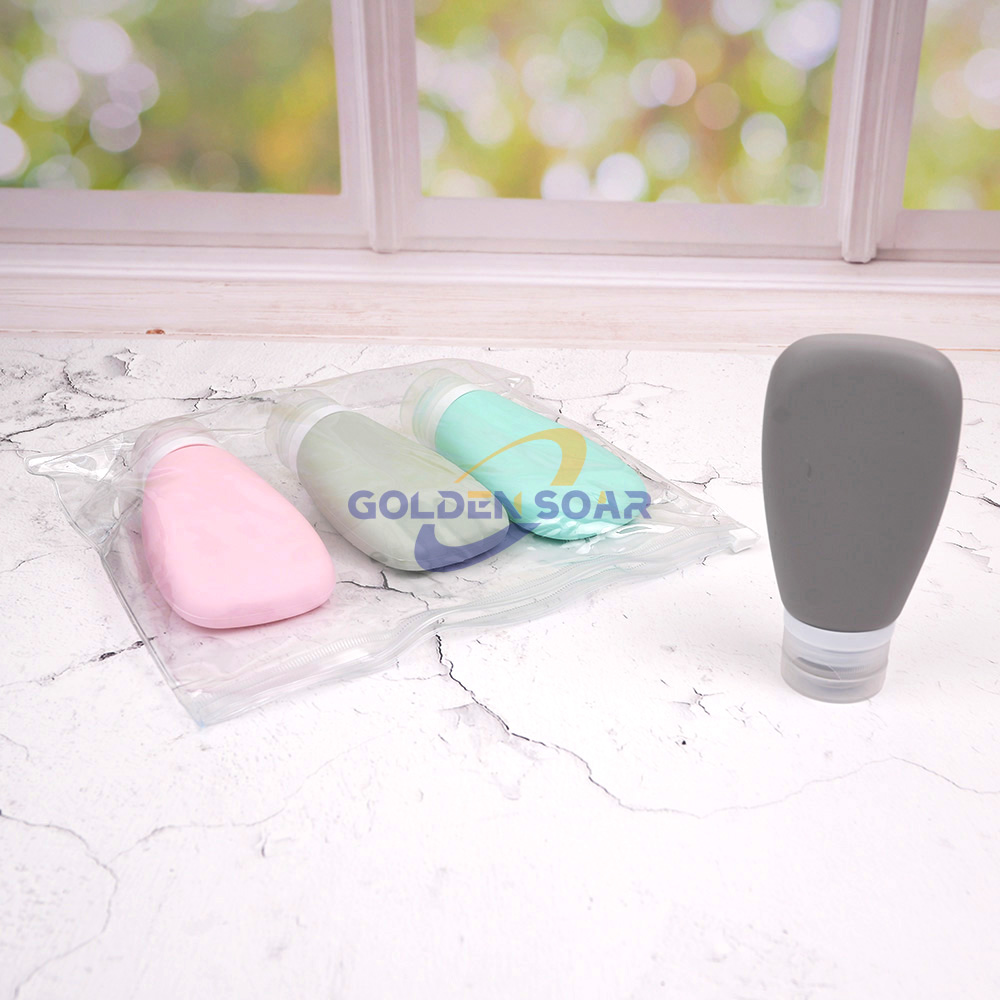
Engineering seal reliability and barrier performance in cosmetic travel containers
With the growing popularity of portable cosmetics, the technical demands on cosmetic travel containers have never been higher. Ensuring robust sealing and barrier performance is critical for maintaining product integrity throughout travel, especially in flexible packaging applications. This article explores the engineering behind cosmetic travel containers, focusing on the material structure and seal-stress behavior that determine their reliability.
Material structure and seal-stress behavior in cosmetic travel containers
The increasing demand for portable cosmetic products has placed significant emphasis on the engineering of travel containers, particularly regarding their ability to maintain product integrity throughout transport. For packaging production engineers, the primary technical challenge lies in ensuring that cosmetic travel containers exhibit robust sealing performance and effective barrier properties, especially within the realm of flexible packaging. As cosmetics are frequently subjected to variable mechanical stresses, pressure differentials, and environmental fluctuations during travel, the reliability of seals and the resistance of packaging materials to barrier degradation become paramount. This article provides a technical exploration of cosmetic travel containers from a seal-reliability engineering perspective, focusing on material structure, seal-stress interactions, and the mechanisms driving barrier performance loss. The following sections address core engineering concerns, frequently encountered technical questions, and best-practice recommendations for material validation and seal integrity assurance.

Cosmetic travel containers are typically constructed from a range of polymers such as polyethylene (PE), polypropylene (PP), polyethylene terephthalate (PET), and, in some cases, incorporate aluminum or silicone components for enhanced barrier or sealing functionality. The material selection and structural design directly influence the container’s ability to withstand the rigors of travel, particularly in terms of seal reliability and barrier integrity.
A key engineering consideration is the multilayer structure of flexible packaging. These structures often combine a sealant layer (e.g., low-density PE or cast PP) with one or more barrier layers (such as EVOH or metallized films) and, in certain designs, an outer support layer for mechanical strength. The sealant layer must exhibit sufficient melt-flow characteristics to form a uniform, defect-free seal under controlled heat and pressure. However, the interface between the sealant and barrier layers is frequently a locus for stress concentration, particularly when containers are repeatedly squeezed, dropped, or subjected to torsional forces during travel.

Seal-stress behavior is a critical factor in determining the long-term reliability of cosmetic travel containers. During production, heat-sealing parameters—temperature, dwell time, and pressure—must be precisely controlled to avoid weak seals or excessive material thinning. Inadequate control can result in microchannels or incomplete fusion at the seal interface, which may not be immediately apparent but can propagate under cyclic mechanical stress. For instance, repeated flexing or squeezing of a flexible tube can initiate microcracks at the seal edge, leading to gradual barrier performance degradation and eventual leakage.
The barrier performance of cosmetic travel containers is equally dependent on the integrity of the multilayer structure. Barrier layers such as EVOH or aluminum foil are highly effective at limiting oxygen and moisture ingress; however, any discontinuity or delamination at the seal interface can create preferential pathways for permeation. This is particularly problematic for formulations sensitive to oxidation or hydrolysis, as even minor barrier failures can compromise product efficacy and safety.
SEAL INTEGRITY EVALUATION – TEST ID: CT-2024-07
Pressure decay and dye penetration tests reveal that improper heat-seal parameters result in a 35% increase in microleakage events after 1000 simulated travel cycles. Optimized sealing conditions reduce failure rate to below 2%.

Environmental factors encountered during travel, such as rapid temperature changes, low cabin pressures, and mechanical vibration, further exacerbate seal stress and barrier degradation. For example, PE-based containers may experience thermal expansion mismatch between layers, leading to stress concentration at the seal. Similarly, silicone valves or closures, while providing excellent resealing properties, can be vulnerable to compression set or fatigue if not properly formulated and tested.
Material compatibility is another core consideration. Many cosmetic formulations contain oils, surfactants, or active ingredients that can plasticize or swell certain polymers, reducing seal strength over time. Engineers must therefore select materials with proven chemical resistance and validate compatibility through accelerated aging protocols. In practice, this often involves subjecting sealed containers to elevated temperatures and aggressive formulations, followed by mechanical and barrier testing to quantify performance loss.
Another frequent pain point for packaging engineers is the trade-off between ease of use and seal robustness. Flip-top caps, dispensing valves, and soft-touch features are desirable for end-users but can introduce additional sealing interfaces and potential leak paths. Each interface—whether ultrasonic welds, adhesive bonds, or mechanical closures—must be evaluated for both initial seal strength and resistance to fatigue under repeated use.
Frequently asked questions from production engineers often center on the quantification and mitigation of seal failure risks. The following addresses several of these technical concerns:

Frequently asked questions on seal reliability and barrier performance
How can seal reliability be quantitatively assessed in cosmetic travel containers?
Seal reliability is typically evaluated using a combination of burst testing, vacuum decay, and dye penetration methods. Burst testing measures the maximum internal pressure the seal can withstand before failure, while vacuum decay and dye penetration identify microleaks not visible to the naked eye. For flexible packaging, cyclic mechanical testing—simulating repeated squeezing and flexing—provides critical data on fatigue resistance.
What are the most common failure modes observed in flexible cosmetic travel containers?
The primary failure modes include channel leaks at the seal edge, delamination between layers, and stress cracking at closure interfaces. Channel leaks often originate from incomplete fusion during heat sealing or from foreign particle inclusion. Delamination is typically a result of poor adhesion between dissimilar polymers or from environmental stressors such as humidity and temperature cycling.
Which material structures offer the best balance of flexibility, sealability, and barrier performance?
Multilayer laminates combining a soft sealant layer (e.g., LDPE or cast PP) with a high-barrier core (EVOH, metallized PET, or aluminum foil) and a robust outer layer (PET or nylon) generally provide optimal performance. The sealant layer ensures processable, strong seals, while the barrier core limits permeation. The outer layer imparts mechanical protection and printability. The selection must be tailored to the specific cosmetic formulation and anticipated travel conditions.
How does environmental exposure during travel affect seal and barrier performance?
Thermal cycling, pressure changes, and mechanical vibration can induce stress at the seal and layer interfaces, promoting microcrack formation and delamination. Moisture ingress is accelerated if the barrier layer is compromised, while temperature extremes can exacerbate differential expansion between layers, further stressing the seal.
Are there industry standards or test protocols for validating seal reliability in cosmetic travel containers?
Yes, several standards are relevant. ASTM F88/F88M covers seal strength testing for flexible barrier materials, while ASTM F1929 addresses dye penetration for detecting seal leaks. For barrier assessment, ASTM F1249 (water vapor transmission rate) and ASTM D3985 (oxygen transmission rate) are widely used. Adherence to these protocols ensures repeatable, quantifiable assessment of seal and barrier performance (ASTM Standards).
What engineering controls can mitigate seal reliability degradation?
Precise control of heat-sealing parameters, rigorous incoming material inspection, and in-line non-destructive testing are essential. Material selection should prioritize chemical compatibility and fatigue resistance. Design features such as rounded seal edges, reinforced corners, and redundant sealing can further reduce failure risk.

For packaging production engineers tasked with developing or validating cosmetic travel containers, a methodical approach to seal reliability and barrier performance is essential. The following engineering actions are recommended:
- Review all material datasheets for chemical compatibility with intended cosmetic formulations.
- Implement ASTM-compliant seal strength and barrier testing at both initial production and after simulated travel cycles.
- Utilize finite element modeling to predict stress concentration zones and optimize seal geometry accordingly.
- Conduct accelerated aging studies using representative environmental and mechanical stressors.
- Establish in-line quality control protocols, including non-destructive leak testing and visual inspection for seal uniformity.
- Evaluate closure and dispensing features for both user convenience and long-term fatigue resistance.
RECOMMENDED PRACTICE – PROTOCOL ID: MVP-CTC-2024
All new cosmetic travel container designs must undergo a minimum of 1000 cycle mechanical fatigue testing, combined with ASTM F88 seal strength and ASTM F1929 dye penetration analysis, prior to production release.

By rigorously applying these engineering controls and validation protocols, packaging production engineers can significantly reduce the incidence of seal failure and barrier degradation in cosmetic travel containers. The integration of advanced material structures, precise process control, and comprehensive testing ensures that portable cosmetic packaging meets the demanding requirements of modern travel scenarios while maintaining product safety and efficacy.
For more information on packaging materials and engineering support, visit our Personal Care & Toiletries packaging solutions or explore Cosmetic Packaging options from Goldensoar.
Best practices for seal reliability in cosmetic travel containers
Engineers and quality managers are encouraged to implement robust material validation and seal-testing protocols to ensure the long-term performance of cosmetic travel containers. Following ASTM standards, conducting accelerated aging, and leveraging advanced modeling tools are essential steps for minimizing seal failure and barrier degradation. For technical support or to learn more about Goldensoar’s packaging solutions, visit the Goldensoar company profile.
 English
 Español
 Русский
 日本語
日本語 한국어
한국어 Français
 العربية
 Português