
Shipping Packaging Materials Solution
Reference Standard: Relevant material and performance testing standards include ASTM D1693 for polyethylene environmental stress-cracking resistance, plus material-specific inspection logic for leak testing, dimensional control, and packaging protection.
Short Answer
Shipping damage is often blamed on the outer box, yet many failures start inside the box. A bottle wall that is too thin at a corner, a pump that does not seat tightly, a PET surface that rubs against neighboring units, or a PE container exposed to surfactants under residual stress can turn a visually acceptable shipment into a leakage or complaint case. This solution treats shipping packaging materials as a layered system: the carton only distributes external force, while the inner plastic package decides whether liquid, appearance, and sealing integrity survive the journey.
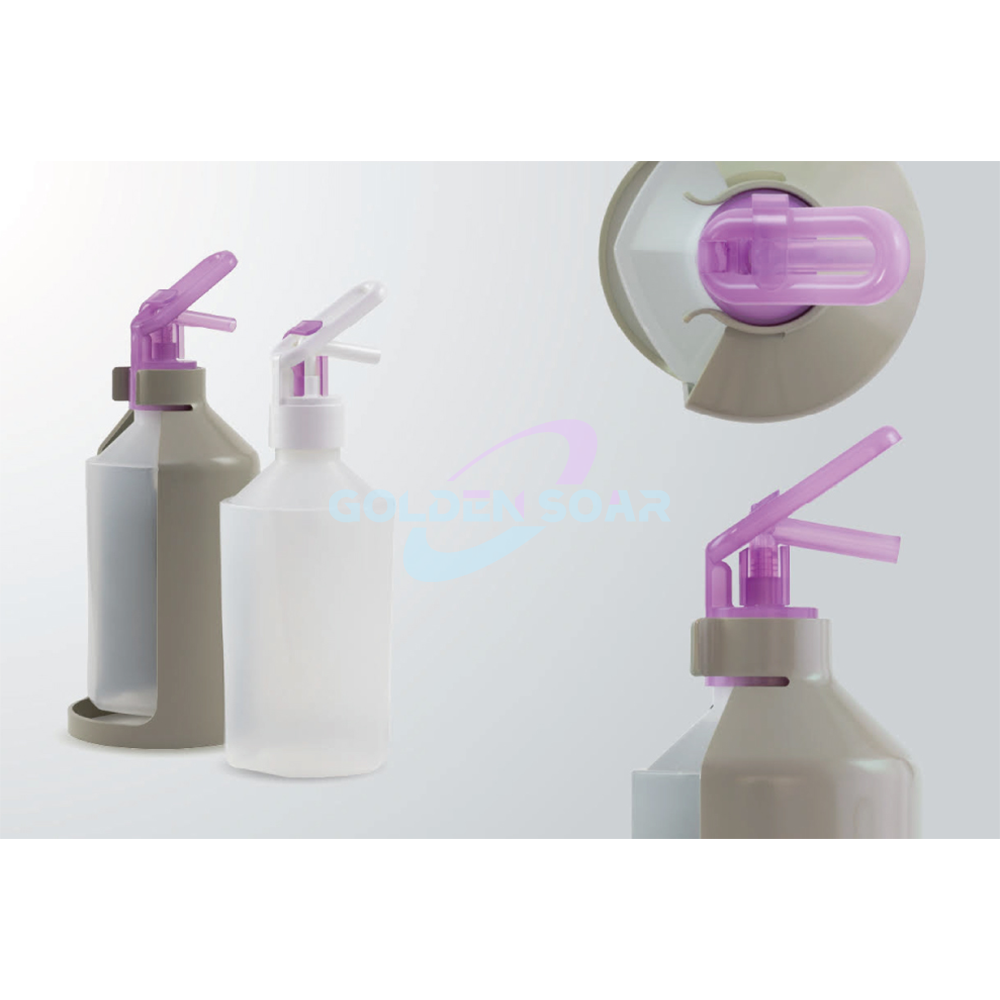
When Shipping Turns a Bottle Into a Load-Bearing Part
A filled plastic bottle behaves differently in transit than it does on a display shelf. In the warehouse, a bottle may stand upright, evenly supported, and rarely disturbed. During shipping, the same bottle becomes a temporary structural part inside a compressed, vibrating, and impact-prone system. It may receive vertical pressure from stacked cartons, lateral pressure from neighboring units, and point-contact force from caps, pumps, dividers, or secondary packaging. The material is no longer judged only by appearance; it is judged by how it distributes force while preserving closure integrity.
For PE packaging, the material choice matters because HDPE has a density range of 0.93-0.97 g/cm³, 와 LDPE has a density range of 0.91-0.94 g/cm³. HDPE’s denser, more linear molecular structure supports rigidity and stacking strength for larger-volume containers. LDPE’s lower-density branched structure gives flexibility for squeeze bottles. In a shipping scenario, those two behaviors create different risk maps. A rigid HDPE bottle can resist deformation better, but stress may concentrate around molded corners, shoulders, or thread zones. A soft LDPE squeeze bottle may absorb compression, but excessive deformation can disturb closure contact or label position.
The factory-side control point is not simply “use stronger plastic.” The relevant process is extrusion blow molding with advanced parison programming and 100-point parison control. Parison control changes wall thickness along the bottle height, reinforcing corners while reducing unnecessary material in lower-risk zones. In practical shipping logic, this means the bottle’s weak points should not be where force gathers: shoulder transitions, base edges, handle curves, and thin panels deserve attention before bulk shipment.
PET introduces another transport function. The catalog states that PET packaging can be made through single-stage injection stretch blow molding, where polymer chains are biaxially oriented. This contributes to higher drop-impact resistance, allowing PET to replace glass in some packaging scenarios while reducing shipping weight and breakage risk. The risk is different from PE: PET may protect clarity and shape well, but surface rubbing and neck accuracy still matter.
PP is more relevant for closures, pumps, caps, and rigid precision parts. Its structural rigidity, chemical resistance, and injection-molding precision make it suitable where the shipping load passes through a threaded closure or mechanical interface. If a pump or cap loses alignment, the carton may look intact while the inner liquid path fails.
| Material role in transit | Documented material fact | Shipping risk if ignored | Practical control direction |
|---|---|---|---|
| HDPE bottle body | 0.93-0.97 g/cm³ | Corner stress and stacking deformation | Wall-thickness programming and ESCR review |
| LDPE squeeze bottle | 0.91-0.94 g/cm³ | Over-compression and closure disturbance | Flexibility matched with cap security |
| PET display bottle | Single-stage ISBM | Drop impact or surface marking | Neck precision and protected packing |
| PP cap or pump part | Rigid precision molding | Thread mismatch or pump looseness | Dimensional tolerance and fit inspection |
A useful edge-condition model is a multi-carton shipment where bottles near the lower layer receive both vertical stack load and repeated small vibration. In the early stage, the bottle only shows elastic recovery. In the middle stage, stress concentrates around corners and neck interfaces. In the limit stage, a weak wall section, cap seal, or surface-contact point becomes the failure origin. This model does not require inventing carton compression data; it only recognizes that the inner plastic package must act as a mechanical component.
A cross-dimensional comparison is PE versus PET under the same transport handling. PE may tolerate squeezing and deformation but needs strong ESCR control when surfactant-based contents are inside. PET may offer premium clarity and lighter glass replacement, but the appearance layer and neck finish need protection. The better shipping material is not the one with the strongest marketing claim; it is the one whose failure mode matches the shipment’s real stress path.
The Quiet Failure Window Between Filling and Arrival
Most shipping failures do not begin at the moment a box is dropped. They begin earlier, during filling, capping, cooling, packing, storage, and route movement. The quiet failure window is the time between a package leaving the production line and the buyer opening the carton. During that window, small stresses can compound: residual molding stress, liquid contact, cap torque, temperature fluctuation, carton pressure, vibration, and surface contact.
For PE packaging, the most important documented risk indicator is environmental stress-cracking resistance. The catalog describes ASTM D1693 testing using 10% Igepal solution at 50°C, with PE bottles stated to withstand more than 168 hours of exposure. That matters for shipping because many personal care and cleaning products contain surfactant systems. A bottle may pass a short leak check but still face slow crack growth when internal stress and chemical contact continue during storage and transit.
Mechanically, stress cracking is not a simple hole or puncture. It often starts at a microscopic flaw or high-stress region. Surfactant molecules can assist crack initiation by interacting with the polymer surface under tension. The visible symptom may appear later as a hairline crack, whitening, seepage, or sudden leakage near a corner, base, handle, or threaded area. The container may look normal at packing time, then fail after days of vibration and chemical exposure.
PET has a different quiet-window risk. Its clarity and glass-like appearance are useful when a brand wants premium visual value without glass shipping weight. The catalog notes 92% light transmission, #1 recycling code, 및 0% BPA / phthalates for PET materials. But clarity creates a visibility standard: scratches, rub marks, scuff transfer, and cloudy contact zones are easier to notice. A PET bottle may not leak, but it may arrive looking downgraded if the surface is not separated. The catalog mentions individual polybagging for premium heavy-wall PET items and layer packing with dividers as measures to reduce scratching.
PP components add another hidden timing issue. A pump, cap, or threaded part can appear fitted during assembly, but dimensional shrinkage, thread mismatch, or vibration loosening may show up later. The catalog gives PP injection molding tolerance as tight as +/-0.05 mm. That level of precision is relevant because small dimensional errors at the closure interface can magnify during transit.
An extreme fatigue model can be divided into three stages. In the early phase, the package passes visual inspection and basic filling checks. In the middle phase, vibration and stacking pressure repeatedly load the same shoulder, cap, or base zones. In the limit phase, chemical stress, compression memory, or closure movement turns a small defect into leakage, scuffing, or deformation. The important lesson is that shipping reliability cannot be judged by a single moment. It must be evaluated as a time-based exposure system.
KEY TAKEAWAYS
- Fine whitening, hairline marks, or corner dullness can appear before full PE stress-crack leakage.
- A pump or cap that feels slightly uneven may become a shipment leak point after vibration.
- PET scuffing may signal inadequate surface separation even when the bottle body remains structurally intact.
Inner Package Materials That Decide Whether Outer Shipping Protection Works
A strong outer carton cannot compensate for every inner packaging weakness. The outer carton can buffer impact, distribute stacking force, and keep units organized. It cannot repair a poor bottle neck, an unstable pump fit, uneven wall thickness, or unprotected PET surfaces. That is why inner plastic packaging materials often decide whether outer shipping protection works.
For PE containers, the first decision is whether the bottle’s mechanical behavior matches the formula and shipment path. HDPE supports larger containers that need stacking strength; LDPE supports squeeze applications. But the underlying concern is not material name alone. ASTM D1693 ESCR logic, parison programming, wall-thickness distribution, and leak testing must align. If a PE bottle is filled with shampoo, detergent, lotion, or cleaning liquid, a buyer should treat chemical contact and shipping stress as a combined condition, not two separate reviews.
For PET containers, the strength comes from the ISBM process and biaxial orientation. This can improve drop-impact performance and support glass replacement. The risk is that premium PET also carries visual expectations. If the inner packing allows bottle-to-bottle rubbing, the carton may protect against external impact while failing to protect retail appearance. This is why individual polybagging 그리고 layer packing with dividers matter for premium PET packaging. They are not decorative add-ons; they are surface-contact controls.

For PP components, the inner-package role is often hidden because PP may be only a cap, pump, flip-top closure, or mechanical support part. Yet a closure is the gatekeeper between a filled bottle and a leakage claim. The catalog describes PP as chemically resistant to acids, alkalis, alcohols, and oils, while injection molding can form threads, snap-fits, and pump mechanisms with tight precision. In shipping terms, PP controls whether the bottle remains closed under vibration, compression, and handling.
A cross-system comparison makes the issue clearer. Consider two shipments with the same outer box. Shipment A uses a PE bottle with wall-thickness control, ESCR testing, and inline leak testing. Shipment B uses a generic bottle with no confirmed ESCR data and only a visual check. Even if both cartons meet the same outer packing condition, Shipment B carries higher hidden risk because the inner package is more vulnerable to chemical stress and transport fatigue. The same logic applies to PET. A clear PET bottle with dividers may arrive with premium appearance intact, while the same bottle without surface separation may arrive structurally sound but commercially downgraded.
Internal links should match this material logic. For PET-based bottle projects, reviewing shampoo and conditioner PET bottles is relevant when clarity, neck precision, and lightweight shipping matter. For pressurized or spray-related formats, 맞춤형 의료용 미니 알루미늄 에어로졸 캔 그리고 aluminum aerosol spray cans with screw bottles belong to a different packaging risk class, so they should not be confused with PE, PET, or PP bottle shipping assumptions.
A useful edge scenario is mixed-material packaging inside one shipment: PE bottle body, PP pump, PET-like display expectation, printed decoration, and secondary packing all interacting. The weak link may not be the material with the lowest strength. It may be the interface where materials meet: thread to neck, pump to bottle, bottle shoulder to divider, printed surface to sleeve, or bottom edge to tray. Shipping protection works only when these interfaces are identified before production release.
A Shipping-Focused Acceptance Checklist Without Inventing Carton Data
A reliable acceptance checklist for packaging materials for shipping should not invent carton data that the catalog does not provide. There is no documented corrugated board GSM, ECT, BCT, flute type, drop height, tape specification, or carton-layer standard in the provided product data. A responsible article should not create those numbers. The stronger approach is to separate verified material and process facts from practical shipping checks that should be requested during project validation.
The verified data layer includes ISO 9001:2015, ASTM-D1693 Standard, PE ESCR testing with 10% Igepal at 50°C, exposure stated as more than 168 hours, in-line leak testing, automated deflashing, PET precision necks, PET individual polybagging 또는 layer packing with dividers, and PP injection precision as tight as +/-0.05 mm. These are useful because they connect directly to likely shipping outcomes: cracking, leakage, surface damage, and closure fit.
The supplemental shipping review layer should be phrased carefully. It is reasonable to request vibration review, post-transport leak inspection, stacking observation, torque confirmation, and surface scuff checks. But these should be described as additional validation items, not as confirmed catalog claims. This distinction protects the page from unsupported statements and helps buyers communicate more precisely with suppliers.
Solution 1: Wall-thickness and material-role confirmation.
Execution Protocol: Before approving a PE shipping package, confirm whether the bottle is HDPE or LDPE and ask how the wall thickness is distributed across shoulders, base, corners, and panels. The request should focus on high-stress zones instead of only total bottle weight. If advanced parison programming is used, the buyer should ask which bottle zones are intentionally reinforced.
Expected Material Evolution: A better-controlled PE bottle should distribute load more evenly during stacking and vibration. Instead of stress concentrating in one thin corner, deformation should remain more controlled across the body. This does not eliminate all risk, but it lowers the chance that a single weak section becomes the first crack origin.
Hidden Cost and Side-Effect Avoidance: More material in reinforced zones may affect cost, cycle time, or squeezing feel. Avoid solving shipping damage by making every wall unnecessarily thick. The better strategy is targeted reinforcement guided by bottle geometry.
Solution 2: ESCR and formula-contact screening.
Execution Protocol: For surfactant-based contents such as shampoo, detergent, or cleaning liquid, request ESCR evidence instead of relying on a general “chemical resistant” statement. The catalog’s ASTM D1693 context, 10% Igepal at 50°C, and more than 168-hour exposure reference are relevant anchors.
Expected Material Evolution: A PE bottle with stronger ESCR performance should resist slow crack growth longer under combined chemical and tensile stress. During shipping, this means lower risk of delayed leakage caused by residual molding stress and formula contact.
Hidden Cost and Side-Effect Avoidance: ESCR-focused materials or PCR blends may affect color, stiffness, or processing. If PCR content is requested, review color consistency, wall behavior, and decoration compatibility together rather than treating sustainability as a separate feature.
Solution 3: Neck, closure, and pump fit validation.
Execution Protocol: For PET and PP interfaces, verify neck finish, cap fit, pump seating, and closure torque before shipment. PET precision necks are relevant to leak-proof seals, while PP tolerance down to +/-0.05 mm supports consistent mechanical interfaces.
Expected Material Evolution: A tighter interface should reduce micro-movement during transport vibration. The package is less likely to loosen, weep, or develop cap-related leakage under repeated handling.
Hidden Cost and Side-Effect Avoidance: Over-tightening can damage threads, deform gaskets, or make consumer opening difficult. The inspection should balance seal security with usability.
Solution 4: Surface separation for premium visible packaging.
Execution Protocol: For PET or visually sensitive packaging, request surface-contact controls such as individual polybagging or layer packing with dividers. The purpose is to reduce rubbing, pressure marks, and scuff transfer inside the carton.
Expected Material Evolution: Protected surfaces should retain clarity and retail appearance better during long-distance movement. The bottle may remain structurally unchanged, but commercial acceptance improves because visible abrasion is reduced.
Hidden Cost and Side-Effect Avoidance: Extra separation material increases packing labor and may affect sustainability messaging. Use it selectively for high-visibility items rather than every project.
| Acceptance variable | Verified data anchor | Practical shipping check | Risk controlled |
|---|---|---|---|
| PE stress resistance | ASTM D1693, 10% Igepal at 50°C, more than 168 hours | Formula-contact and post-storage leak review | Slow stress cracking |
| Bottle wall control | Advanced parison programming, 100-point control | Corner and base deformation observation | Thin-wall collapse |
| PET protection | ISBM, precision necks, dividers or polybagging | Surface scuff and closure seal review | Visual downgrade and leakage |
| PP component precision | Injection tolerance as tight as +/-0.05 mm | Pump, cap, thread, and snap-fit inspection | Interface loosening |
| Shipping supplement | Not stated as catalog carton data | Vibration, stacking, torque, and transit recheck | Real route exposure |
PRO-TIP / CHECKLIST
- Confirm whether the inner bottle is PE, PET, PP, or a mixed-material system before discussing outer cartons.
- Ask for ESCR context when the product contains surfactants, detergents, shampoos, or cleaning liquids.
- Review neck finish and closure fit as shipping-risk items, not only filling-line items.
- For clear PET packaging, request surface separation when retail appearance matters.
- Treat PCR content, decoration, and shipping durability as connected variables.
- Do not invent carton strength numbers when the supplier has not provided carton test data.
- Run post-transport leak and scuff checks on samples before bulk release.
- Record the difference between verified factory data and additional buyer-side validation requests.
Frequently Asked Questions (FAQ)
Is sealed packaging material recyclable in Rowan County, NC?
Local recycling rules vary by county and facility. A sealed plastic package may need to be empty, clean, and separated by material type before recycling. PET with recycling code #1 and PP with code #5 may be recyclable in some streams, but buyers should confirm local acceptance directly with Rowan County recycling guidance.
Are packaging materials taxable?
Packaging material taxation depends on jurisdiction, product use, resale status, and whether the material is considered part of the sold product. Shipping supplies, retail packaging, and manufacturing inputs may be treated differently. This article cannot provide tax advice; confirm with a local tax authority or qualified accountant.
How to evaluate box packaging material?
Start by separating outer-box performance from inner-package performance. For plastic bottle shipments, review PE ESCR, PET surface protection, PP closure precision, leak testing, and post-transport condition. Carton data such as board grade, compression strength, and drop testing should be requested separately if not documented.
Does Amazon provide Amazon packaging material to sellers for free?
Amazon packaging support depends on program type, fulfillment method, and seller arrangement. FBA, seller-fulfilled, and branded packaging programs may have different rules. Sellers should check current Amazon Seller Central documentation instead of assuming free cartons, labels, or protective materials are automatically provided.
 English
 Español
 Русский
 日本語
日本語 한국어
한국어 Français
 العربية
 Português