
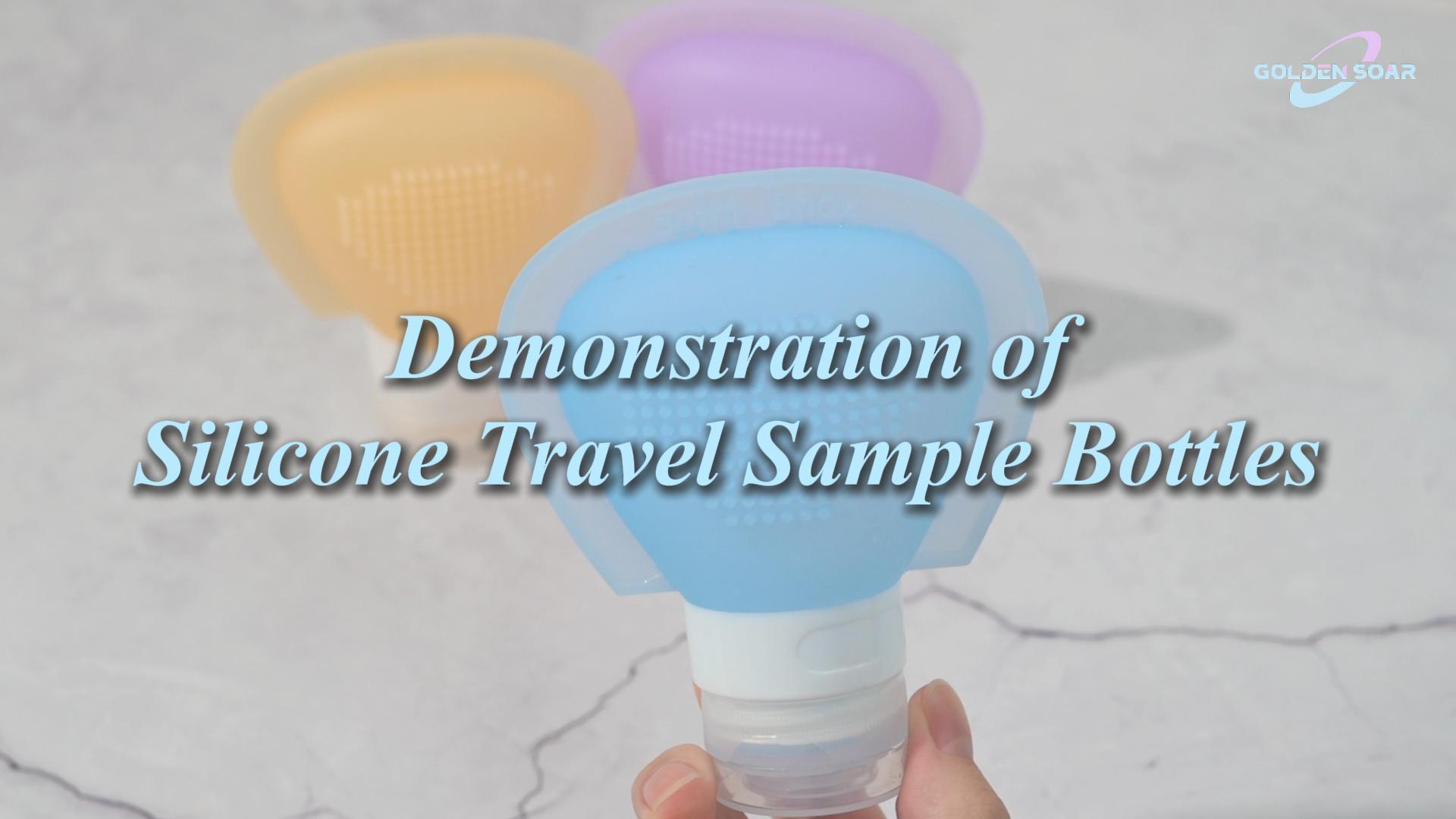
Seal reliability under stress in empty squeeze bottles
Empty squeeze bottles are essential in flexible packaging, yet their seal reliability is constantly challenged by repeated mechanical stress. Understanding how these seals perform under cyclic deformation is critical for engineers seeking to maintain consistent integrity and safety in packaging applications.
This article explores the mechanisms of seal-stress behavior in empty squeeze bottles, mapping degradation modes and providing insights for optimizing material selection and closure design.

In flexible packaging systems, empty squeeze bottles are widely utilized for their convenience and adaptability across various applications, from personal care products to food and industrial chemicals. However, the mechanical demands placed on these containers—particularly during repeated squeezing and resealing—pose significant challenges to the long-term reliability of their seals. For packaging production engineers, understanding the interplay between material fatigue and seal integrity is essential, especially as product quality and safety are directly impacted by seal performance under mechanical stress. The following analysis systematically investigates how the seal areas of empty squeeze bottles respond to cyclic deformation, with a focus on the mechanisms of seal-stress behavior and the evaluation of degradation modes that can compromise packaging effectiveness.
The engineering of empty squeeze bottles typically involves selecting flexible polymers such as low-density polyethylene (LDPE), polypropylene (PP), or thermoplastic elastomers (TPE), each offering distinct mechanical and sealing characteristics. The bottle body must balance flexibility for user actuation with sufficient rigidity to recover its shape after deformation. The sealing region—often a snap-on or threaded closure with a liner or integrated seal—serves as the primary barrier against leakage and contamination. The mechanical interface between the closure and the bottle neck is subject to repeated stress concentrations during use, which can induce localized plastic deformation, micro-cracking, or creep in the seal material.
The reliability of these seals depends on several factors: the viscoelastic properties of the chosen polymer, the geometry of the sealing interface, the uniformity of closure torque or snap-fit engagement, and the presence of any additives or fillers that may alter material response. In production, even minor deviations in wall thickness or surface finish can result in stress risers that accelerate fatigue. For engineers focused on flexible packaging, it is crucial to map the stress distribution across the seal during repeated actuation, as this reveals zones most susceptible to fatigue-induced failure.
Seal reliability under cyclic stress is primarily threatened by two degradation modes: progressive loss of elastic recovery in the seal material and the initiation of micro-fissures at the interface. Over time, the repeated compression and relaxation of the seal can cause molecular chain disentanglement or orientation, reducing the material’s ability to rebound to its original shape. This is particularly evident in LDPE-based bottles, where lower crystallinity can lead to more pronounced viscoelastic creep. In contrast, PP and TPE formulations may exhibit better fatigue resistance but can become brittle if not properly plasticized or if exposed to environmental stress cracking agents.


To quantify seal-stress behavior, standardized cyclic compression testing is employed. In a typical protocol, empty squeeze bottles are subjected to repeated squeezing and release cycles using a mechanical actuator, with force and displacement monitored throughout. The number of cycles to seal failure—defined as the onset of leakage or measurable loss of sealing force—is recorded for each material and closure design. These tests are often supplemented by finite element analysis (FEA) to visualize stress concentrations and predict failure locations under realistic loading conditions.
The evaluation of seal performance must also consider the influence of environmental factors such as temperature fluctuations, humidity, and exposure to packaged contents. Polymeric seals can soften at elevated temperatures or become embrittled at low temperatures, altering their mechanical response to stress. Additionally, the ingress of chemicals from the contents or the external environment can plasticize or degrade seal materials, further reducing their fatigue life. For packaging production engineers, it is essential to specify material grades and closure geometries that maintain seal integrity across the expected range of service conditions.
A key metric in evaluating seal reliability is the retention of sealing force after a defined number of squeeze cycles. For example, a high-quality LDPE bottle may retain 85–90% of its initial sealing force after 1000 cycles, whereas a suboptimal formulation or poorly designed closure may drop below 70%, increasing the risk of leakage. The engineering challenge lies in correlating these performance metrics with material selection, processing parameters, and closure design. Surface roughness at the sealing interface, for instance, can trap air or contaminants, leading to localized stress concentrations and premature failure. Similarly, uneven closure torque can distort the seal geometry, creating pathways for leakage under cyclic loading.
The mechanical stress impact on seal integrity is further complicated by the interaction between the bottle body and the closure during actuation. As the bottle is squeezed, internal pressure rises, forcing the contents against the seal. Upon release, the bottle walls must recover rapidly to their original shape to prevent vacuum-induced seal separation. If the material exhibits excessive creep or slow elastic recovery, the seal may not re-engage fully, resulting in intermittent leakage or loss of barrier properties. This dynamic behavior underscores the importance of material formulation and closure design optimization in maintaining long-term seal reliability.


In practice, engineers must also account for manufacturing variability and in-use handling. Automated assembly processes can introduce minor misalignments or inconsistent closure forces, while end users may apply unpredictable squeezing patterns or excessive force. Robust seal design must therefore accommodate a range of real-world stresses, ensuring that the seal remains effective even under suboptimal conditions. This often involves specifying tighter tolerances for critical dimensions, selecting materials with proven fatigue resistance, and conducting accelerated aging studies to simulate long-term use.
Evaluation of seal reliability is incomplete without post-test analysis of failure modes. After cyclic testing, seals are examined for signs of material fatigue, such as whitening, crazing, or the presence of micro-cracks. Scanning electron microscopy (SEM) or optical profilometry can reveal sub-surface damage not visible to the naked eye. Chemical analysis may also be warranted if environmental stress cracking is suspected. These diagnostic techniques provide valuable feedback for refining material formulations and closure geometries, enabling continuous improvement of empty squeeze bottle designs.
Ensuring long-term seal reliability in empty squeeze bottles
For packaging production engineers, the core pain point remains the degradation of seal reliability due to material fatigue. This issue is not only a function of the base polymer but also of the interaction between material properties, closure mechanics, and environmental exposures. Addressing this challenge requires a holistic approach: selecting polymers with high fatigue resistance, optimizing closure geometry for uniform stress distribution, and implementing rigorous quality control measures during production. Furthermore, ongoing validation through cyclic testing and failure analysis is essential to ensure that empty squeeze bottles meet the demanding requirements of flexible packaging applications.
To ensure the continued integrity of seals in empty squeeze bottles, it is recommended that engineering validation protocols be established. These should include cyclic mechanical testing under simulated use conditions, detailed analysis of stress distribution using FEA, and post-test examination of seals for early indicators of fatigue. Material selection should prioritize polymers with demonstrated resistance to creep and environmental stress cracking, while closure designs must be evaluated for their ability to maintain consistent sealing force throughout the product lifecycle. By adopting a data-driven, engineering-focused approach to seal reliability, packaging production engineers can mitigate the risks associated with material fatigue and uphold the performance standards required in flexible packaging systems.
For more technical resources on flexible packaging and seal reliability, visit our PE Packaging materials page or explore PP Packaging solutions for further insights into material performance in empty squeeze bottles.
 English
 Español
 Русский
 日本語
日本語 한국어
한국어 Français
 العربية
 Português