
Empty Lotion Bottles With Pump Solution
Reference Standard: Relevant material and performance testing standards include PET packaging performance logic, dimensional verification for pump-compatible neck finishes, side-lay leakage observation, drop handling review, and material safety screening supported by recognized organizations such as ASTM International そして U.S. FDA food-contact packaging resource.
Short Answer
Empty Lotion Bottles With Pump as a 300ml Merchandising Unit
A 300ml pump bottle sits in a useful middle zone. It is larger than a trial-size travel container, yet smaller than bulk family refill packaging. For shower gel, body lotion, body wash, hotel amenity programs, and cosmetic refill lines, that volume becomes a planning unit. The buyer is not only asking whether the bottle can hold liquid. The real commercial question is whether 300ml PET packaging can support the pace of repeat use, display replenishment, gift-set combinations, and SKU expansion.
The product record identifies the target item as かわいい300ミリリットルシャワージェルボトル卸売|ポンプペット包装OEMカスタマイズ可能な空のローションボトル. That wording matters because it links four layers: a defined capacity, a personal-care use case, PET material positioning, and customization. In retail planning, the same bottle can act as a daily bathroom product, a salon counter refill bottle, a hotel room upgrade, or a body-care line extension. A 300ml bottle gives enough visible volume to look substantial on a shelf, while still remaining manageable for hand use and sink-side placement.
The edge-case model here is not heat or leakage. It is replenishment rhythm drift. Imagine a brand launches a body wash, lotion, and hand cleanser in the same 300ml bottle family. In the early phase, every SKU looks aligned because the packaging footprint is consistent. In the middle phase, faster-moving formulas need more frequent restocking while slower-moving formulas remain visually present. In the pressure phase, a weak packaging system creates mismatched visual density: some shelves look empty, some look overstocked, and the brand loses rhythm. A 300ml unit helps control this problem because the bottle can serve as a repeatable unit across related products without making every SKU feel bulk-sized.
A cross-dimensional comparison shows the difference clearly:
| Planning Variable | Small Trial Bottle | 300ml PET Pump Bottle | Large Refill Pack | Practical Meaning |
|---|---|---|---|---|
| Shelf presence | Low | Medium to strong | Strong but bulky | 300ml supports visible retail display without oversized blocking |
| Refill behavior | Frequent | Balanced | Less frequent | A 300ml unit fits daily-use personal care routines |
| Series expansion | 限定 | Strong | Less flexible | One bottle format can support shower gel, lotion, and cosmetic packaging |
| Gift-set usability | Easy but small | Strong | Difficult | 300ml can feel complete without becoming heavy |
| Bathroom counter fit | Strong | Strong | Variable | The pump format supports repeated access |
The comparison is useful because it frames the bottle as a merchandising decision rather than a simple container. A buyer sourcing shower gel bottle wholesale and lotion bottle formats should ask how the bottle will behave as a repeatable unit across the full product family.
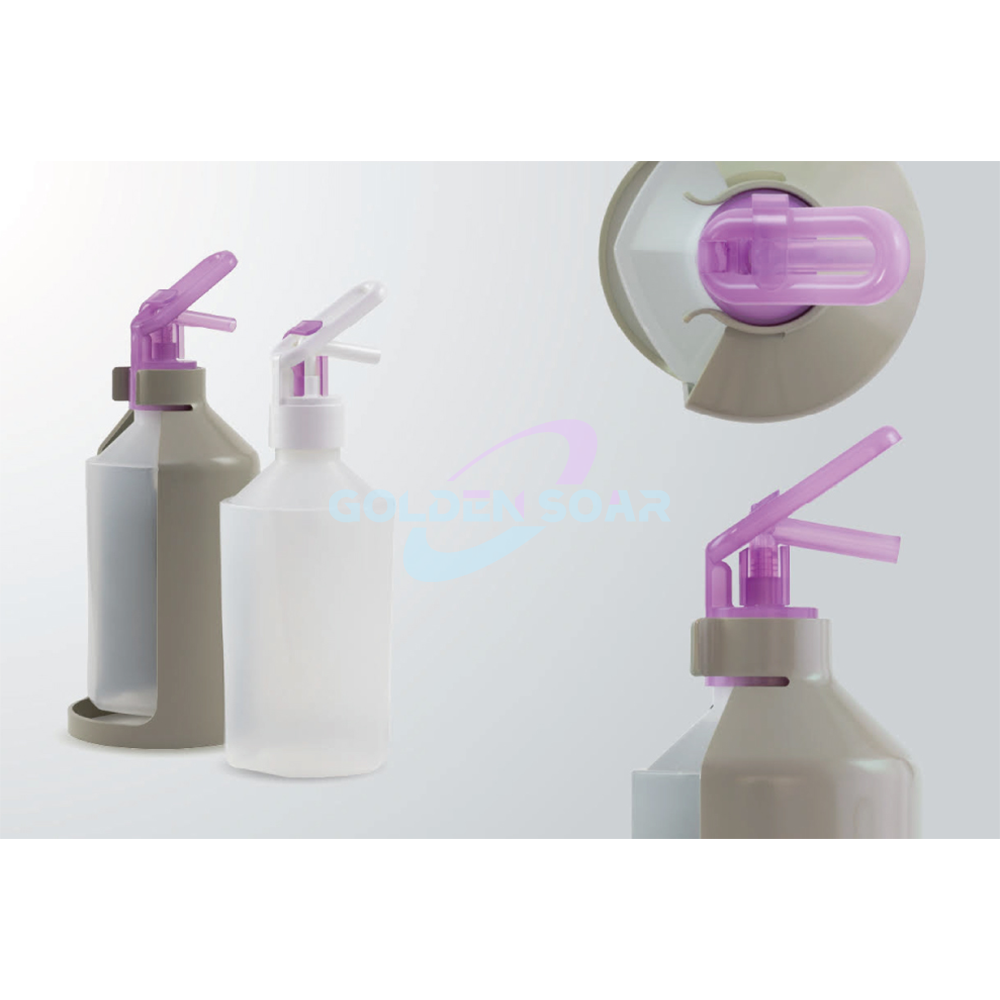
Front-Facing Recognition Through Shape, Color Blocks, and SKU Memory
For a consumer-facing pump bottle, the front view carries more work than many buyers realize. A shopper or hotel guest usually does not inspect technical data first. They recognize use category through shape, color grouping, pump position, label zone, and the visual relationship between adjacent SKUs. The item’s product language already points to this: かわいい, 300ミリリットル, shower gel bottle, ポンプ付きローションボトル, PET包装, そして OEM customizable. These are not decorative words only. They define how the bottle can become a visual memory object.
The article should avoid repeating old light-transmission or shelf-light analysis. A better angle is recognition compression. In a crowded bathroom, retail shelf, salon cabinet, or hotel room, the user may have only one or two seconds to identify which bottle contains lotion, shower gel, or body wash. A pump bottle that carries consistent visual logic can shorten that decision. Color blocks can separate product lines. A shared bottle silhouette can connect the family. OEM customization can apply brand marks, surface identity, or series color planning without needing to invent unverified print technologies.
The extreme scenario is a multi-SKU counter with three similar personal-care liquids. In the early stage, the user sees three 300ml bottles and understands the brand family. In the middle stage, use frequency changes the liquid level, but the shape still keeps the family together. In the pressure stage, if color, label panel, and pump orientation are poorly coordinated, the user starts selecting the wrong product. This is not a material failure; it is a recognition failure.
A cross-dimensional test case can compare three design routes:
Test Route A: Same bottle, same pump color, weak label differentiation.
Expected issue: strong family feel, but poor category separation.
Test Route B: Same bottle, controlled color-block variation, clear product naming.
Expected benefit: stronger SKU memory with less visual confusion.
Test Route C: Different bottle shapes for every SKU.
Expected issue: high novelty, but weak family recognition and more complex procurement planning.
This kind of analysis keeps the page distinct from older PET clarity articles. It focuses on the way a product family is remembered, selected, and repeated. The material still matters because PET packaging gives a clean visual base, but the main point is not optical measurement. The main point is how the front-facing bottle becomes part of a buying and using routine.

KEY TAKEAWAYS
- A 300ml bottle can act as a repeatable merchandising unit across shower gel, lotion, and body-care lines.
- OEM customization should support fast category recognition, not only visual decoration.
- Weak SKU differentiation can create user confusion even when the bottle material and pump format are acceptable.
User Rhythm Mapping From First Press to Bathroom Counter Reuse
The daily user path is different from the buyer’s spreadsheet. A buyer may see PET, 300ml capacity, OEM customization, and pump format. A user sees the first press, the counter position, the refill moment, the wet-hand reach, and the decision to keep or discard the bottle. This is where the product can be understood as a rhythm object.
Start with first contact. A pump bottle is often judged by how naturally it sits on the counter and how quickly the user understands its purpose. The 300ml format can feel substantial without becoming a storage container. In a bathroom setting, that balance matters because the user may handle it with damp hands, place it beside other personal-care items, and press it repeatedly across many days. The product’s refillable and cosmetic-packaging context supports this rhythm, but the article should not turn into a pump-path test or viscosity discussion. The useful angle is behavioral continuity.
Mechanism breakdown: PET is a thermoplastic polyester widely used for clear and semi-rigid packaging. Its polymer structure supports high visual clarity and impact resistance compared with glass in many normal handling situations. The supplied data identifies 92% light transmission, PET包装, そして #1 recycling code at the material-page level. It also states 0% BPA / phthalates. These facts support a user-facing format where visibility, light weight, and product presentation are relevant. The single-stage ISBM process orients polymer chains in two directions, helping the bottle achieve better strength and cleaner geometry than a loosely controlled process. In practical terms, the user experiences this as a container that looks clean, feels structured, and supports repeated bathroom placement.
Extreme pressure timeline model: In the initial phase, the bottle is filled, placed, pressed, and visually introduced into the user’s routine. The early performance signal is not a dramatic failure; it is whether the bottle remains easy to identify and comfortable to keep on the counter. In the middle phase, the label, bottle surface, and pump area face repeated hand contact, water droplets, and movement between sink, shower shelf, and cabinet. The user begins to judge whether the bottle feels reusable or disposable. In the limit phase, the bottle’s role changes from purchased package to retained object. If the format still looks organized, the consumer may refill it, keep it for a second use, or associate the brand with practical value.
Cross-system hidden effect: When a bottle fails to fit user rhythm, the brand loses more than one packaging impression. A container that feels awkward on the counter can reduce product visibility at the exact moment when repeat use should build preference. A bottle that looks like it belongs in a series can make the next purchase feel easier because the user already understands where it fits in the routine. This secondary effect is often missed because procurement teams focus heavily on unit cost, while user behavior is shaped by small repeated moments.
Procurement Storyboard for Custom PET Pump Bottles
A useful sourcing page should not look like a generic procurement checklist. For custom PET pump bottles, a storyboard structure works better because the buyer’s decision evolves from idea to sample to shelf-ready family. The product record supports this direction through the terms PET素材, カスタマイズ可能なOEM, そして 300ミリリットル. The material page also gives a 10K standard MOQ, which should be treated as a material-page standard MOQ rather than a single-product exclusive figure.
Stage one is concept framing. The buyer defines whether the bottle will serve shower gel, body lotion, body wash, hotel amenity packaging, or a cosmetic refill line. At this stage, 300ml should be considered as a family unit, not only as a fill volume. The key question is whether the same bottle can support multiple formulas without making the brand range look fragmented.
Stage two is appearance direction. PET packaging can support transparent or solid opaque color routes according to the supplied material-page information. Custom colored PET normally requires planning around the stated standard MOQ logic. The buyer should avoid treating color as a late-stage decoration decision. Color is part of SKU recognition, replenishment planning, and retail grouping.
Stage three is sample review. The supplied factory-fix data points to single-stage ISBM technology, seamless bottoms, superior strength, そして precision necks for pump and sprayer compatibility. These should be reviewed as process-linked acceptance signals. The goal is not to claim a universal no-failure bottle. The goal is to confirm that the sample behaves consistently enough for the intended product family.
Stage four is shelf-family expansion. A single 300ml PET pump bottle can become the base for shower gel, body lotion, hand care, hotel supplies, or gift-set packaging. Brands can also connect it with adjacent formats such as perfume spray bottle and aluminum bottle lines または カスタムメディカルミニアルミエアゾール缶 when building a broader packaging architecture. The point is not to merge unrelated categories, but to keep packaging decisions coherent across product families.
Four Solution Layers for Buyers
1. Capacity-to-SKU mapping
Execution Protocol: Begin by listing every formula that may use the 300ml bottle: shower gel, lotion, body wash, hand cleanser, or hotel amenity refill. Group them by use frequency and display location. Select the bottle as a common packaging unit only when the visual family and refill rhythm make sense together.
Expected Material Evolution: The PET material itself does not become stronger because of SKU planning, but the packaging system becomes more predictable. A common 300ml unit allows more controlled shelf density, simpler family recognition, and cleaner product-range expansion.
Hidden Cost and Risk Control: Overusing the same bottle for unrelated liquids can blur category identity. Avoid this by assigning clear label hierarchy, controlled color blocks, and product naming rules before mass customization.
2. Front-view identity control
Execution Protocol: Build the bottle face around recognition speed. Decide where the brand mark, product category, and color zone should sit. Keep pump orientation, label region, and visible product family logic consistent across SKUs.
Expected Material Evolution: The PET surface remains a visual carrier. The measurable change is not chemical; it is recognition efficiency across the product family. Good front-view control reduces user hesitation and improves series memory.
Hidden Cost and Risk Control: Excessive visual variation can weaken brand unity. Too little variation can cause SKU confusion. Use controlled variation rather than random decoration.
3. Sample-stage performance review
Execution Protocol: Review neck finish consistency, pump fit, bottle standing behavior, surface appearance, and sample-to-sample visual consistency. Use side-lay observation, basic drop handling, and surface inspection as practical checks.
Expected Material Evolution: Samples that pass repeat handling checks should show stable geometry, controlled appearance, and consistent assembly fit. PET should not be evaluated for hot-fill use unless a suitable heat-set or alternative material route is chosen.
Hidden Cost and Risk Control: A sample can look acceptable in isolation but fail as a series. Compare multiple samples side by side, not only one hero sample.
4. Packaging protection planning
Execution Protocol: For premium visible PET bottles, define surface-contact protection before shipping. The supplied material-page information supports individual polybagging or layer packing with dividers for premium heavy-wall PET items, while robotic pick-and-place can reduce production contact.
Expected Material Evolution: Protective packing does not change PET chemistry, but it can preserve surface appearance by reducing friction marks during movement. This matters when the bottle is meant to communicate clean retail value.
Hidden Cost and Risk Control: Extra packing increases handling complexity and material use. Apply it where visible finish value justifies the protection, rather than turning every shipment into an overpacked system.
| Control Point | Relevant Data Anchor | Expected Review Method | Acceptance Logic |
|---|---|---|---|
| Merchandising volume | 300ミリリットル | SKU family mapping | Capacity supports repeated personal-care use |
| Material identity | PET包装 | Visual and handling review | Clean appearance and structured bottle feel |
| Process route | Single-stage ISBM | Sample geometry review | Consistent bottom and neck presentation |
| Pump compatibility | Precision necks for pumps and sprayers | Fit and side-lay observation | Assembly supports controlled dispensing use |
| Heat boundary | Standard PET deforms above 60°C | Fill-temperature screening | Avoid ordinary hot-fill planning |
| Surface protection | Divider packing or individual polybagging for premium PET | Pre-shipment appearance review | Reduce visible abrasion risk |
PRO-TIP / CHECKLIST
- Confirm whether 300ml is being used as a single product size or as a repeatable SKU-family unit.
- Treat the material-page MOQ as a planning reference, not as a substitute for a product-specific quotation.
- Review front-facing recognition before approving decoration direction.
- Compare samples as a family instead of judging only one bottle.
- Keep ordinary PET away from hot-fill assumptions unless a suitable material route is confirmed.
- Match packing protection to visible finish value and retail display expectations.
- Use refill and reuse language only when the bottle format supports the intended user routine.
- Document color, label zone, pump orientation, and category naming together.
Frequently Asked Questions (FAQ)
Which material is most commonly used for biodegradable packaging?
Common biodegradable packaging materials include PLA, molded fiber, paper-based substrates, starch blends, and bagasse. PET is widely recyclable as code #1, but standard PET should not be described as biodegradable unless a verified biodegradable formulation and certification are provided.
How can companies ensure packaging materials compliance with new standards?
Companies should document material identity, supplier declarations, applicable contact-safety requirements, migration or performance test logic, and batch-level traceability. For pump bottles, compliance review should also include material screening, dimensional consistency, closure compatibility, labeling claims, and destination-market requirements.
When shippers package the material, what are they trying to protect?
Shippers are usually trying to protect surface appearance, closure stability, shape integrity, and carton-level order accuracy. For visible PET pump bottles, divider packing, layer separation, and reduced surface contact help limit abrasion before retail or filling operations.
How should packaging materials sold with product be logged?
Packaging materials should be logged by material type, capacity, closure type, supplier batch, decoration version, quantity, and destination product. For 300ml PET pump bottles, the log should connect the bottle, pump, label version, and SKU family to avoid mixing similar-looking items.
Which organelle packages materials and distributes them throughout the cell?
The Golgi apparatus packages, modifies, and distributes materials inside the cell. This biology question is not directly related to PET pump bottle sourcing, but the packaging analogy is useful: organization and routing matter as much as the container itself.
 English
 Español
 Русский
 日本語
日本語 한국어
한국어 Français
 العربية
 Português