
Exclusive Plastic Packaging Storage Signals
Reference Standard: ASTM D1693 environmental stress-cracking evaluation for polyethylene, supported by practical dimensional, leak, surface, and receiving inspection logic for PE, PET, and PP packaging.
Short Answer
Plastic packaging materials used for personal care, cosmetics, detergents, refill systems, and hot-fill packaging often pass through a quiet risk zone between production and use. The bottle has already been molded, decorated, capped, packed, shipped, stored, opened, and inspected, but the formulation has not yet entered the container. That interval matters.
A PE detergent bottle, a PET cosmetic bottle, and a PP jar do not age in the same way during export storage. PE may be selected for squeezability or chemical resistance. PET may be chosen for clarity and glass-like presentation. PP may be preferred for heat stability, closures, pumps, threaded parts, and chemically demanding formulas. The question is not simply which material is stronger. The better question is: what changes after cartons are stacked, pallets vibrate, warehouse temperatures rise, and the buyer opens the first box?
When Plastic Packaging Leaves the Factory but Has Not Yet Entered the Filling Room
The first hidden phase is the waiting period. The packaging has left the controlled production environment, but it has not yet entered the customer’s filling room. This stage can include sea freight, warehouse stacking, container temperature variation, pallet movement, repacking, local distribution, and sample-level receiving checks. In that period, the buyer is not testing raw resin. The buyer is seeing the combined result of material choice, molded geometry, closure fit, packing protection, and storage exposure.
PE packaging in the catalog includes HDPE and LDPE behavior. HDPE is linked with higher rigidity and large-volume containers, while LDPE supports squeezable applications such as lotion tubes, travel bottles, and soft dispenser formats. PET packaging uses single-stage ISBM for clearer, heavier-wall presentation, with high visual clarity and lower breakage risk than glass. PP is presented as a heat-resistant, chemically stable option for hot-fill, threaded parts, precision caps, pumps, and jars.
The warehouse waiting period changes the buyer’s first impression because packaging is inspected as a finished object, not as a polymer sample. A bottle that looked correct after molding may be judged by how its shoulder holds shape, whether its pump sits squarely, whether a transparent surface shows scuffing, whether the carton corner has compressed, or whether a neck finish feels tight enough for future filling. These observations are not full laboratory tests, but they can reveal whether the selected material family fits the expected shipping and storage reality.
A useful edge-case model is a mixed export pallet held in a warm warehouse before filling. PET bottles are visually premium, but standard PET is not suitable for hot-fill exposure above its deformation risk zone. PP has a stronger heat-resistance profile and can support higher-temperature filling conditions. PE may be acceptable for shampoo, detergent, lotion, shower gel, or cleaning products, but its final behavior depends on density choice, wall distribution, and contact with surfactant-rich formulas after filling. The buyer should not treat all plastic packaging as one category after storage.
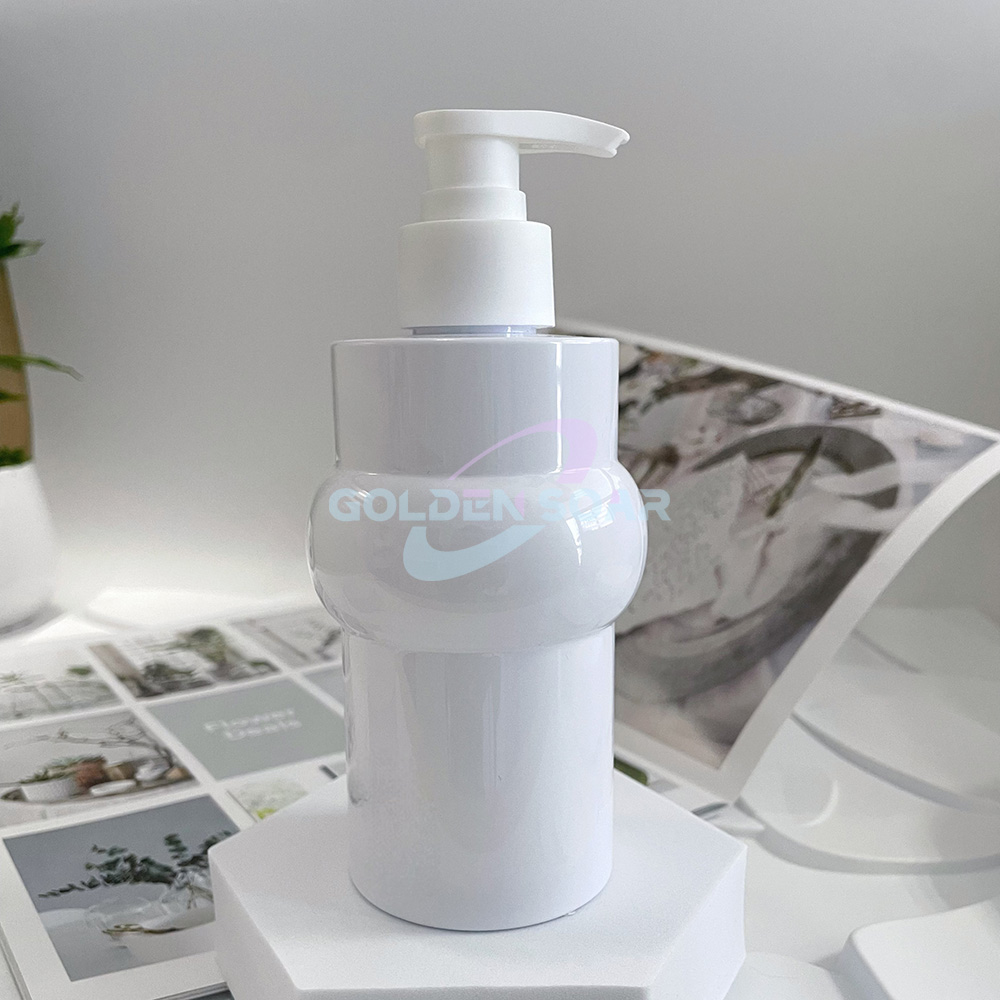
A cross-dimensional comparison is useful here. In a short receiving trial, one team may compare three packaging families under the same storage history: a squeezable PE bottle, a transparent PET bottle, and a PP pump or jar component. PE should be checked for rebound and stress marks near the shoulder. PET should be checked for surface contact marks, haze, and heat-related shape change. PP should be checked for thread fit, snap behavior, and closure precision. The point is not to declare one material superior; it is to match inspection questions to material behavior.
| Receiving Variable | PE Packaging Signal | PET Packaging Signal | PP Packaging Signal |
|---|---|---|---|
| Warm warehouse hold | Shoulder recovery and squeeze feel | Shape stability below heat-risk conditions | Heat-resistant fit and threaded stability |
| Pallet stacking | Body panel compression | Surface scuffing or contact marks | Cap or closure geometry retention |
| First carton opening | Bottle rebound and pump seating | Clarity and scratch visibility | Snap, thread, or hinge feel |
| Pre-filling review | Compatibility with surfactant products | Visual premium appearance | Suitability for hot-fill or mechanical parts |
The practical lesson is direct: the first inspection should read the storage journey, not only the material label.
The Quiet Drift Between Carton Pressure, Neck Fit, and Pump Readiness
Plastic packaging components rarely fail as isolated pieces. A bottle body, pump head, flip-top cap, inner refill bottle, outer case, and neck finish interact as a small mechanical system. During export storage, carton pressure does not need to crush the product to create doubt. Minor shape drift, cap angle, pump looseness, or neck misalignment can change how the buyer perceives readiness for filling.
The catalog data includes PE bottle bodies combined with PP pump heads, PE inner bottles inside PP outer cases, flip-top caps, dual chamber bottles, calibrated neck finishes, and airless refill structures. These are not simple empty containers. They are assembled packaging systems with contact points. A 300ml PE bottle with a PP pump, a 350ml foam pump format, a 120ml PE dispenser, a 300ml + 300ml dual chamber bottle, and a refill airless system all introduce different mechanical questions at receiving.
The mechanism starts with stiffness contrast. PE provides bottle-body flexibility or rigidity depending on density and design. PP offers higher rigidity and precision for pumps, caps, threaded parts, and mechanical features. PET delivers clarity and premium visual weight but can show surface marks more clearly. When these materials are assembled, the most important receiving signal may appear at the interface: bottle neck to pump, cap to thread, inner bottle to outer frame, or flip top to lid seat.
A practical pressure timeline can be described in three stages. In the initial stage, carton pressure may create only a mild panel set or temporary contact mark. The product still appears sellable, but the buyer may notice small differences in pump angle or bottle rebound. In the middle stage, repeated pallet movement and side pressure can expose weak orientation in the carton. Pump heads may appear less uniform, transparent PET may show more obvious scuffing, and PE bottles may need time to recover their shape. In the limit stage, the problem is no longer cosmetic: neck fit, closure seating, pump actuation, or dual-chamber symmetry can become inspection concerns before filling begins.
The cross-system risk is that a receiving team may blame the wrong cause. A pump that feels loose after carton pressure may be interpreted as a molding defect. A PET scuff may be interpreted as poor material clarity. A PE body that feels soft may be interpreted as incorrect resin selection. Yet the real cause may be a combination of material behavior, component geometry, packing support, and storage pressure.

KEY TAKEAWAYS
- Slight pump angle variation can appear before a true leak or closure failure is visible.
- Transparent PET surfaces may reveal packing contact marks earlier than opaque bottle bodies.
- PE bottle rebound after unpacking should be checked before judging permanent deformation.
A useful comparison test is to open cartons from the pallet center, pallet edge, and pallet corner. The center may show stable vertical loading. The edge may show lateral rubbing or carton distortion. The corner may reveal compression and handling marks. If the same bottle type behaves differently by pallet position, the issue is likely linked to transport and storage mechanics rather than a single material defect. For related PET foamer packaging examples, buyers can compare component structure through PET foaming pump bottles and foam dispenser bottle formats when evaluating how pumps and bottles should sit before filling.
Storage Temperature Is Not a Material Label, It Is a Buyer-Side Risk Filter
Temperature is often treated as a specification line, but the receiving team experiences it as a filter. After shipment, the buyer sees whether packaging still feels consistent after warehouse exposure. That does not mean every batch needs a full thermal laboratory program at the receiving dock. It means storage temperature should guide which material behaviors deserve closer attention.
PET is valued for clarity, single-stage ISBM aesthetics, and glass-like presentation. It is suitable for many cosmetic and personal care applications, but standard PET is not the natural choice when filling temperature rises into high heat conditions. The catalog notes PET deformation risk above 60°C. PP, by contrast, is described with heat resistance up to 120°C, a melting point range of 160°C to 170°C, and hot-filling suitability around 85°C to 95°C. PE serves many shampoo, lotion, detergent, squeeze, and refillable packaging uses, yet its behavior should be reviewed in relation to density, stress, and formula type.
A buyer-side temperature model can be split into three points. First, the arrival condition: the cartons may be opened after time in a non-climate-controlled warehouse. Second, the handling condition: samples may move from warehouse to inspection room to filling area. Third, the process condition: the packaging may later meet room-temperature liquid, warm product, aggressive cleaning formula, or hot-fill product. A mismatch at any stage can distort the first inspection result.
The edge-case model is a summer warehouse scenario. PET bottles may still look clear, but if stored near heat sources or moved through hot transport lanes, receiving teams should check shape stability, neck finish, and surface distortion before approving them for heat-sensitive filling plans. PP components should be checked for thread, hinge, snap, or pump response because their value often lies in mechanical precision. PE packaging should be evaluated for body feel, stress marks, and suitability for the final formula category, especially if the future contents include surfactant-rich products.
A cross-dimensional test can combine temperature observation with functional handling. Instead of only recording warehouse temperature, the buyer can inspect one sample immediately after opening, one sample after room-temperature rest, and one sample after basic assembly handling. If the packaging changes noticeably during that short sequence, the risk may be storage-related, not purely production-related. This method does not replace standards, but it prevents overconfidence based on a single first-touch impression.
Authoritative standards and technical references can support this logic. ASTM information on environmental stress cracking can be reviewed through ASTM International, while polymer identification and recycling categories are commonly aligned with industry guidance from organizations such as the Association of Plastic Recyclers. These references should support, not replace, product-specific receiving inspection.
Plastic Packaging Materials Receiving Inspection Without Repeating Factory QC
A receiving inspection should not copy the factory QC checklist word for word. The factory may perform in-line leak testing, automated deflashing, parison control, surface inspection, durability checks, individual polybagging, divider packing, robotic pick-and-place, dimensional control, and closure tests. The buyer sees the package after freight, storage, handling, and opening. That different position requires a different script.
The receiving script should begin with carton evidence. Before removing bottles, inspect whether pressure was vertical, lateral, or corner-focused. Then remove samples from different carton positions. A bottle from the top layer, center, and edge may tell different stories. For transparent PET, inspect surface contact marks under normal light and angled light. For PE, check rebound and shoulder symmetry. For PP closures, pumps, and mechanical parts, check thread engagement, snap response, hinge feel, and seating consistency.
Next, inspect interface readiness. Plastic dispenser bottles and refill systems are not only judged by bottle material. A PP pump head attached to a PE bottle must sit evenly. A flip-top cap must open and close without abnormal resistance. A dual chamber bottle must keep the two chambers visually balanced. A refill inner bottle and outer case should not show obvious positional conflict at first assembly. These checks are receiving-side signals, not claims about the original factory process.

Four practical solutions can make this receiving script more reliable.
Solution 1: Position-based carton sampling
Execution Protocol: Open cartons from different pallet zones instead of checking only the easiest box. Select samples from the top, middle, edge, and corner positions. Record whether body deformation, pump tilt, cap pressure, or surface abrasion appears in a repeated pattern. If only corner cartons show issues, the root cause may be storage or handling pressure rather than broad material failure.
Expected Material Evolution: PE may recover some temporary body set after resting. PET may keep visible surface marks if contact pressure created scratches. PP components may retain shape but reveal assembly stress through pump seating or thread feel. This approach separates temporary pressure effects from permanent part-level concerns.
Hidden Cost and Risk Control: More sampling takes time and may increase opened stock. The control method is to define a limited receiving plan: one carton per pallet zone for first shipment, then reduce sampling once repeated stability is proven.
Solution 2: Interface-first inspection
Execution Protocol: Check neck, cap, pump, and refill interfaces before judging the bottle body alone. Rotate caps, press pumps, observe closure level, and compare assembly feel across several samples. The aim is to identify whether carton pressure changed the interaction between parts.
Expected Material Evolution: PP parts should give more stable mechanical feedback when molded and packed correctly. PE bottle bodies may flex without failing, but the neck interface should remain consistent. PET bottles should maintain neck precision if not exposed to unsuitable heat or severe compression.
Hidden Cost and Risk Control: Too much manual actuation may contaminate or fatigue samples. Use controlled inspection samples and keep untouched retention samples for later comparison.
Solution 3: Temperature-linked receiving notes
Execution Protocol: Record warehouse condition and carton arrival condition with the inspection result. Do not treat visual inspection as separate from storage exposure. If a shipment arrives after hot transport, prioritize PET shape checks, PP closure checks, and PE stress-zone review.
Expected Material Evolution: PET may show higher sensitivity to heat-related deformation than PP in hot-fill contexts. PP should be more appropriate when hot filling or higher heat exposure is expected. PE should be reviewed in relation to its final formula and stress-cracking risk after filling.
Hidden Cost and Risk Control: Temperature records can create false alarms if interpreted without context. Pair the notes with physical inspection rather than using temperature alone as a rejection trigger.
Solution 4: Surface protection verification
Execution Protocol: For premium transparent or decorated packaging, check whether protective packing measures prevented visible contact damage. Compare bottles from layers with dividers or individual protection against bottles from tighter contact zones.
Expected Material Evolution: PET clarity makes scratches more visible. Decorated PE may need careful surface handling after treatment and printing. PP matte or molded surfaces may hide small marks but still need functional interface checks.
Hidden Cost and Risk Control: Higher protection can increase packing cost and material volume. The buyer should reserve stronger protection for premium visual surfaces, high-value cosmetic lines, and transparent packaging where surface marks affect brand acceptance.
| Control Point | Cross Variable | Expected Receiving Signal | Practical Acceptance Logic |
|---|---|---|---|
| PE bottle body | Storage pressure plus squeeze use | Rebound, shoulder symmetry, no severe stress marks | Compare after rest, not only at first touch |
| PET transparent body | Heat history plus surface contact | Clarity, no serious scuffing or shape distortion | Inspect under angled light before approval |
| PP pump or cap | Thread fit plus carton compression | Stable actuation, even seating, consistent snap | Compare multiple pallet positions |
| Airless refill system | Inner bottle plus outer case | Smooth assembly and visible position consistency | Check without forcing components |
| Decorated packaging | Surface treatment plus handling | Print or foil remains visually stable | Inspect contact zones and packing support |
| Dual chamber bottle | Side pressure plus symmetry | Chambers remain balanced and usable | Check both visual alignment and pump feel |
PRO-TIP / CHECKLIST
- Open cartons from different pallet zones, not only the top layer.
- Inspect PET surfaces under both normal and angled light.
- Let PE bottles rest briefly before judging permanent compression.
- Press sample pumps consistently and compare actuation feel.
- Check cap, neck, and thread interfaces before approving filling readiness.
- Record arrival temperature context when reviewing PET or hot-fill-related packaging.
- Keep untouched retention samples from each shipment for later dispute comparison.
- Match receiving checks to the final formula, not only the bottle appearance.
Frequently Asked Questions (FAQ)
Does USPS charge for weight from package material?
Yes. Carriers generally calculate shipping by actual weight or dimensional weight, and packaging material can contribute to both. Plastic bottles, pumps, dividers, cartons, and protective layers may raise shipment weight or volume, so packaging design should balance protection with transport efficiency.
What packaging material is used for heavy loads?
For heavy liquid loads, rigid HDPE or structurally reinforced plastic packaging is often used when stacking strength and chemical resistance matter. PP may be selected for caps, closures, and hot-fill parts. PET is better suited when visual clarity and premium appearance are priorities.
What is primary packaging material?
Primary packaging material directly contacts or contains the product. In this context, PE bottles for shampoo or detergent, PET cosmetic bottles, PP jars, pumps, caps, and refillable inner containers can all function as primary packaging depending on the final product format.
 English
 Español
 Русский
 日本語
日本語 한국어
한국어 Français
 العربية
 Português