

PET Packaging and Its Role in Modern Sustainable Packaging Design
Many manufacturers struggle to balance clarity, durability, and recyclability in PET Packaging. We promise to bring insight into how engineered PET materials solve these issues through science-based design and responsible sourcing. Learn how today’s PET bottles, foamer dispensers, and lotion containers combine light weight with environmental value—and take practical actions to choose better packaging for your business.
Explore PET Materials Eco Material InsightsDefinition and Technical Background
PET Packaging refers to polyethylene terephthalate containers widely used for cosmetics, beverages, and personal care products. It is valued for its transparency, strength, and resistance to moisture and chemicals. Within the packaging industry, PET has become the benchmark for recyclable plastics because it retains clarity after multiple uses and allows lightweight transportation.
From a technical standpoint, PET resins undergo stretch blow molding, producing bottles with high tensile strength and smooth surface finishes. Testing typically includes impact resistance, pressure endurance, and drop simulations to ensure that the packaging maintains its integrity during logistics. During processing, temperature control around 250 °C and cooling rate adjustments determine final clarity and flexibility—critical aspects verified by standard quality inspection protocols.
Producers often conduct 24-hour aging tests before shipment to confirm barrier stability. Such precision ensures long shelf life for products ranging from face wash bottles to refillable hand soap dispensers. Learn more about filling and sealing guidelines that support consistent PET packaging performance.
Advantages and Limitations
PET Packaging provides a combination of high transparency and excellent toughness, which makes it suitable for premium skincare or food products. Its lightweight nature reduces shipping costs, and the material is fully recyclable under standard PET recycling streams. The surface also accepts screen printing or labeling with minimal static, enabling diverse branding possibilities.
Another advantage lies in chemical resistance—PET bottles can safely hold alcohol-based cosmetics or liquid soaps without material swelling. It is also compatible with various pump heads and foaming mechanisms, offering flexibility across product lines. For example, facial cleanser foam dispensers demonstrate how PET maintains both visual appeal and mechanical stability under repeated pressing.
However, limitations exist. PET is sensitive to extreme heat; above 70 °C, deformation risk increases, so hot-fill products require special grade PET. Custom colors may need minimum order quantities, and regrind content may reduce transparency. During QC, tensile and compression tests are standard to balance durability with lightweight design—a routine part of quality control laboratories worldwide.
Applications and Use Cases
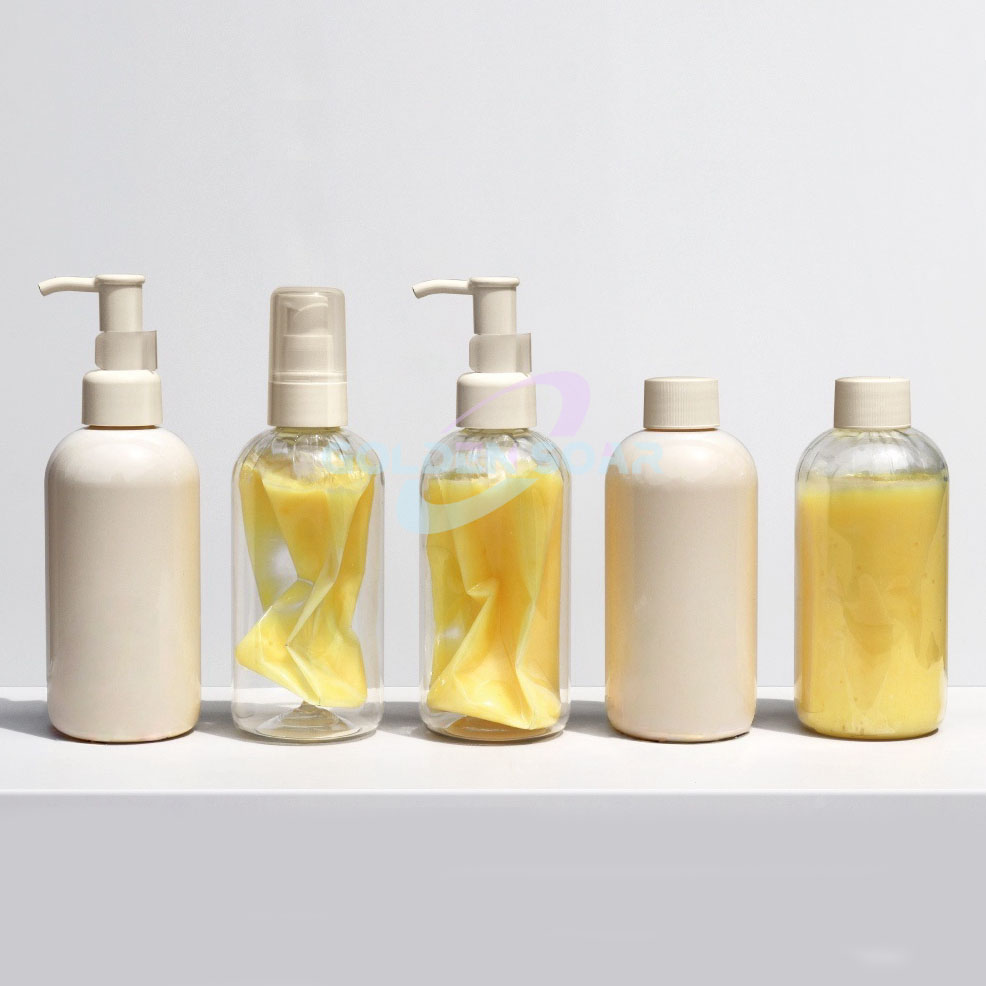
In personal care lines, PET Packaging such as shower gel bottles and shampoo conditioner bottles provide clarity that enhances product aesthetics. Many skincare brands use transparent PET for its premium appearance and recyclability. Users often appreciate how PET containers maintain shape even when squeezed repeatedly, ensuring smooth dispensing.


In cosmetic applications, PET foamer bottles allow light, even foam formation. The lightweight design makes them ideal for travel kits, reducing luggage weight without sacrificing durability. Frequent travelers report that PET bottles stay leakproof after pressure changes on flights.
Industrial and healthcare products also employ PET airless containers for precise dosing. The replaceable airless bottle design extends shelf life and minimizes contamination—key for serums and liquid pharmaceuticals. In durability tests, PET bottles maintain vacuum integrity after 10,000 pump cycles, showing how engineering details contribute to long-term reliability.
Comparison with Other Materials
Compared with PE or PP containers, PET Packaging offers higher transparency and gloss, making it preferable for products where appearance matters. PE packaging, though flexible, is less clear and better for opaque creams. Aluminum bottles, on the other hand, provide light shielding but weigh more and are less cost-effective for short-use items.
When evaluated for recyclability, PET stands ahead thanks to established collection systems and reprocessing networks. While tinplate and aluminum are also recyclable, PET’s lower melting point reduces energy demand during reformation. This makes it a leading option for brands balancing aesthetics and sustainability. Explore aluminum alternatives to understand cross-material design considerations in packaging.
Manufacturing and OEM Capabilities
PET Packaging manufacturing involves precision blow molding, mold polishing, and post-forming inspection. Industrial lines often integrate automated cutting, thread forming, and leak-proof testing to ensure consistent dimensions. The integration of optical sensors helps detect defects as small as 0.1 mm in wall thickness. OEM suppliers focusing on PET bottles can accommodate custom shapes and private label production for both the EU and US markets.
Global packaging factories also produce hybrid packaging combining PET bodies with PP pumps or PE caps to meet multifunctional design needs. Many OEM clients prefer co-development to adjust wall thickness and finish type for branding differentiation. Visit company profile pages to understand how collaborative engineering supports modern PET solutions.
Common MOQ ranges from 5,000 to 10,000 pieces per design, depending on color and mold type. Standard procurement practices include pre-production samples and functional leak tests at 1.2 bar air pressure. Such controlled validation ensures that OEM outputs align with international quality standards.
Values and Sustainability
Eco Responsibility
Every PET container is designed to minimize carbon footprint through lightweighting and recyclability. Production facilities now emphasize closed-loop water systems and low-emission extrusion lines.
Quality Assurance
Each batch undergoes dimensional scanning and burst testing. During quality inspection, temperature stability and stress-crack resistance are checked to ensure lasting clarity.
Timely Delivery
Lean production planning and modular tooling shorten lead time for customized PET projects, helping clients align with seasonal product launches globally.
Innovation in Design
Continuous research in leak-proof lid design and ergonomic pump structure drives safer, more convenient user experience while maintaining modern aesthetics.
FAQ
What is PET Packaging made of?
PET Packaging is made from polyethylene terephthalate, a thermoplastic polymer derived from ethylene glycol and terephthalic acid, commonly used for bottles and jars.
Is PET safe for cosmetic use?
Yes, it meets food and cosmetic-grade standards. Before bulk production, many suppliers test PET samples with lotion or alcohol to ensure compatibility.
Can PET bottles be refilled?
They are refillable under normal temperature; however, cleaning with mild detergent is advised to prevent residue accumulation. Sampling often includes repeated refill tests to verify seal integrity.
Are PET containers recyclable?
Absolutely. They belong to the most commonly recycled plastic group worldwide. Many buyers source post-consumer PET to support circular manufacturing.
How do PET bottles compare to glass?
PET is lighter, shatter-resistant, and safer for travel. Glass remains preferred for high-end perfume lines but requires higher transportation cost.
Do PET foaming bottles maintain pressure over time?
Yes, through precision pump calibration and spring testing during assembly. Most undergo 48-hour leakproof evaluations to confirm consistency.
What’s the typical MOQ for PET bottle customization?
MOQ varies between 5,000–10,000 units depending on color, mold, and finish. Sampling precedes mass production to confirm texture and wall uniformity.
Are PET airless bottles suitable for serums?
Yes, because the vacuum mechanism limits oxygen exposure, extending product shelf life. Many pharmaceutical buyers conduct internal viscosity tests before approval.
Can PET packaging handle heat sterilization?
Standard PET cannot withstand autoclave heat; instead, sterilization is done using UV or chemical cleaning. Heat-resistant PET grades exist for specific uses.
Where is PET packaging commonly used?
It’s widely applied in cosmetics, food, and household detergents. For example, personal care packaging benefits from PET’s clarity and resilience.
Move Toward Smarter, Cleaner PET Packaging
Designing sustainable packaging begins with understanding material science and production integrity. Continue exploring related materials and eco approaches that redefine durability and design value.
Discover PET Solutions English
 Español
 Русский
 日本語
日本語 한국어
한국어 Français
 العربية
 Português