
Reference Standard: Relevant material and performance testing standards should be selected only after the material, fabrication stage, package function, and approval requirements are clearly defined.
A quotation becomes much easier to compare when the buyer describes the expected deliverable instead of relying on the word fabricated alone.
What Does “Fabricated Packaging Materials” Mean in a Sourcing Request?
In packaging procurement, fabrication describes a transformation stage, not necessarily a particular material. A buyer may begin with a base material such as metal, plastic, paper-based stock, foam, or another packaging substrate, but the requested deliverable may be considerably further along in the production chain.
For example, one inquiry might concern base stock that the buyer will process later. Another might concern a prepared component with a defined geometry. A third might require multiple components that are ready for the buyer’s own assembly operation. A fourth might concern a more complete packaging configuration that has already reached an agreed delivery condition.
Those requests can involve very different scopes even if all are described informally as fabricated packaging materials.
The practical sourcing question is therefore not simply, “Which material do we need?” It is also, “At what stage should the supplier hand it over?”
That distinction affects drawings, quantity discussions, dimensional responsibility, sample approval, packaging of the supplied components, documentation, and the way competing quotations are compared.
Ningbo GOLDENSOAR Package Co., Ltd., located at No. 95, Free Trade Avenue, Beichan Development Zone Zhoushan, China, is the publishing company providing this general packaging sourcing guidance. Its available catalog context documents a packaging portfolio, but the available information does not verify fabricated packaging materials as a specific product supplied by the company.
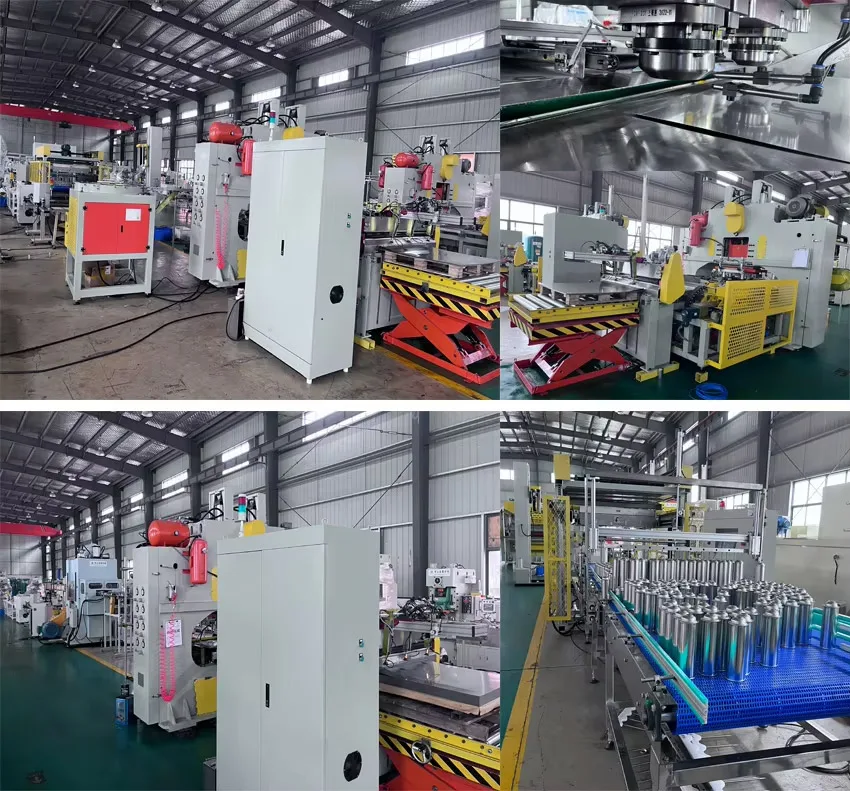
A useful RFQ should therefore make the transformation boundary visible. The supplier should be able to understand the physical item expected at delivery without having to interpret an ambiguous keyword.
Separate Base Materials From Converted Packaging Components
A base material and a fabricated packaging component are not interchangeable descriptions.
A base-material request focuses primarily on the material that will enter a later conversion process. A fabricated-component request focuses on the form that exists after one or more transformation steps have already occurred.
Consider four general sourcing levels:
| Sourcing level | What the buyer is defining | Typical clarification needed |
|---|---|---|
| Base material | Material before project-specific conversion | Material family, grade or buyer specification, quantity, supplied form |
| Prepared material | Material already converted into a defined intermediate form | Geometry, thickness or other buyer-controlled dimensions, orientation, finish |
| Packaging component | Individual part intended for a packaging function | Drawing, interfaces, tolerances where applicable, identification requirements |
| Defined deliverable | Component set or packaging configuration supplied at an agreed completion stage | Included parts, assembly state, approval method, documentation and packing condition |
The purpose of these categories is not to prescribe a universal manufacturing sequence. Packaging projects differ. Instead, the categories help buyers state where supplier responsibility begins and ends.
For instance, asking for a material name alone may leave unanswered whether the buyer expects sheet, roll, blank, formed component, insert, closure-related part, protective element, or another project-defined format. The exact possibilities depend on the packaging system and supplier capabilities.
That is why fabrication terminology should be paired with a noun that identifies the physical deliverable. “Fabricated plastic packaging component” is more informative than “plastic material.” A drawing-defined component description is more informative still.
The buyer should also avoid assuming that every packaging company performs every conversion method. Cutting, forming, molding, laminating, printing, machining, joining, coating, and assembly are distinct industrial capabilities. Their availability must be confirmed with the company being evaluated rather than inferred from the broad term fabricated packaging materials.
Signs That the Fabrication Scope Is Still Too Vague
- Different suppliers quote materially different deliverables for the same inquiry.
- Drawings describe a finished component while the RFQ describes only a raw material.
- Buyer and supplier teams cannot clearly state which conversion or assembly stage marks final delivery.
Define the Required Fabrication Stage Before Requesting a Quote
A strong quotation request identifies the handover point.
Start by describing what the packaging item is expected to do. Is it a protective element, container component, closure-related part, insert, liner, structural element, dispensing-related component, or another part of the packaging system? Function gives the supplier context for interpreting the requested form.
Next, identify the starting material when it is already controlled by the project. If material selection remains open, say so rather than presenting an undecided preference as a fixed specification.
Then define the required component form. A description such as “fabricated component to buyer drawing” establishes a different responsibility boundary from “material supplied for buyer conversion.”
The inquiry should also state whether any further conversion is expected before delivery. If several parts are involved, clarify whether they should arrive individually, grouped as a component set, or assembled to a defined stage. Do not assume that the word fabricated communicates that requirement.
Drawings and reference samples are especially valuable when geometry matters. They provide a common reference for dimensions, interfaces, hole positions, profiles, surface regions, component relationships, or other buyer-controlled characteristics.
Quantity should be included because the expected volume can affect how suppliers evaluate tooling, production route, packing method, and commercial feasibility. Quantity alone does not define capability, but leaving it out can make quotations less comparable.
Approval responsibility should also be explicit. Identify which characteristics the buyer intends to review before release. Depending on the project, these may include material identification, dimensions, visual condition, fit with another component, surface treatment, printed appearance, sample assembly, documentation, or other project-specific criteria.

A concise RFQ can therefore follow this logic:
- Packaging function: Explain what the requested item does in the packaging system.
- Starting material: State the controlled material requirement, or identify material selection as open.
- Required form: Describe the physical component expected at delivery.
- Fabrication boundary: State which additional conversion or assembly is included or excluded.
- Quantity: Provide expected order or project volume.
- Technical references: Attach buyer-controlled drawings, specifications, or reference samples where available.
- Approval points: Identify the characteristics requiring buyer review.
- Documentation: List any material information, drawing references, declarations, inspection records, or other project documents that must accompany the proposal.
This structure makes commercial comparisons more meaningful. Supplier A and Supplier B may otherwise quote different completion stages while appearing to quote the same item.
The objective is scope equivalence: each supplier should be pricing substantially the same physical deliverable, responsibility boundary, and approval requirement.
Describe the Final Deliverable Clearly to Packaging Companies
The strongest sourcing language describes what will arrive at the buyer’s facility.
A final deliverable description should identify the component or package element, its role, the applicable material requirement, the controlled drawing or reference, the agreed fabrication stage, the required quantity, and the approval process.
Avoid using process vocabulary when the real requirement is an outcome. Buyers do not always need to prescribe the supplier’s exact production route. When a manufacturing method is genuinely project-controlled, it can be specified. Otherwise, describing the required component condition and acceptance criteria may provide suppliers with clearer responsibility while avoiding unnecessary assumptions.
This distinction matters because a fabrication process and a final deliverable are different concepts. Two suppliers may use different legitimate production routes to reach the same buyer-approved component. Conversely, two components produced from the same base material may be commercially and functionally different because they are delivered at different transformation stages.
Sample approval can help close this gap. A sample should not merely be described as “approved.” The approval record should identify what was actually reviewed: material designation, drawing revision, physical configuration, visible finish, mating interface, assembly state, packaging condition, or other project-controlled features.
The quotation should use the same definitions.
That continuity reduces the risk of a common sourcing problem: the buyer approves one interpretation during discussion but receives a quotation based on another.

Items to Confirm Before Sending the RFQ
- Name the exact physical item you expect to receive.
- State where that item sits within the overall packaging system.
- Identify the starting material requirement when it is already controlled.
- Attach the applicable drawing, specification, or reference sample.
- Define the fabrication or conversion stage expected at delivery.
- State whether components should be separate, grouped, or assembled.
- Provide quantities and relevant project timing.
- Identify the characteristics that require sample or buyer approval.
- List documentation that must accompany the quotation or sample.
- Ask the supplier to identify any requirement it cannot confirm rather than silently substituting another interpretation.
This approach also gives procurement teams a cleaner basis for supplier communication. Instead of asking whether a company “has fabricated packaging materials,” buyers can ask whether it can evaluate a specifically defined component and delivery state.
That wording turns a broad search phrase into an actionable commercial request.
Buyers evaluating packaging options can also review the documented packaging and company context published by Ningbo GOLDENSOAR Package and contact the company regarding information within that documented context or for a general packaging discussion. Product-specific capability, fabrication processes, dimensions, materials, testing requirements, and supply availability should be confirmed directly for the project rather than inferred from this educational article.
Frequently Asked Questions (FAQ)
What materials can be used for packaging?
Packaging can use many material families, including paper-based materials, plastics, metals, glass, foams, textiles, and composites. The appropriate choice depends on package function and project requirements. “Fabricated” does not identify a material by itself; it describes how far the selected material has been transformed toward the required packaging deliverable.
Where can I get packaging materials?
Packaging materials may be sourced from material producers, distributors, converters, component manufacturers, or packaging companies depending on the required fabrication stage. Before requesting quotations, define whether you need base stock, a converted component, several prepared parts, or a more complete packaging configuration so suppliers can evaluate the same scope.
 English
 Español
 Русский
 日本語
日本語 한국어
한국어 Français
 العربية
 Português