

What Is PP Packaging and Why It’s Ideal for Microwaveable Food Containers
Title (60 chars): PP Packaging for Microwaveable Food Containers | Goldensoar
Description (120 chars): Learn what PP is and why it excels for microwaveable food containers, plus PE advantages from China OEM supplier Goldensoar.

For ready meals, take-away soups, reheatable sauces, and delis that sell chilled dishes, packaging must resist microwave temperatures, prevent warping, and keep food safe from contamination. Many buyers still weigh PET, PE, and PP without a clear framework. This page demystifies polypropylene (PP) packaging—its molecular behavior under heat, real-world tolerances, and how it compares with PET and PE in microwaveable food containers. We also outline when PE materials are the smarter choice for lids, seals, or squeeze components. Throughout, we’ll reference Goldensoar’s role as a China polypropylene packaging material manufacturer, PP film packaging factory, and PP packaging materials exporter offering OEM, custom, and wholesale service.
Definition & Principle: What Exactly Is PP Packaging?
Polypropylene (PP) is a semi-crystalline thermoplastic polymer produced via polymerization of propylene monomer. Its chain structure features repeating methyl groups that increase stiffness and provide a higher softening point than PE. Typical microwaveable food containers rely on PP because its heat deflection temperature and crystalline morphology keep the container dimensionally stable around 100–120°C for short cycles, provided the grade and wall-thickness are correctly specified. PP resists steam-induced stress, has low water absorption, and retains toughness in hot-wet environments. These attributes make PP a default answer for microwaving in convenience foods.
In production, PP pellets are injection-molded or thermoformed into tubs, clamshells, and bowls. Impact-modified PP adds rubbery ethylene-propylene segments to improve drop resistance—useful for delivery chains. Clarified PP grades boost transparency with nucleating agents, allowing customers to preview contents while maintaining heat performance.
From a compliance standpoint, appropriate PP grades meet food-contact requirements when sourced responsibly. Goldensoar supplies PP articles as an OEM polypropylene packaging material manufacturer and PP packaging materials supplier in China, delivering custom microwaveable containers with data sheets and migration testing support upon request.

Advantages & Trade-offs of PP in Microwaveable Containers
Key Advantages
- Microwave compatibility: PP has low dielectric loss and tolerates short microwave cycles without significant deformation when designed correctly.
- Steam & hot-fill resistance: Excellent performance against moisture and heat makes it suitable for reheating soups and sauces.
- Lightweight & rigid: Maintains a sturdy structure at low gram weights—ideal for cost control and freight savings.
- Chemical resistance: Resists fats and many acids found in food matrices.
- Recyclability: As a mono-material (PP), the container supports circularity programs better than multi-layer laminates.
Potential Trade-offs
- Temperature window: Not for conventional ovens or browning; design for microwave bursts rather than prolonged >120°C exposure.
- Transparency vs. strength: High clarity can slightly reduce impact. Choose clarified PP with impact modification if drop tests are critical.
- Seal design sensitivity: Lidding films and venting patterns must be validated to prevent pressure build-up.
Our engineering team helps specify grade, wall thickness, vent location, and snap or film seal to ensure consistent microwave outcomes—typical of a polypropylene packaging material manufacturer and PP film packaging factory focused on real use-cases rather than generic catalogs.

Application Scenarios: From Deli Counters to Meal Prep
Microwave meal bowls and trays: Ready-to-heat curries, pasta, rice dishes, and soups rely on PP bowls with calibrated vent lids. The vent lets steam escape to prevent lid pop-off and avoids vacuum after cooling.
Take-away & delivery: PP’s rigidity reduces spills in transit. Lids snap securely, and stackable geometries maximize space in hot-bag compartments.
Chilled retail with reheating guidance: PP clamshells or tubs for refrigerated noodles and dumplings carry clear reheating instructions and microwave symbols.
Food & Beverage Packaging in bulk and wholesale: As a PP bags packaging supplier and PP packaging materials exporter, Goldensoar also provides matching PP or PE liners and films for secondary containment in food & beverage packaging.
Complement with PE parts: PE (polyethylene) excels in softness and stress-crack resistance. It’s used for flexible lids, pour spouts, and squeeze features. As a PE packaging materials supplier and polyethylene packaging materials manufacturer, we provide custom PE film packaging to pair with PP bases for balanced performance.

PP vs. PET vs. PE: Which Material Where?
PP (Polypropylene) — The Microwave Standard
Choose PP when the end-user will reheat food in a microwave. Its higher softening point and steam tolerance keep geometry intact. Goldensoar offers OEM container designs under PP Packaging, including bowls, trays, and lids—backed by performance guides and filling best practices.
PET (Polyethylene Terephthalate) — High Clarity, Cold Strength
PET shines in cold display and carbonated beverage packaging, with glass-like clarity and excellent barrier vs. moisture. For microwaving, typical PET grades are less suitable; heat-resistant CPET exists but is a different conversion route. Goldensoar operates as a PET packaging material supplier, PET sheet packaging supplier, and PET packaging materials export partner for cold foods, beverages, and cosmetics. Explore PET Packaging.
PE (Polyethylene) — Soft, Seal-Friendly, Stress-Crack Resistant
PE is ideal for soft lids, seals, and squeeze elements around PP bodies. It tolerates flexing cycles, offers reliable heat-seal behavior, and remains cost-effective. We provide PE film packaging factory service, PE bags packaging supplier capability, and PE packaging material exporter support for kitchen-friendly accessories that complement microwaveable PP containers. See PE Packaging.
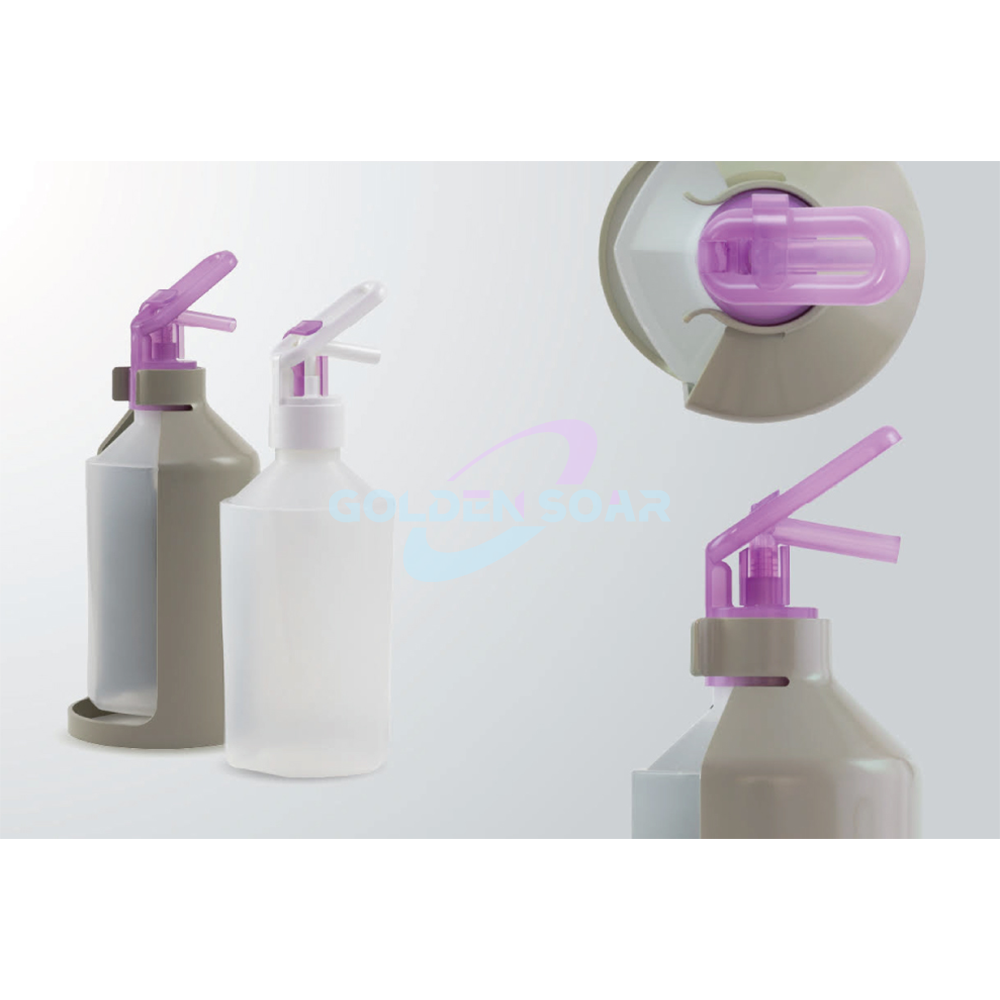


How PP Behaves During a Microwave Heating Cycle
- Microwave energy agitates water molecules in the food, not the PP. Heat conducts from the food to the container.
- Steam builds above boiling point. Well-designed PP lids include a micro-vent or peelable lidding film to relieve pressure.
- Thermal softening remains controlled within the designed temperature window and wall thickness.
- Post-cycle stability: PP regains rigidity as temperature falls, helping the lid reseat and the tub keep shape.
For best results, follow Filling Guidelines and Leak-Proof Lid Design resources. These internal links expand on seal strengths, torque, and vent patterns for consistent reheating.

Industries & Use Cases We Serve
Food & Beverage Packaging
Microwave meal bowls, deli tubs, sauce pots (Wholesale / OEM Service)
Household & Daily Use
Storage containers, freezer-to-microwave transitions.
Pharmaceutical & Healthcare
Single-serve nutrition and controlled reheats.
Travel & Meal Prep
Stackable bento PP sets for weekly preparation.
Quality Assurance, Eco Materials & Customer Confidence
Goldensoar focuses on documented, auditable quality routines—from incoming resin verification to process controls and finished-goods traceability. Our Company Profile outlines manufacturing scope, export capability, and service experience across global markets. For buyers seeking sustainable solutions, Eco Materials resources describe material selection and reduction strategies, while Customer Reviews capture field performance.
We support microwaveable projects with material data, migration testing references upon request, and packaging design notes such as TSA-Approved Sizes (where relevant for travel kits), Easy Refill Wide Opening best practices, and Silicone & BPA-Free Options for accessory components. These resources complement our role as a China PP packaging materials supplier with OEM, wholesale, and exporter services.

Design Checklist for Microwaveable PP Containers
- Select grade: Random copolymer PP for clarity; impact-modified PP for delivery; clarified PP for showcase visibility.
- Wall thickness: Balance rigidity vs. cycle time; verify on customer’s microwave wattage.
- Venting strategy: Micro-vent lidding or peel point; avoid sealed “bomb” conditions.
- Seal integrity: Partner PP base with PE/PP lidding films tested for peel strength after reheating.
- Geometry: Avoid sharp internal corners; adopt ribbing for stability and stacking.
- Labeling & inks: For microwaving, use sleeves or inks specified for heat exposure.
Need a quick start? Leverage our Demo Video library for handling and sealing methods, and contact our engineering desk for a custom microwave container built by a Factory / Manufacturer / Supplier in China offering OEM and for sale options globally.
Where PE Materials Add Value Around PP
Vented lids & peelable seals: PE’s ductility helps prevent brittle failure in tabs and hinges. Heat-seal windows are forgiving, and stress-crack resistance supports multi-use cycles.
Squeeze add-ons: Dosing spouts or condiment nozzles made in PE integrate smoothly with a PP body, enabling one-hand operation after microwaving.
Gaskets & liners: PE or silicone components create tight closures. See Silicone Packaging for temperature-resilient seals.
Goldensoar acts as a PE packaging material exporter and PE bags packaging supplier to deliver these accessories in wholesale volumes alongside the PP body, minimizing multi-vendor risk.

Material Selection Quick Guide
PP — Microwave
Use for bowls, trays, and lids; supports venting; rigid and lightweight.
PE — Flexible Parts
Best for soft lids, spouts, and seals that flex repeatedly.
PET — Cold & Clarity
Choose for refrigerated display; not the default for microwaving.
Why Not Aluminum or Tinplate in Microwaves?
Metals reflect microwave energy and can arc—so aluminum or tinplate containers belong to non-microwave formats (aerosols, ambient cans). We manufacture those too as an aluminum packaging supplier, aluminium packaging materials manufacturer, and tinplate packaging supplier, but they are intended for other channels, not microwaving. See Aluminum Packaging and Tinplate Packaging.
Silicone Accessories
Food-grade silicone excels for high-temperature gaskets, grips, and steam valves used around PP containers. As a silicone packaging materials supplier and silicone rubber packaging factory, we pair silicone components with PP bodies for precise vent control. Explore Silicone Packaging.

Goldensoar — What Makes Us Different
We blend material science with manufacturing pragmatism. As a China PP packaging materials supplier, polypropylene packaging material manufacturer, and PP packaging materials exporter, we deliver OEM/ODM development, rapid prototyping, and tooling iteration aligned to microwave validation. We also supply PE packaging, PET packaging, aluminium container packaging, tinplate cans packaging, and silicone packaging—so your entire program runs with one accountable partner. Ask for samples, cycle test notes, and a quote today.
FAQs · Demo Video
Materials
PP Packaging · PE Packaging · PET Packaging
Industries
Cosmetic Packaging · Personal Care
 English
 Español
 Русский
 日本語
日本語 한국어
한국어 Français
 العربية
 Português