
Exclusive PE Package Filling Material Audit
Reference Standard: ASTM D1693 environmental stress-cracking resistance testing for polyethylene, supported by ISO 9001:2015 quality management and practical leak, weight, thread, and surface inspection controls.
Short Answer
PE packaging materials behave differently from rigid cartons, foam inserts, or sterile printed packs because the bottle is both a storage vessel and a future dispensing interface. HDPE in the 0.93-0.97 g/cm³ density range supports large containers where stacking strength matters, while LDPE in the 0.91-0.94 g/cm³ range is selected when squeeze recovery and flexible dispensing are more important. For a packaging materials supplier or brand buyer, the real audit starts before liquid enters the bottle.
When Empty Packaging Becomes a Waiting Vessel Before Filling
An empty PE bottle is not an inactive object. It is a waiting vessel with open surfaces, geometric memory, air volume, and future contact points. Before filling, it may pass through molding, trimming, visual handling, carton staging, line feeding, and cap or pump matching. This article does not treat the bottle as a finished shelf item. It treats package filling material as a pre-fill component whose condition can decide whether later filling, sealing, printing, and dispatch remain stable.
The material side begins with density. HDPE at 0.93-0.97 g/cm³ has a more linear molecular structure, giving it higher tensile strength and rigidity. That is useful for large shampoo, laundry detergent, or cleaning-agent containers that must resist body collapse during handling. LDPE at 0.91-0.94 g/cm³ has a more branched molecular structure, which limits tight molecular packing and creates higher flexibility. That makes it better for lotion tubes, travel bottles, squeeze bottles, and amenity packaging where controlled deformation is part of the user experience.
The edge scenario is a pre-fill holding model: imagine three empty PE bottles from the same material family entering the line at different stages. A rigid HDPE detergent bottle may keep shape under light stacking, but its corners and shoulder transitions still depend on wall distribution. A soft LDPE squeeze bottle may survive side compression but can distort at the neck if the threaded opening is thin. A PCR-blend bottle may look acceptable but may show batch-sensitive variation in hand feel or color. No extra storage time or humidity claim is needed; the risk is already visible in the interaction between density, geometry, handling, and line readiness.
A cross-dimensional test case should compare a 150ml PE travel squeeze bottle weighing 18g with a 57mm44mm160mm specification against a larger 1000ml PE dispenser bottle with a 54-thread and 200g content weight. The small bottle is judged by squeeze response, cap alignment, and portability. The large bottle is judged by wall stiffness, corner reinforcement, and thread stability before pump or closure installation. Both can be PE, but they are not the same filling material in operational terms.

A buyer should ask whether the bottle was produced by Extrusion Blow Molding, whether 100-point Parison Control was used to manage vertical wall thickness, whether Automated Deflashing removed edge defects, and whether In-line Leak Testing was performed before the item entered packing or customization. These controls are more meaningful than a generic “plastic bottle” description because they connect the empty vessel with its future filling behavior.
| Pre-fill variable | HDPE-heavy expectation | LDPE-heavy expectation | Audit focus |
|---|---|---|---|
| Density behavior | Higher rigidity | Higher flexibility | Match bottle role before filling |
| Wall response | Better stacking resistance | Better squeeze recovery | Check body and shoulder zones |
| Thread risk | Closure torque and pump fit | Distortion under cap pressure | Inspect neck finish |
| Decoration readiness | Needs clean treated surface | Needs clean treated surface | Confirm print area discipline |
The Quiet Geometry of Wall Zones, Bottle Corners, and Threaded Openings
The most overlooked part of package filling material is not the headline material name. It is the silent geometry of wall zones, corners, shoulders, and threaded openings. A PE bottle can pass a simple appearance check while still having uneven stress distribution. The bottle corner can be thick enough to survive handling, the sidewall can be thin enough to save material, and the neck can be precise enough for pump or cap alignment. These zones must cooperate.
At the molecular level, PE responds to stress through chain mobility, density-driven stiffness, and local deformation. HDPE’s more linear structure helps resist tensile loading, but it does not remove stress concentration from corners, shoulder transitions, or thread roots. LDPE’s branched structure improves flexibility, but flexibility can also permit neck ovalization if the opening is under-designed. This means the geometric design is not just an external shape; it is a mechanical map that decides where pressure, torque, squeeze, and impact travel.
The documented use of 100-point Parison Control matters here because extrusion blow molding creates a hollow form whose wall thickness must be controlled vertically. A bottle body that is light in the middle but reinforced at the corners can reduce resin waste without leaving corner zones vulnerable. This is especially relevant when the package must move from empty staging to filling, capping, packing, and retail handling. The bottle is never stressed only once.
A fatigue timeline model can be used without inventing unsupported numbers. In the early stage, the empty bottle receives low-force handling and may show no visible deformation. In the middle stage, the neck and shoulder begin carrying more relevance because line feeding, closure alignment, and pump trial fitting start to interact with threaded openings. In the extreme stage, repeated handling, squeeze pressure, and chemical loading after filling expose any weakness created earlier by poor wall distribution or inconsistent thread geometry. The visible failure may happen late, but the geometry condition was created before filling.
A useful comparison is the 300ml PE bottle with PP pump head, 50g weight, and 28-thread design versus the 350ml PE bottle with PP pump head, 60g weight, and 40-thread design. Both use PE body and PP pump logic, yet the thread scale, body mass, and dispensing role are different. The 28-thread design may be judged by compact compatibility and lightweight handling. The 40-thread design must support foaming pump behavior and a wider closure zone. The correct inspection question is not “Which bottle is stronger?” It is “Which geometry is more tolerant of its filling and dispensing role?”

KEY TAKEAWAYS
- Early neck ovalization can appear before visible leakage when the thread zone is too lightly supported.
- Corner whitening, edge roughness, or uneven touch response can signal poor wall distribution before filling.
- A bottle that passes squeeze feel may still fail pump alignment if the threaded opening is unstable.
Secondary failure can also spread across systems. A weak neck does not only affect sealing. It can change pump seating, label alignment, carton arrangement, and user dispensing consistency. A thin shoulder does not only affect drop resistance. It can concentrate stress when the bottle is filled with a surfactant-rich product and later handled by consumers. Geometry is the bridge between material data and real packaging behavior.
Clean Surface Before Branding, Not Decoration Before Logo
The surface of PE package filling material should be understood as a clean boundary before branding, not as a decorative canvas first. PE is non-polar, so ink and foil do not naturally bond well to it. The catalog data supports Flame Treatment or Corona Discharge to raise surface energy above 38 dynes/cm, but this article does not use surface treatment as the main storyline. The more practical pre-fill question is whether the bottle surface is clean, controlled, and suitable for later contact with labels, ink, gloves, cartons, inner bags, and inspection fixtures.
A clean surface boundary matters because surface contamination can create defects that are misread as printing failure. Light dust, friction transfer, mold-release residue, handling marks, or carton scuffing may not change the chemical identity of PE, but they can interrupt consistent printing or finishing. If a buyer only checks the final logo, the root cause may already be hidden. The correct audit sequence starts with unprinted sample surfaces, then treated surface readiness, then logo method selection.
The available logo methods include silk print, embossed, and debossed options, with custom color matching and OEM or ODM packaging support. Each method interacts with the PE surface differently. Silk printing needs adhesion consistency. Embossed or debossed marking depends on mold or forming accuracy and visual definition. Custom color matching needs batch control so the decorated surface does not reveal resin inconsistency. Surface discipline is not a cosmetic afterthought; it is part of filling material readiness.
An edge scenario model is a white or light-colored PE bottle staged before printing. In the early phase, the bottle looks clean under normal viewing. In the middle phase, contact with cartons or handling gloves creates faint transfer marks that may not be visible until printing begins. In the extreme phase, a brand color or metallic foil exaggerates the underlying inconsistency. The issue appears as a decoration problem, but the operational root is surface boundary control before branding.
A cross-dimensional comparison can test three output types: an unprinted PE bottle, a silk-printed PE bottle, and an embossed PE bottle. The unprinted sample reveals raw surface cleanliness. The silk-printed sample reveals adhesion and ink wetting. The embossed sample reveals whether geometry and material response can hold a clean mark without edge distortion. This sequence avoids confusing a printing decision with a material readiness decision.
For technical background, buyers can compare the PE surface-energy concept with general surface treatment principles from organizations such as ASTM International and quality management logic from ISO. The key is not to cite standards as decoration. The key is to align the inspection plan with the actual risk: surface contact history before branding.
PCR Ratio as a Batch Discipline, Not a Sustainability Claim
PCR content should not be treated as a slogan. In PE package filling material, 30% to 100% Post-Consumer Recycled resin blends change the procurement conversation from simple material selection to batch discipline. A bottle with PCR content still has to meet filling, handling, color, weight, and surface expectations. The sustainability claim is only useful if the physical batch remains consistent enough for production.
The material mechanism is straightforward. PCR resin can introduce wider variation in color tone, flow behavior, odor background, or mechanical response than virgin resin if the input stream is not controlled. This does not mean PCR is unsuitable. It means PCR must be handled as a measurable blend, not a vague environmental label. The catalog notes a successful 50% PCR-PE customer experience where color matching showed minimal gray tint. That is useful evidence, but it should be treated as a batch outcome, not as a universal promise for every color, every bottle, or every formula.
An edge scenario model can begin with a brand requesting the same bottle shape in standard PE and PCR-PE. In the early phase, samples may look close under casual viewing. In the middle phase, side-by-side color comparison, bottle weight measurement, squeeze feel, and print response may show small batch differences. In the extreme phase, high PCR content near the upper range requires stricter approval because color matching, surface finish, and mechanical consistency become more difficult to manage. The realistic control point is not avoiding PCR; it is documenting PCR ratio, sample approval, color tolerance, and functional testing before bulk production.
A cross-dimensional test case can compare a 120ml PE dispenser bottle weighing 15g with a 48mm48mm101mm specification against the larger PE formats used for detergent or dual-chamber dispensing. The small bottle may show PCR variation through color and squeeze feel. The larger bottle may reveal batch consistency through wall stiffness, weight stability, and closure alignment. The same resin story creates different inspection priorities depending on size and use.
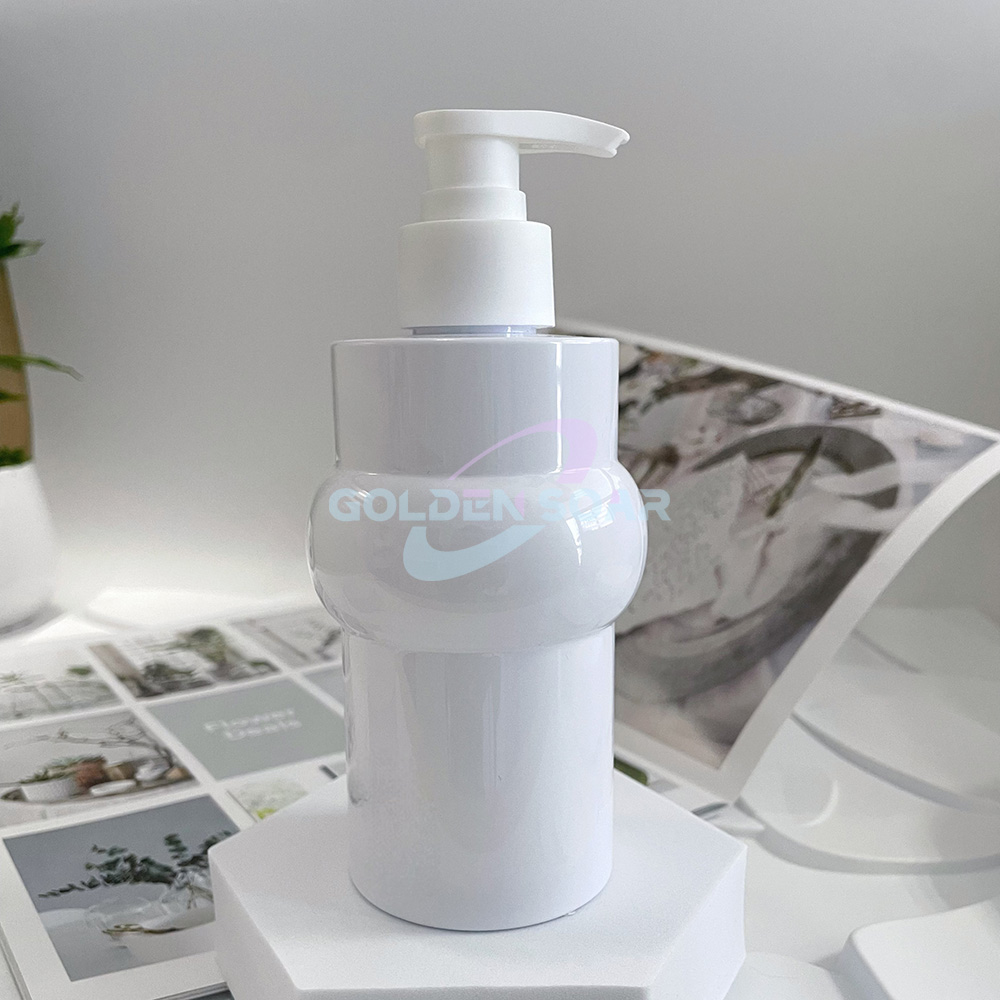
A procurement document should separate three claims: material composition, production control, and application fitness. Material composition states the PCR percentage range. Production control records color matching, bottle weight, capacity, and sample approval. Application fitness checks whether the bottle still performs in shampoo, lotion, shower gel, facial cleanser, detergent, or cleaning-agent packaging. Mixing these three claims into one sustainability sentence creates risk.
Acceptance Controls for PE Package Filling Material
The practical factory-side solution is not a single test. It is a layered admission process for resin, bottle geometry, surface readiness, closure fit, and batch release. The following four controls can be used as a procurement and acceptance white paper for PE package filling material.
1. Density-role matching before sampling
Execution Protocol: Start by defining whether the packaging role requires rigid stacking or controlled squeeze recovery. HDPE should be considered for large-volume packaging where body stiffness matters, while LDPE should be considered for travel, lotion, amenity, and squeeze dispensing roles. The buyer should not approve a sample based only on shape; the density range and expected use must be linked before mold or finish decisions are reviewed.
Material evolution: When density is matched correctly, the material response becomes more predictable. HDPE supports a firmer wall and stronger stacking behavior, while LDPE supports softer deformation and easier squeeze dispensing. The measurable result should appear through weight checks, capacity checks, squeeze feel, and dimensional comparison.
Hidden cost and side-effect control: A rigid bottle may feel premium but become uncomfortable for squeeze use. A soft bottle may dispense well but need better neck and shoulder control. To avoid this trade-off, approve samples by role, not by generic appearance.
2. Wall-zone verification through molding control
Execution Protocol: Use extrusion blow molding data and visual inspection together. The 100-point Parison Control concept should be connected to corner reinforcement and body material optimization. After molding, inspect trimming quality, thread definition, shoulder transitions, and body symmetry before accepting the bottle as filling-ready.
Material evolution: Better wall-zone control reduces localized weakness. The bottle can maintain a more stable shape during empty handling, filling, and closure installation. This does not make the bottle immune to all stress, but it lowers the chance that one thin zone becomes the starting point for later leakage or deformation.
Hidden cost and side-effect control: Overbuilding the entire bottle increases resin use and cost. Underbuilding creates fragile zones. The balanced approach is not maximum wall thickness everywhere, but controlled thickness where the geometry carries more stress.
3. Surface boundary approval before decoration
Execution Protocol: Check unprinted samples before approving silk print, embossed, or debossed decoration. Confirm that the bottle surface is clean, that handling marks are controlled, and that treated surface areas remain suitable for later branding. Surface energy above 38 dynes/cm can support ink bonding, but visual cleanliness and contact history still need practical inspection.
Material evolution: A clean and properly prepared PE surface improves printing predictability and reduces the risk of false decoration defects. The bottle surface becomes a controlled interface instead of a random contact record from handling and packing.
Hidden cost and side-effect control: Surface treatment without clean handling can still lead to inconsistent print results. The countermeasure is to separate surface treatment confirmation from final logo approval, so a failed print is not automatically blamed on artwork or ink.
4. PCR batch release by evidence, not slogan
Execution Protocol: For PCR resin blends, require documentation of the intended percentage, sample color, bottle weight, capacity, and functional feel. A 30% PCR blend and a 100% PCR blend should not be treated as the same risk level. Sample approval must happen before bulk order confirmation.
Material evolution: With disciplined PCR control, recycled content can be integrated while keeping bottle performance closer to approved samples. Color, stiffness, surface response, and weight remain the practical signs of batch stability.
Hidden cost and side-effect control: Higher PCR ratios may require additional sample rounds or tighter color communication. Avoid promising unsupported sustainability metrics. Keep the approval focused on measurable packaging behavior.
| Control variable | Relevant PE data | Practical tolerance logic | Test or inspection basis |
|---|---|---|---|
| Density role | HDPE 0.93-0.97 g/cm³, LDPE 0.91-0.94 g/cm³ | Match rigidity or flexibility to use | Material selection review |
| Stress resistance | ASTM D1693 with 10% Igepal at 50°C, above 168 hours | Use for surfactant exposure risk | ESCR protocol reference |
| Wall distribution | 100-point Parison Control | Reinforce corners while optimizing body resin | Molding and wall-zone inspection |
| Leak readiness | In-line Leak Testing | Reject unstable vessels before filling | Line-side leak control |
| Surface readiness | Above 38 dynes/cm after treatment | Support silk print and foil adhesion | Surface treatment and print trial |
| PCR discipline | 30%-100% PCR blend range | Confirm color, weight, and function by batch | Sample approval and batch record |
PRO-TIP / CHECKLIST
- Confirm whether the bottle role requires HDPE rigidity or LDPE squeeze recovery.
- Ask for capacity, weight, thread, and specification data before approving appearance.
- Inspect neck, shoulder, corner, and sidewall zones separately.
- Require leak testing evidence before treating the bottle as filling-ready.
- Review unprinted surface cleanliness before approving branding.
- Treat PCR percentage as a batch-control variable, not only a sustainability label.
- Compare decorated samples with unprinted samples to identify surface or printing causes.
- Keep ESCR evidence separate from general chemical-resistance claims.
For buyers comparing specific related formats, the PE dual chamber bottle for shampoo and hand wash packaging shows how geometry can split two filling zones in one body. A foam pump bottle for hand wash and cleanser applications illustrates how PE body behavior and PP pump interaction affect dispensing readiness. PET formats such as 250ml foaming pump bottles should be reviewed separately because PET clarity and PE squeeze behavior are not the same material question.
Frequently Asked Questions (FAQ)
What are good packaging materials?
Good packaging materials match the product’s chemistry, handling path, filling method, and shelf role. For PE liquid packaging, HDPE is better for rigid larger containers, while LDPE is better for squeezable formats. The best choice is supported by density, wall control, leak testing, and surface readiness data.
Is it safe to reuse food packaging materials?
Reuse depends on the original material, previous contents, cleaning method, and regulatory context. PE can be reusable in some personal care formats, but food-contact reuse requires stricter hygiene and compliance review. Do not assume a cosmetic or detergent PE package is suitable for food reuse.
Is packaging a direct material?
In manufacturing cost logic, packaging can be a direct material when it becomes part of the finished saleable product. A PE bottle, pump, cap, label, or refill container used to deliver shampoo, lotion, detergent, or cleanser is normally treated as a product-linked material cost.
How should packaging materials be disposed of?
Disposal depends on resin code, contamination, local recycling rules, and whether the package held cosmetic, detergent, or chemical contents. PE bottles are often recyclable, but pumps, caps, labels, and residue may affect acceptance. Empty, clean, and sort components according to local recycling instructions.
Does thread count describe packaging material?
Thread count is not a material definition. In PE packaging, thread references such as 24-thread, 28-thread, 40-thread, or 54-thread describe neck or closure interface design. Material identity still depends on resin type, such as PE body and PP pump or cap components.
How are impression casting materials packaged for evidence?
Evidence packaging is a forensic handling topic rather than a cosmetic PE bottle topic. The key principle is contamination prevention, traceability, and protection of the sample surface. It should not be evaluated using the same criteria as shampoo, lotion, or detergent package filling material.
 English
 Español
 Русский
 日本語
日本語 한국어
한국어 Français
 العربية
 Português