

Structural reliability and preservation stability of Two-piece Can in high-barrier packaging
In high-barrier packaging, the Two-piece Can stands out for its seamless construction and robust preservation capabilities. This technical review explores how its unique structure and material choices contribute to long-term integrity, addressing the engineering challenges of material fatigue and barrier performance.
Reliability of Two-piece Can: Structural Demands and Barrier Integrity
The two-piece can has become a primary packaging solution in applications requiring high-barrier performance and extended preservation stability. Its unique deep-drawn and wall-ironed construction, typically formed from aluminum or tinplate, provides a seamless body and base, eliminating the longitudinal side seam found in three-piece cans. This design, while advantageous for minimizing leak paths and enhancing overall barrier properties, also introduces complex structural demands. For structural packaging engineers, the central challenge lies in evaluating how the can’s material selection and forming process interact with mechanical stresses and environmental factors, ultimately influencing its resistance to deformation and its capacity to maintain product integrity over time. This technical review examines the two-piece can’s structural reliability, focusing on material fatigue and barrier integrity, and provides a detailed assessment methodology for engineers tasked with ensuring preservation stability in high-barrier packaging scenarios.
The core of the two-piece can’s architecture is its monolithic body, achieved through either the Draw and Wall Ironing (DWI) or Draw Redraw (DRD) process. In both methods, a single metal blank is drawn into a cup and then further formed to its final height and diameter. The DWI process, more common for beverage cans, produces thin walls and a uniform structure, while DRD is preferred for food cans requiring thicker walls. The absence of a side seam reduces the risk of longitudinal failure and improves the can’s ability to withstand internal pressures, such as those generated by carbonation or thermal processing. However, this seamless structure also means that any material defects or process-induced weaknesses are distributed over the entire body, making localized failures potentially catastrophic for barrier performance.

Material selection is critical to the can’s performance. Aluminum alloys, often used for beverage cans, offer excellent formability and corrosion resistance but are susceptible to work hardening and thinning during wall ironing. Tinplate, preferred for food cans, provides superior barrier properties and can accommodate thicker walls, yet is more prone to localized corrosion if the protective coating is compromised. Both materials must be carefully evaluated for their stress-strain response, especially in the context of repeated handling, stacking, and filling operations. The forming process itself introduces residual stresses that can accelerate material fatigue, particularly at the base-wall junction and the can’s shoulder region, where geometric transitions concentrate mechanical loads.
The reliability of the two-piece can is fundamentally linked to its ability to resist structural deformation under both static and dynamic loading. During filling and sealing, the can is subjected to axial compression and hoop stresses, which can induce buckling or paneling if the wall thickness is insufficient or if material anisotropy is not properly controlled. In high-barrier applications, such as those involving vacuum-packed or pressurized contents, the internal pressure differential further challenges the can’s integrity. Engineers must account for creep deformation over time, especially in storage environments with fluctuating temperatures and humidity levels. The risk of microcrack initiation and propagation, particularly at areas with high residual stress or surface imperfections, is a primary concern for long-term preservation stability.


Barrier integrity is not solely a function of the metal substrate; it is also determined by the quality and uniformity of internal and external coatings. Epoxy or polyester-based lacquers are typically applied to prevent metal-product interactions and to enhance corrosion resistance. Any discontinuity, pinhole, or under-cured region in these coatings can become a site for corrosion initiation, eventually undermining the can’s ability to preserve its contents. The challenge is exacerbated in high-acid or aggressive product environments, where even minor breaches in the barrier can lead to rapid degradation. Engineers must implement rigorous quality control protocols, including non-destructive testing methods such as eddy current inspection and optical scanning, to detect coating defects before the cans are filled.
Preservation stability in two-piece cans is also influenced by the mechanical performance of the can end and its double seam. While the body and base are formed as a single unit, the end is seamed onto the open top after filling. The integrity of this double seam is critical, as it represents the only mechanical joint in the package. Seam formation must be precisely controlled to avoid excessive thinning or wrinkling, which can compromise both mechanical strength and barrier properties. The interplay between the can body’s rigidity and the seam’s tightness determines the overall package’s resistance to leakage and deformation during thermal processing, transportation, and storage.
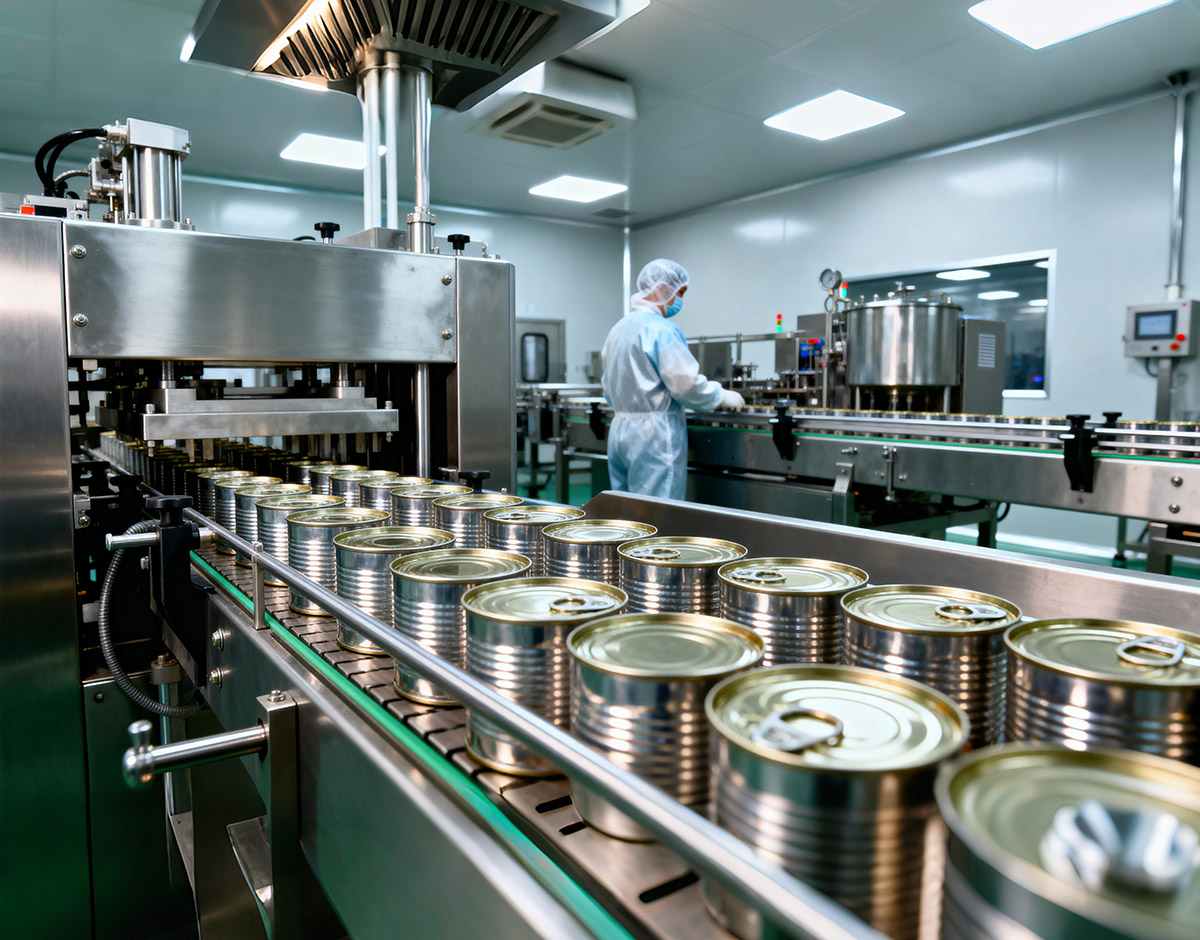

To systematically assess the structural integrity and preservation performance of two-piece cans, engineers employ a combination of analytical, experimental, and simulation-based evaluation techniques. Mechanical testing protocols include axial load resistance, buckle pressure testing, and drop impact analysis. These tests quantify the can’s ability to withstand common mechanical abuses encountered during filling, handling, and distribution. For material fatigue assessment, cyclic loading experiments are conducted to simulate repeated stresses over the product’s shelf life. The results inform design modifications, such as wall thickness optimization or alloy selection, aimed at extending the can’s service life without compromising barrier performance.
Advanced finite element modeling (FEM) is increasingly used to predict failure modes and to optimize can geometry for both strength and manufacturability. FEM allows engineers to visualize stress distribution under various loading scenarios and to identify regions susceptible to plastic deformation or crack initiation. By correlating simulation results with empirical data, engineers can refine forming processes and material specifications to enhance both reliability and preservation stability.
Barrier integrity evaluation involves both destructive and non-destructive methods. Electrochemical impedance spectroscopy and salt spray testing are used to assess coating durability and corrosion resistance. In addition, helium leak detection and vacuum decay tests are employed to quantify the can’s gas and moisture permeability. These methods provide direct measurements of the can’s ability to maintain a hermetic seal and to prevent ingress of oxygen, water vapor, or other contaminants that could compromise product quality.
Preservation stability is further validated through accelerated aging studies, where filled cans are stored under controlled temperature and humidity conditions to simulate extended shelf life. Periodic sampling and analysis of both the package and its contents allow engineers to detect early signs of barrier failure, such as corrosion, delamination, or gas ingress. These studies are essential for verifying that the can’s structural and barrier properties are maintained throughout the intended product lifecycle, especially in demanding high-barrier applications.
For structural packaging engineers, addressing the core pain point of structural deformation and preservation stability requires a holistic approach that integrates material science, mechanical engineering, and process control. The analysis of material fatigue and barrier integrity must be continuous, with feedback loops from field performance data driving ongoing improvements in can design and manufacturing. Particular attention should be paid to the effects of process variability, such as fluctuations in wall thickness, coating application, and seam formation, as these factors can significantly impact the can’s reliability and its ability to preserve contents over time.
To ensure the safety and reliability of two-piece cans in high-barrier packaging applications, it is imperative to conduct rigorous engineering validation at every stage of the product lifecycle. This includes comprehensive material characterization, process optimization, and end-to-end quality assurance. Structural packaging engineers should prioritize the implementation of advanced testing protocols and simulation tools to identify potential failure modes before they manifest in the field. By maintaining a focus on material fatigue and barrier integrity, and by systematically addressing the risk of structural deformation, engineers can uphold the highest standards of preservation stability and product safety in two-piece can packaging systems.
Further resources on Two-piece Can engineering and high-barrier packaging
For additional technical guidance on Two-piece Can design, material selection, and preservation stability, engineers can explore the Tinplate Packaging materials и Aluminum Packaging solutions offered by Goldensoar. For application-specific requirements, refer to the Food & Beverage Packaging section for best practices in high-barrier packaging.
 English
 Español
 Русский
 日本語
日本語 한국어
한국어 Français
 العربية
 Português