
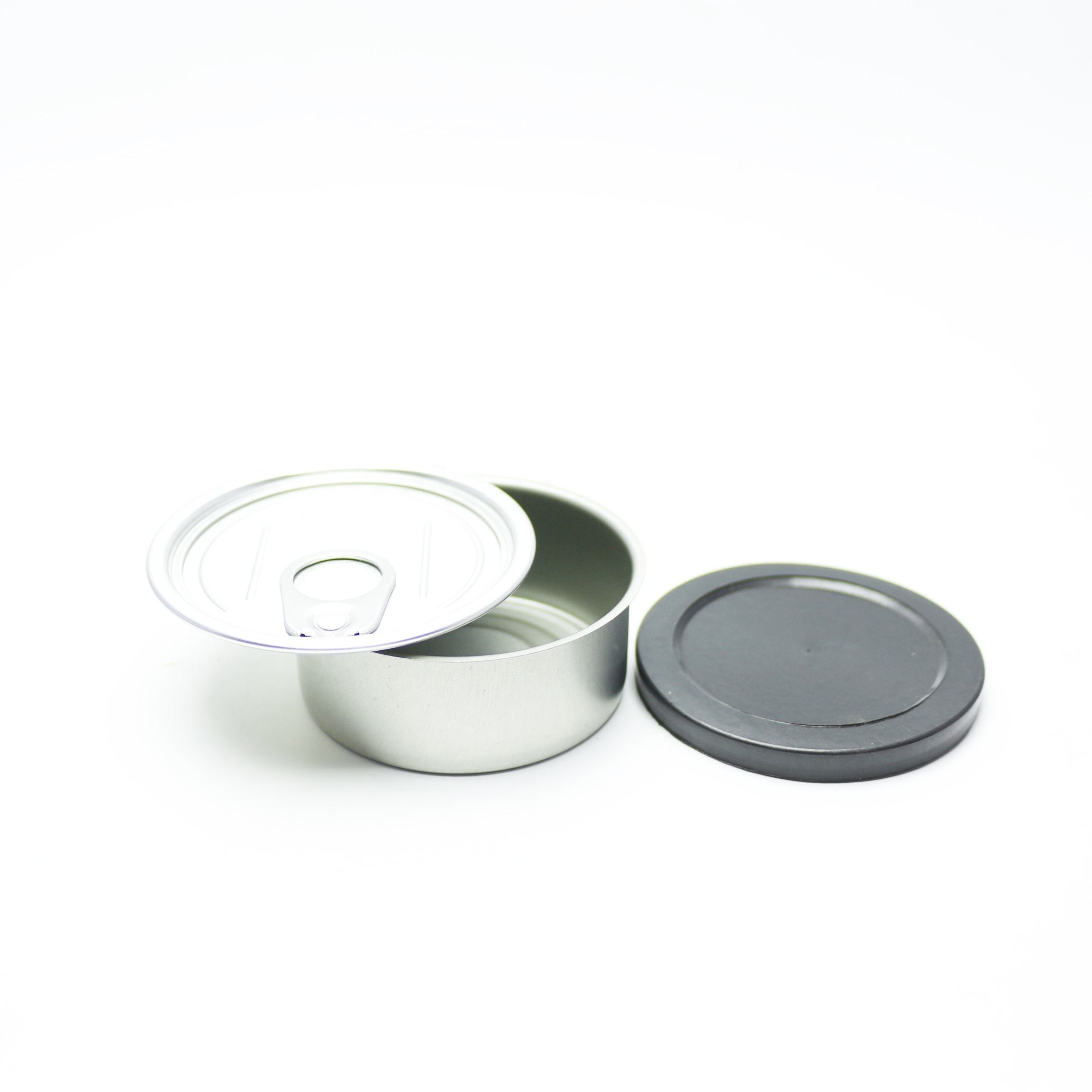
Tinplate Can Structural Strength and Preservation Reliability
Ensuring the integrity of high-barrier packaging depends on the robust structural performance of the tinplate can. For packaging engineers, the tinplate can is a proven solution where impact resistance and long-term material fatigue are critical, making it indispensable in demanding preservation scenarios.
Reliability of Tinplate Can Structures in High-Barrier Packaging
The preservation of sensitive contents in high-barrier packaging relies heavily on the structural integrity and mechanical reliability of the container. For structural packaging engineers, the tinplate can remains a critical solution, especially where resistance to impact and long-term material fatigue are non-negotiable. In environments demanding robust preservation stability, the evaluation of tinplate can performance under mechanical stress and repeated load cycles becomes central to engineering decisions. This technical analysis addresses the core challenge of impact resistance and deformation, examining the structural strength of tinplate cans through the lens of material fatigue and deformation mechanisms. The following sections systematically dissect the can’s construction, its reliability under operational stresses, and the methodologies for rigorous performance evaluation.
Tinplate cans are engineered to provide not only a physical barrier against environmental ingress but also to maintain dimensional stability under various forms of mechanical loading. The interplay between the base steel substrate and the tin coating is fundamental to both corrosion resistance and mechanical robustness. The can body, typically fabricated from low-carbon steel with a tin layer of 2.8–5.6 g/m² per side, is subjected to multiple forming operations such as deep drawing, ironing, and seaming. Each of these processes introduces residual stresses and potential sites for microstructural changes that can influence the can’s response to impact and cyclic loading.

The geometry of the can, including wall thickness (typically 0.14–0.25 mm), diameter, and the design of the double seam, is optimized to balance material usage with strength requirements. The double seam, in particular, is a critical junction where the can body and end are mechanically interlocked and hermetically sealed. This area is often the focus of finite element analysis (FEA) due to its susceptibility to stress concentration during impact events. The bottom profile—ranging from flat to dome-shaped—also affects the distribution of stress under axial and radial loads. Engineers must consider these geometric parameters in conjunction with the material’s yield strength (generally 240–320 MPa for tinplate) to predict failure modes under real-world conditions.
Reliability in tinplate cans is determined by their ability to withstand both static and dynamic loads without compromising the barrier function. Impact resistance is a primary concern, particularly during transportation, handling, and accidental drops. The energy absorption capacity of the can is influenced by the ductility of the steel substrate and the adhesion of the tin layer. Under sudden impact, the can may experience localized plastic deformation, especially at the body wall and seam regions. Material fatigue, on the other hand, arises from repeated low-magnitude stresses, such as those encountered during stacking, vibration, or thermal cycling. Over time, these stresses can initiate microcracks, propagate through the grain boundaries, and ultimately lead to structural failure.

Evaluation of Tinplate Can Impact Resistance and Fatigue
A detailed understanding of failure mechanisms is essential for predicting service life. Impact-induced deformation is typically characterized by dent formation, seam separation, or, in severe cases, wall rupture. The resistance to such events is quantified by drop tests, axial crush tests, and sidewall buckling assessments. In these tests, the can is subjected to controlled mechanical loads, and deformation is measured using displacement sensors and high-speed imaging. The critical threshold for permanent deformation is established based on the onset of yield in the steel substrate, which is influenced by both material properties and geometric design.

Material fatigue is evaluated through cyclic loading protocols, where the can is exposed to repeated compressive or flexural stresses. The number of cycles to failure (Nf) is plotted against the applied stress amplitude to generate S-N curves specific to tinplate cans. These curves provide engineers with a predictive tool for estimating service life under expected loading regimes. Microstructural analysis using scanning electron microscopy (SEM) can reveal the initiation sites of fatigue cracks, often located at inclusions, grain boundaries, or regions of residual stress from forming operations.
Preservation stability is intrinsically linked to the can’s ability to maintain its high-barrier properties despite mechanical insults. Any compromise in seam integrity or wall thickness due to deformation can lead to loss of hermeticity, ingress of oxygen or moisture, and subsequent spoilage of contents. Therefore, the evaluation of structural strength is not isolated to mechanical performance alone but extends to the preservation of the internal environment. Engineers must integrate data from mechanical testing with accelerated aging and barrier property assessments to ensure comprehensive reliability.
Quantitative evaluation of tinplate can performance incorporates several metrics. Maximum allowable deformation before seam leakage, residual stress distribution post-impact, and fatigue life under cyclic loading are among the key indicators. Advanced non-destructive testing methods, such as X-ray computed tomography (CT) and acoustic emission monitoring, are increasingly employed to detect internal flaws and monitor crack propagation in situ. These techniques enable early identification of failure precursors, allowing for design modifications before large-scale production.

Material selection and process control are critical in mitigating the risks associated with impact resistance and structural deformation. The choice of steel grade, tin coating thickness, and forming parameters must be optimized to minimize residual stresses and enhance ductility. Post-forming heat treatments may be applied to relieve internal stresses, although care must be taken to avoid compromising the tin layer’s adhesion. Quality assurance protocols, including inline seam inspection and mechanical property verification, are essential for maintaining batch-to-batch consistency.
Environmental factors, such as temperature and humidity, can exacerbate material fatigue and accelerate degradation. For applications in high-barrier preservation, it is necessary to simulate service conditions during testing. Thermal cycling chambers and humidity-controlled environments are utilized to replicate storage and transport scenarios, providing engineers with data on long-term stability. The integration of these environmental tests with mechanical assessments yields a holistic view of can performance.

The evaluation of tinplate can structural strength is an iterative process, involving feedback between material characterization, mechanical testing, and design optimization. Finite element modeling serves as a predictive tool, allowing engineers to simulate various loading scenarios and identify critical stress points before physical prototyping. Experimental validation remains indispensable, as real-world complexities such as manufacturing tolerances, surface defects, and environmental interactions can influence performance beyond theoretical predictions.
In summary, the structural strength assessment of tinplate cans for high-barrier preservation applications is a multifaceted engineering challenge. By focusing on material fatigue and deformation mechanisms, structural packaging engineers can systematically address the core pain points of impact resistance and structural deformation. The integration of advanced testing methodologies, microstructural analysis, and predictive modeling forms the foundation for reliable, high-performance packaging solutions.
Ensuring Tinplate Can Reliability for Preservation Applications
To ensure packaging reliability, it is essential to conduct comprehensive engineering validation encompassing impact resistance, fatigue life, and preservation stability. This includes routine mechanical testing, non-destructive evaluation, and continuous monitoring of material and process variables. Only through rigorous, data-driven assessment can the structural integrity of tinplate cans be guaranteed for demanding preservation scenarios. For further insights into tinplate can material options and quality assurance, visit the tinplate packaging materials section or explore food and beverage packaging applications at Goldensoar.
 English
 Español
 Русский
 日本語
日本語 한국어
한국어 Français
 العربية
 Português