

Structural reliability of empty tuna cans with lids in preservation engineering
In the realm of seafood packaging, empty tuna cans with lids are engineered to ensure both mechanical rigidity and preservation stability during storage and transport. Their structural design and material selection are critical for maintaining product safety and barrier performance under demanding conditions.
Reliability factors in empty tuna cans with lids
Empty tuna cans with lids are a foundational element in the preservation and distribution of seafood products, particularly when considering the demands of long-term storage and transport. For structural packaging engineers, the focus on tinplate cans extends beyond their immediate containment function to encompass the critical aspects of mechanical integrity and preservation assurance. The interplay between metal structure, lid sealing, and environmental exposure determines the overall reliability of the packaging system. This analysis provides a technical exploration of the structural and preservation mechanics of empty tuna cans with lids, emphasizing the evaluation of material fatigue, structural rigidity, and the capacity to maintain barrier properties under diverse storage conditions. The following sections systematically address the mechanical design, reliability factors, and evaluation protocols, concluding with engineering recommendations for structural validation.
The primary construction of empty tuna cans with lids involves deep-drawn tinplate, selected for its balance of formability, corrosion resistance, and mechanical strength. The can body is typically fabricated from low-carbon steel coated with a thin layer of tin, which serves as both a corrosion barrier and a surface for subsequent lacquering. The lid, often a separate stamped tinplate component, is engineered for secure double-seam closure, ensuring both mechanical interlock and hermetic sealing. The geometry of the can—cylindrical with a bead-reinforced wall—serves to distribute axial and radial stresses, reducing the risk of deformation during filling, seaming, and subsequent handling.

Critical to the preservation mechanics is the integrity of the tinplate’s multilayer structure. The steel substrate provides the primary load-bearing capacity, while the tin layer inhibits oxidative degradation. Internal and external lacquers further enhance chemical resistance, particularly against acidic or saline residues that may be present post-filling. The lid’s design incorporates a compound groove and a sealing compound, which, when compressed during seaming, forms a continuous barrier against moisture and oxygen ingress. The mechanical engagement of the double seam is engineered to withstand both internal pressure fluctuations and external compressive loads without compromising the seal.
Evaluation of structural integrity and preservation stability

Reliability in empty tuna cans with lids is fundamentally linked to the ability of the metal structure to resist deformation and maintain barrier properties over the intended storage period. Structural deformation can manifest as paneling, buckling, or seam distortion, each of which poses a risk to preservation stability. The primary sources of mechanical stress include stacking loads during warehousing, impact during transit, and thermal cycling in storage environments. The bead geometry along the can wall is specifically designed to enhance column strength, mitigating the risk of sidewall collapse under axial compression.
Material fatigue is a core consideration in the long-term reliability of tinplate cans. Repeated mechanical loading, whether from handling or environmental vibration, can induce microstructural changes in the steel substrate. Over time, these changes may propagate as microcracks, particularly at points of stress concentration such as the double seam or bead transitions. The tin coating, while protective, is susceptible to abrasion or localized thinning, especially if the can is subjected to abrasive contact during bulk handling. Preservation technologists must account for these fatigue phenomena when specifying can wall thickness, bead profile, and seam dimensions.
Preservation stability is also contingent on the maintenance of the hermetic seal. The double seam, formed by mechanically interlocking the can body and lid, must remain gas-tight throughout the product’s shelf life. Any loss of seam integrity—due to mechanical impact, corrosion at the seam interface, or improper compound application—can result in oxygen ingress, leading to spoilage or loss of vacuum. Engineers routinely evaluate seam tightness by sectioning and measuring seam dimensions, as well as by conducting vacuum retention and pressure resistance tests.

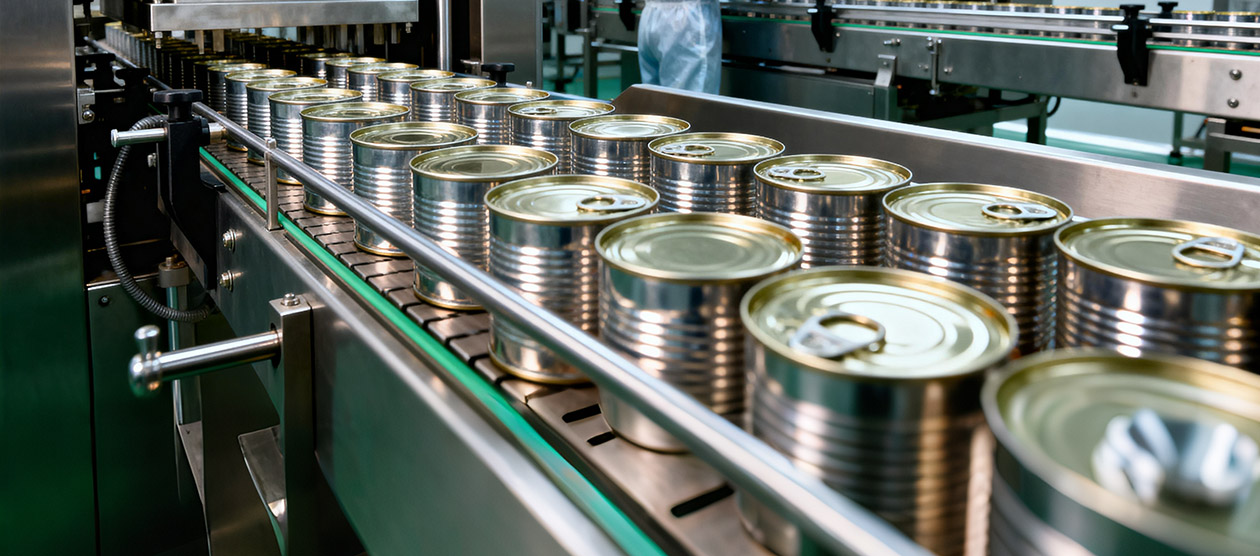
Evaluation of structural integrity in empty tuna cans with lids employs both destructive and non-destructive testing methodologies. Axial and radial compression tests quantify the maximum load the can structure can withstand before permanent deformation. Drop tests simulate impact scenarios encountered during handling and distribution. Non-destructive techniques, such as X-ray or ultrasonic seam inspection, allow for the detection of internal seam defects or incomplete compound coverage without compromising the can’s usability.
Material fatigue is assessed through cyclic loading experiments, where cans are subjected to repeated mechanical stresses representative of transportation or stacking cycles. The number of cycles to failure, as well as the mode of failure (e.g., seam separation, wall cracking), provides critical data for material selection and design optimization. Environmental exposure tests, including salt spray and humidity chambers, are used to evaluate the corrosion resistance of the tinplate and the effectiveness of lacquer coatings in preserving the substrate under aggressive storage conditions.
Preservation stability is further validated by monitoring oxygen and moisture ingress over time. Accelerated aging protocols, involving elevated temperature and humidity, are employed to simulate long-term storage effects within a compressed timeframe. Analytical techniques such as headspace gas analysis and moisture vapor transmission rate (MVTR) testing quantify the barrier performance of both the can body and the seam. Any increase in oxygen or moisture levels within the can is indicative of compromised preservation stability, necessitating a review of seam design or material selection.
Recommendations for engineering validation focus on a comprehensive approach to structural and preservation assessment. Initial design validation should include finite element analysis (FEA) to model stress distribution and deformation under simulated loading conditions. Physical testing must encompass both static and dynamic load scenarios, with particular attention to seam integrity and bead performance. Periodic batch testing of production cans is essential to monitor for material or process variability that could affect structural performance.
Material selection should prioritize tinplate grades with proven fatigue resistance and uniform coating thickness. The application of internal and external lacquers must be controlled to ensure complete coverage and adhesion, particularly at seam interfaces and bead transitions. Seam compound formulation and application parameters should be optimized to maintain elasticity and barrier properties throughout the product’s shelf life.

For ongoing quality assurance, implementation of non-destructive seam inspection technologies—such as X-ray tomography or ultrasonic scanning—provides continuous feedback on seam integrity without the need for destructive sampling. Corrosion resistance testing should be integrated into routine quality control, with accelerated aging protocols used to identify potential failure modes before distribution.
Engineering validation should culminate in the establishment of performance benchmarks for axial and radial load resistance, seam tightness, and barrier performance. These benchmarks serve as acceptance criteria for both design qualification and production release. Any observed deviation from established benchmarks must trigger a root cause analysis and corrective action, ensuring that the structural integrity and preservation stability of empty tuna cans with lids are consistently maintained.
Systematic engineering for empty tuna cans with lids
In summary, the structural performance and preservation stability of empty tuna cans with lids are governed by the interplay of material selection, mechanical design, and process control. Addressing the core pain point of structural deformation under storage conditions requires a rigorous engineering approach, encompassing both predictive modeling and empirical validation. Structural packaging engineers are advised to conduct systematic engineering validation—spanning material fatigue assessment, seam integrity testing, and environmental exposure simulation—to ensure that tinplate packaging consistently meets the demands of high-barrier preservation and mechanical reliability.
For further technical details on tinplate packaging materials and their application in food preservation, refer to the Tinplate Packaging Materials resource. Additional guidance on material selection and testing protocols can be found in the Food & Beverage Packaging section and the إرشادات التعبئة for optimal can performance.
 English
 Español
 Русский
 日本語
日本語 한국어
한국어 Français
 العربية
 Português